💬 Live Customer Support / 🌐 Available in 28 Languages / 💳 Secure Payments
Lorem ipsum dolor sit amet, consectetur adipiscing elit. Ut elit tellus, luctus nec ullamcorper mattis, pulvinar dapibus leo.
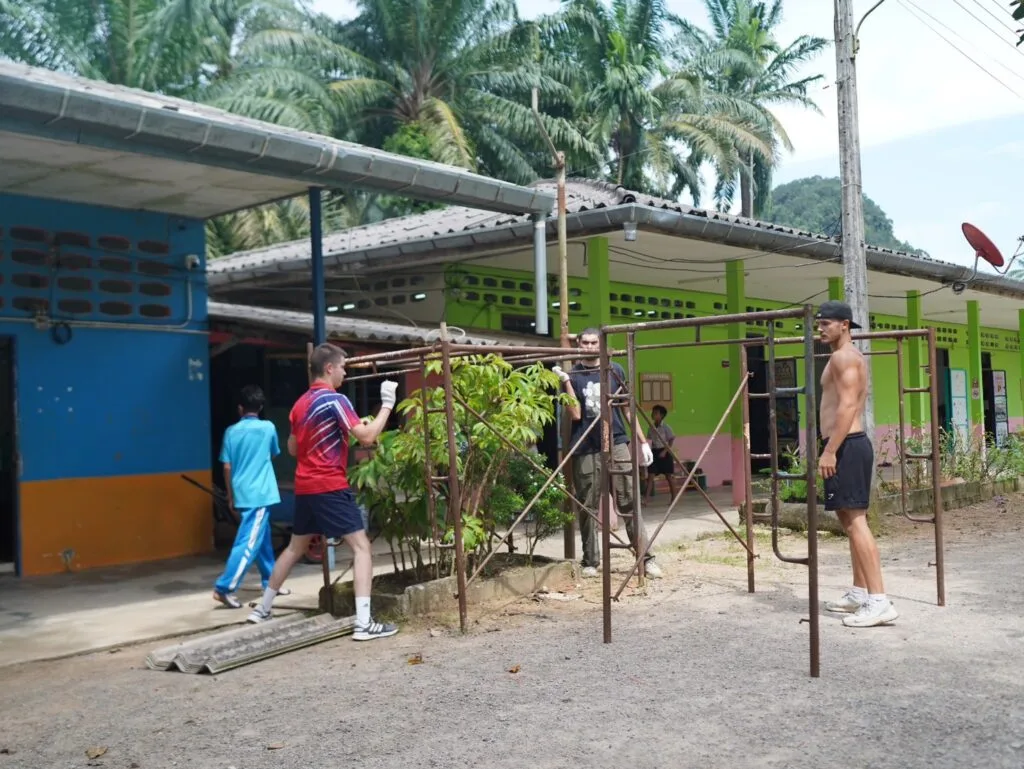
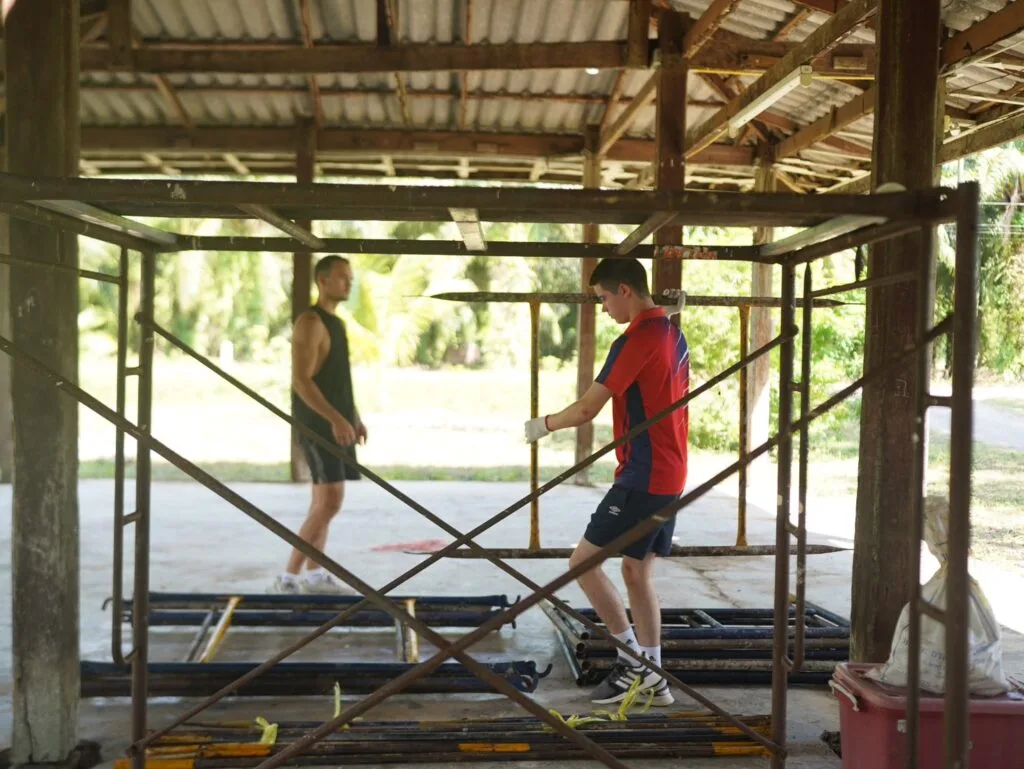
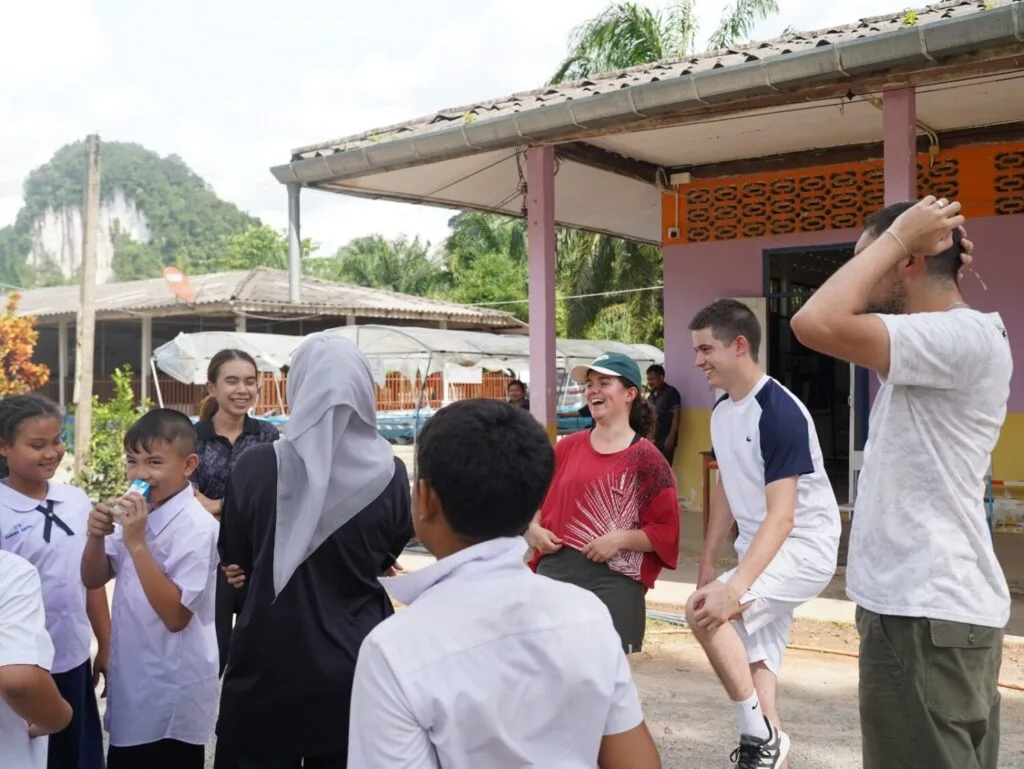
It’s now been more than a month since I started living in Thailand, split between a restoration project at the heart of a village and weekends spent exploring the south of the country. As a civil engineering student, I came here with a certain vision of the trade — the one we’re taught in school. A month later, that vision has been enriched by everything Thailand does best: ingenuity, authenticity, and an ability to achieve extraordinary things with simple means. This article is my attempt to capture what I’d call my “Thai spirit”: the way this country has reshaped my outlook as a future engineer, and enriched the everyday life of a 20-year-old far from home.


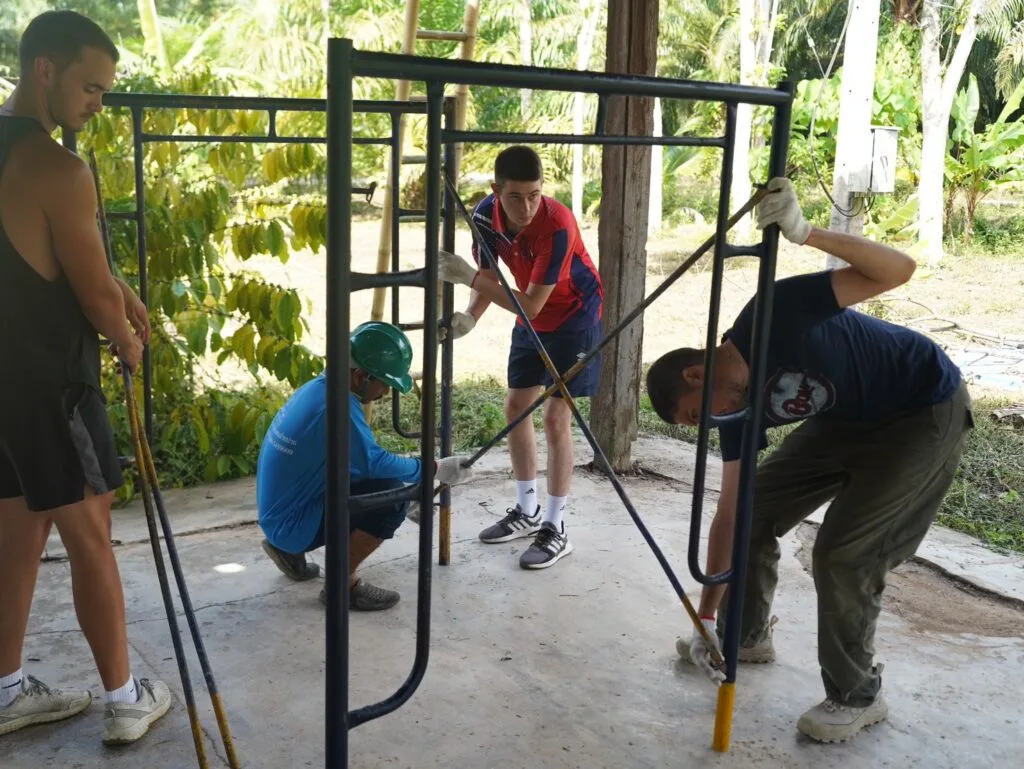
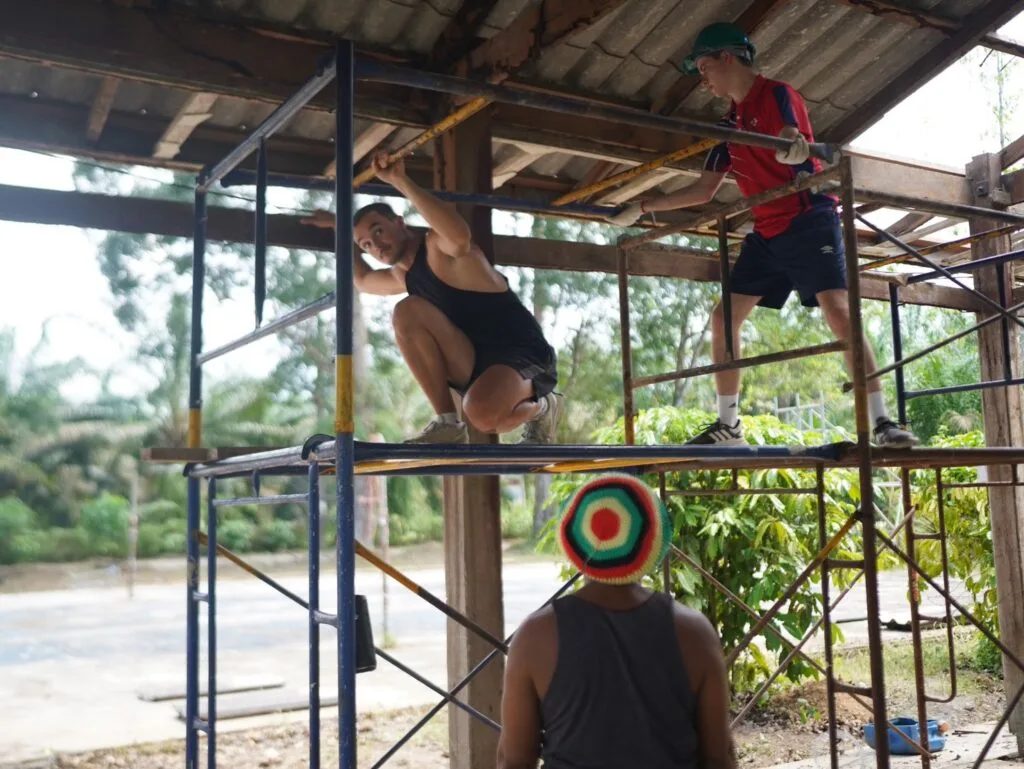
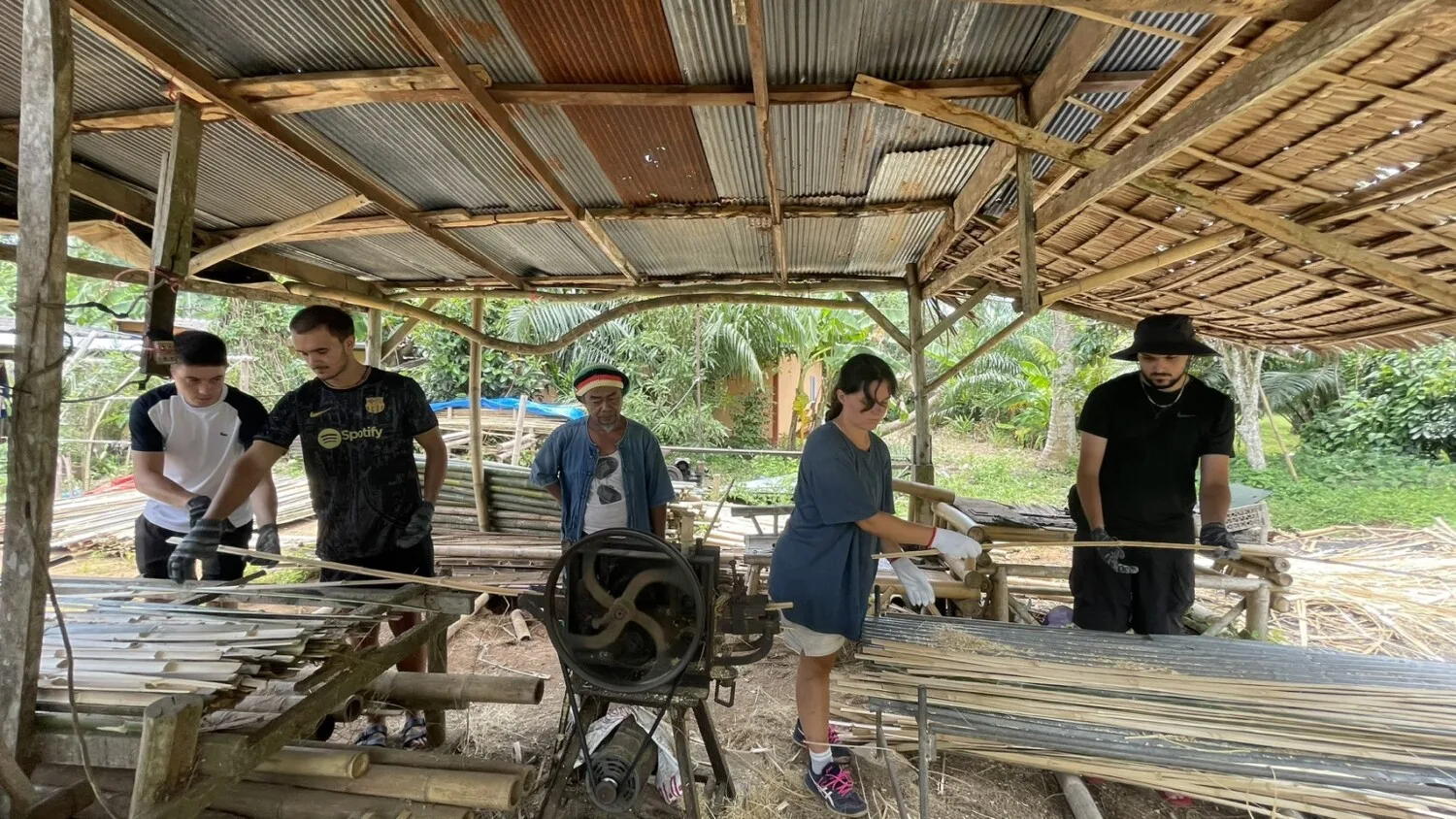
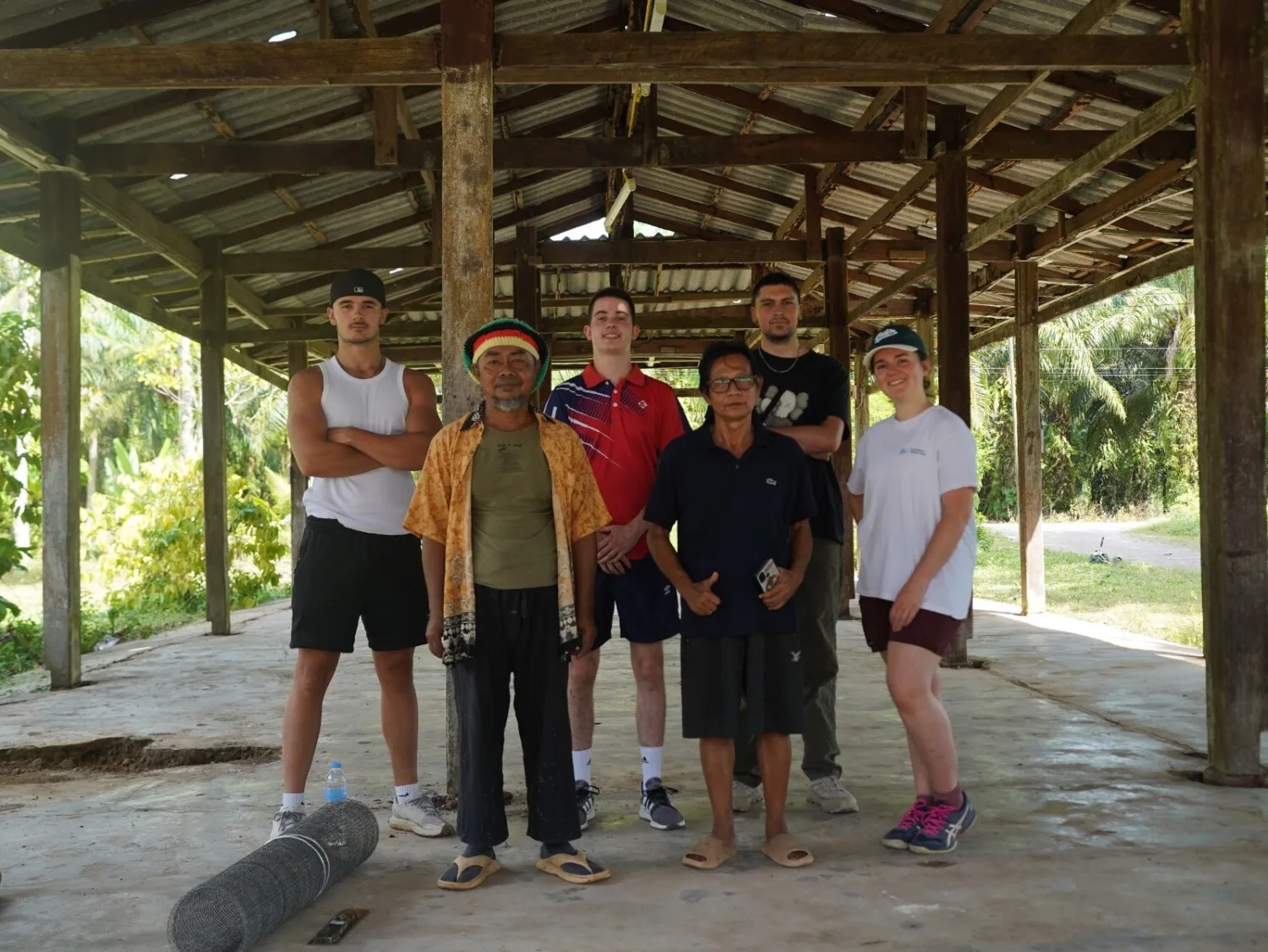
Before this internship, I thought of bamboo as an almost secondary material compared to the concrete or steel we’re taught about in engineering school. That view has completely changed. We built two ladders and a bench with stools entirely out of bamboo, and I saw firsthand just how remarkably strong yet incredibly light this material is, thanks to its hollow structure. We also quantified 312 linear meters of bamboo intended to reinforce the roof framing — concrete proof that this material is anything but anecdotal and can structurally rival traditional timber.
What excited me most was the short-supply-chain logic behind its use: we cut the stalks directly from the plots right next to the site. No ordering, no delays, no transport over hundreds of kilometers. It’s a genuine lesson in sustainable, local construction that already inspires me for the rest of my studies and career: bamboo is a material of the future — bio-based, local, and both aesthetic and structural.
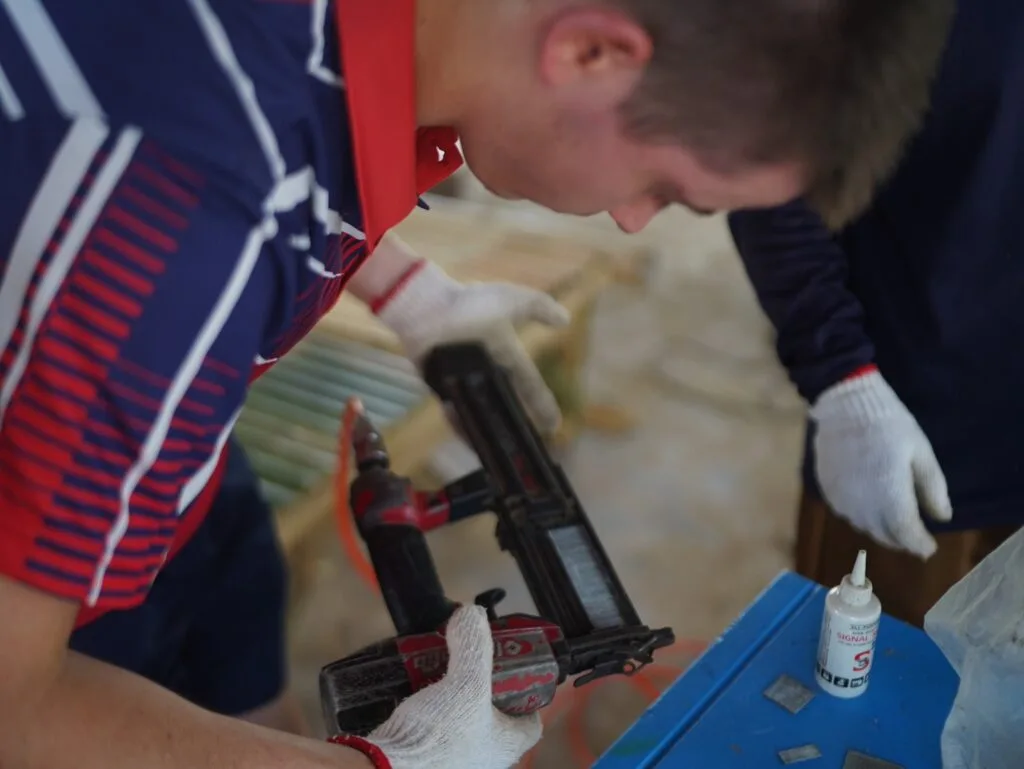
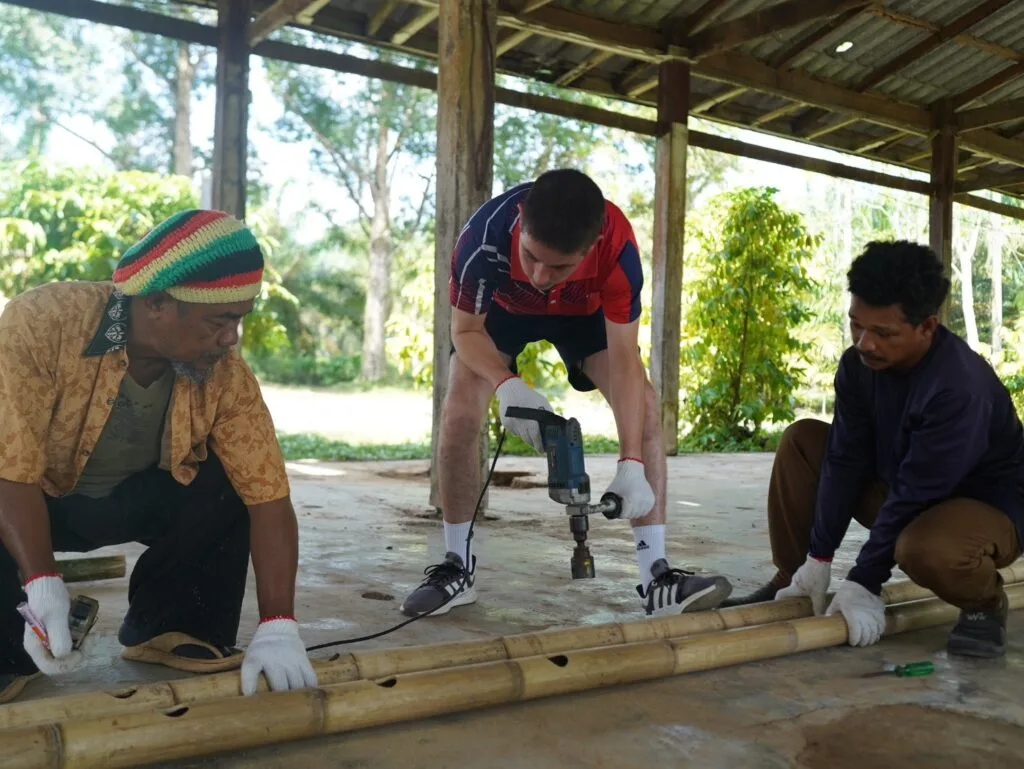
As for Bang Ree, I have nothing but praise. His background — a master’s degree specialized in the subject, hands-on experience on reconstruction projects following the tsunamis that struck Thailand, and projects completed in Phuket — gives real legitimacy and genuine inspiration to his teaching. What struck me most was his hands-on teaching style: he put the tools directly in our hands (hole saw, machete, nail gun) and let us get to know the material through practice, while staying present to pass on his knowledge at just the right moment, with patience and passion. It’s a living, embodied kind of teaching that I’d recommend to any civil engineering student curious to step off the beaten path.
What makes this experience so rich are, above all, the people who accompany it day after day.
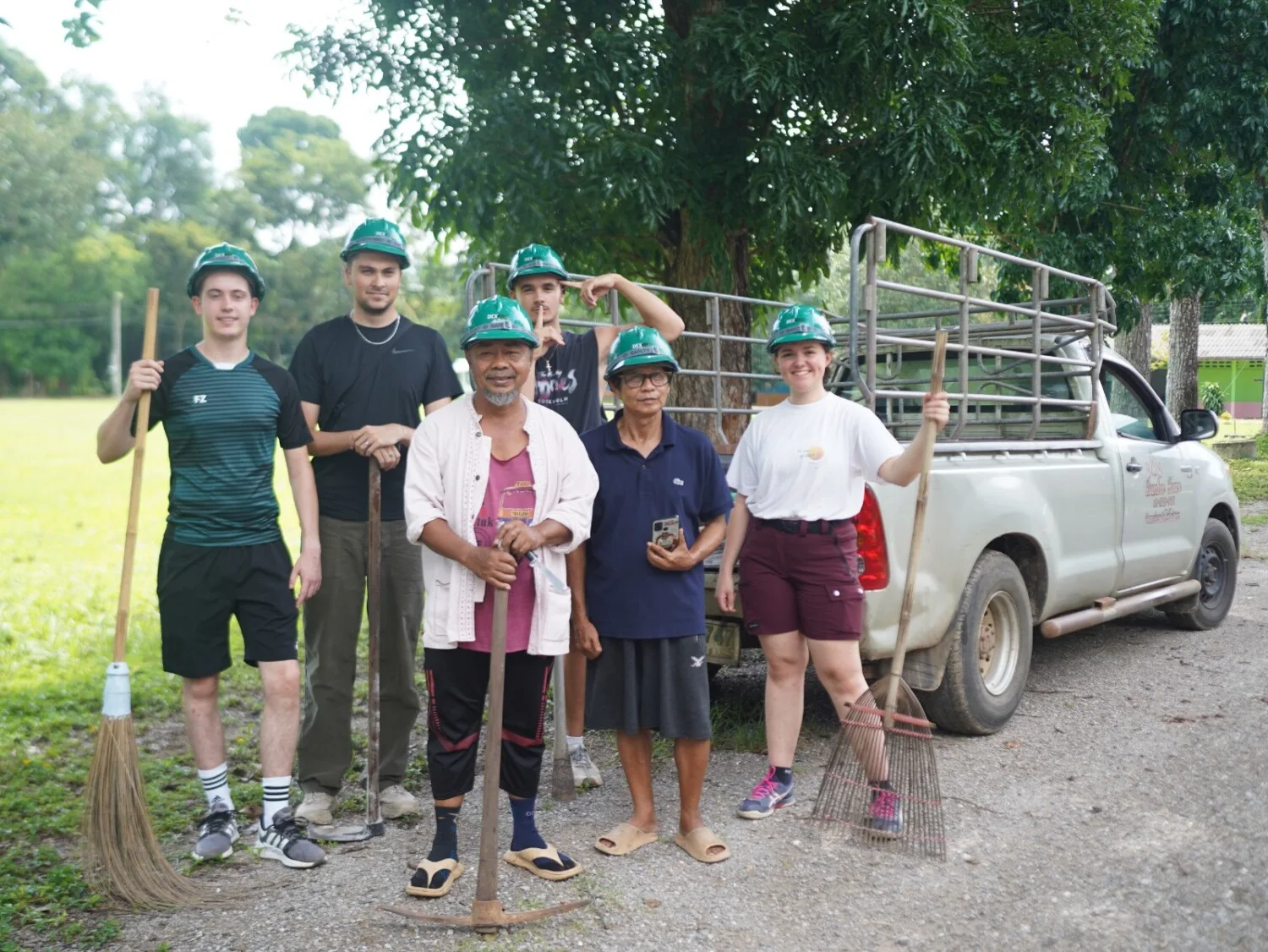
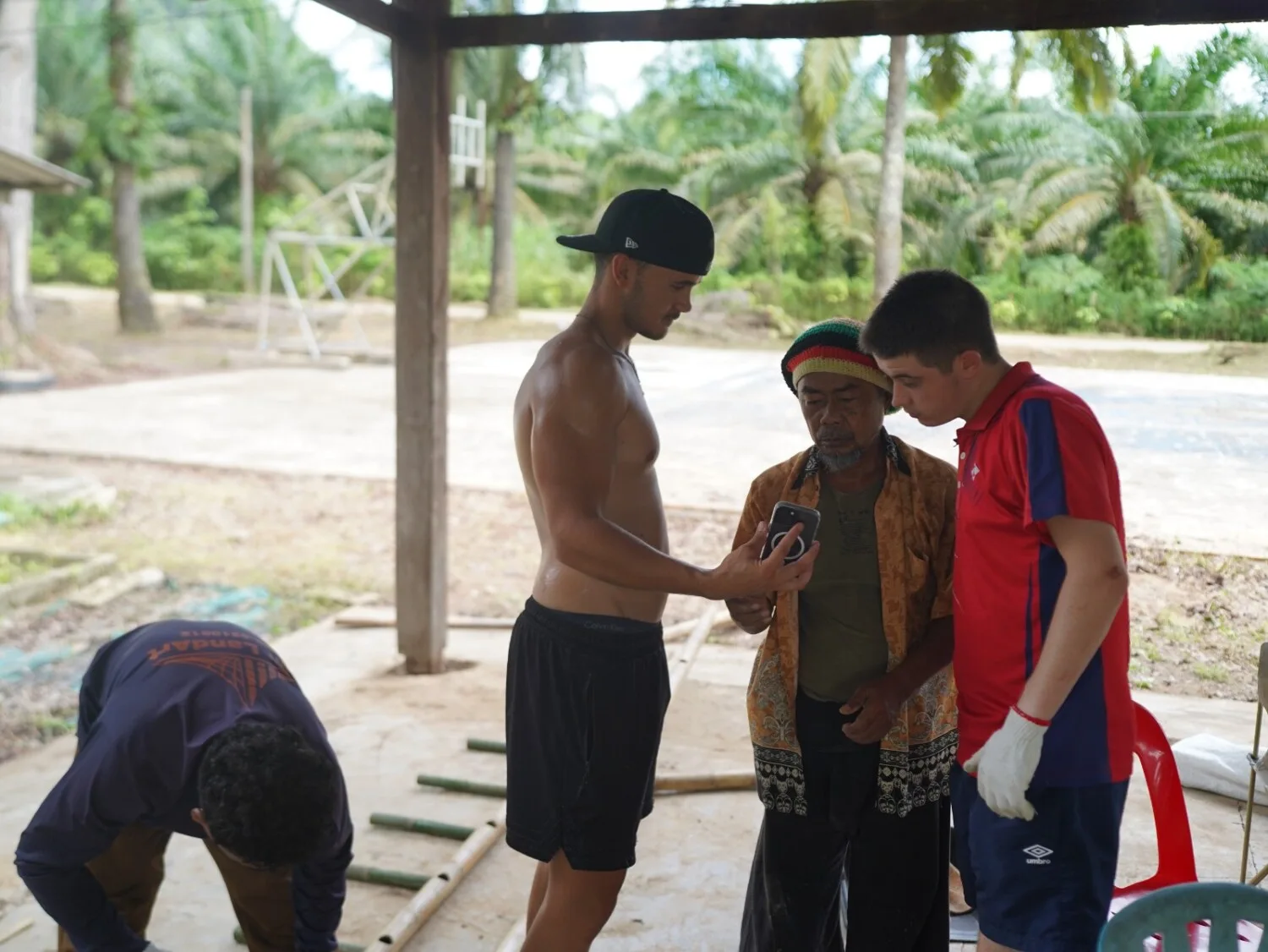
First, there’s Bang Ree, our bamboo expert and true site foreman on a daily basis. He’s the one leading all the works with a mastery and natural authority that immediately command respect. His presence is both reassuring and inspiring: you can feel, in every gesture, the experience accumulated in the field, and it’s a genuine pleasure to learn alongside him day after day.
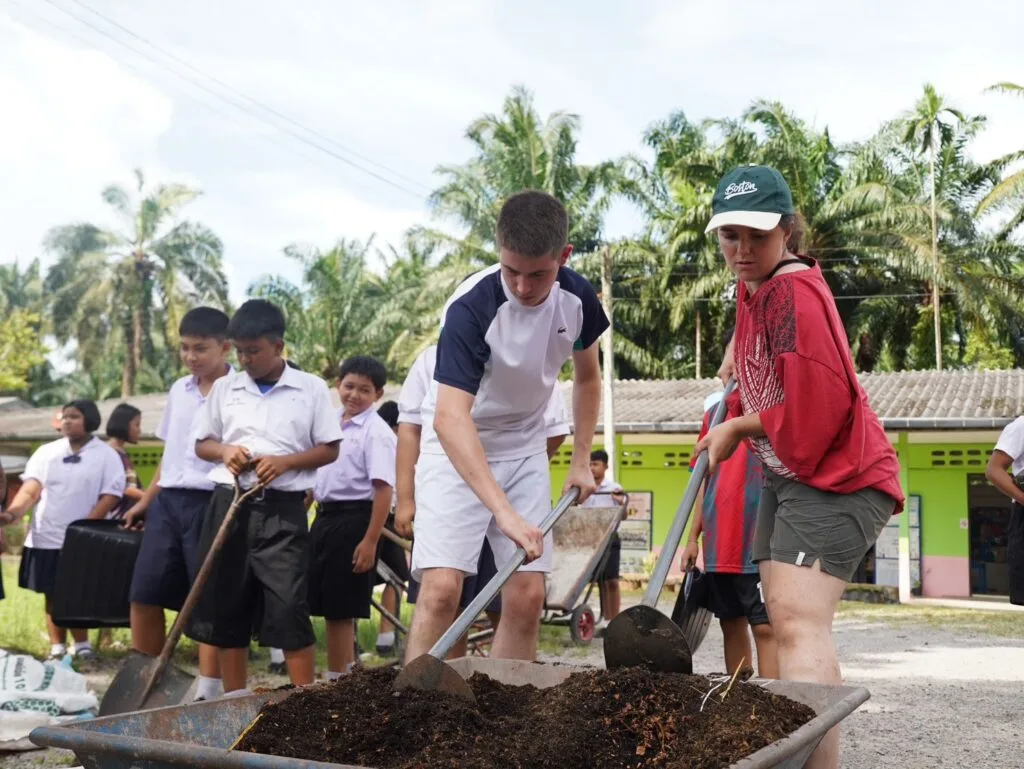
Then there’s Kun Khet, aka “Batman,” the village elder, whose ingenious and original method of making his own fertilizer from the resources of his own cave struck me immediately with its creativity and its intimate connection to the surrounding nature.
There’s also Sin, the worker who works alongside Banly every day on the site. His constant presence and infectious good mood set the pace for each of our workdays — always ready with a smile or an encouraging word, he embodies that simple, warm generosity found everywhere in Thailand.
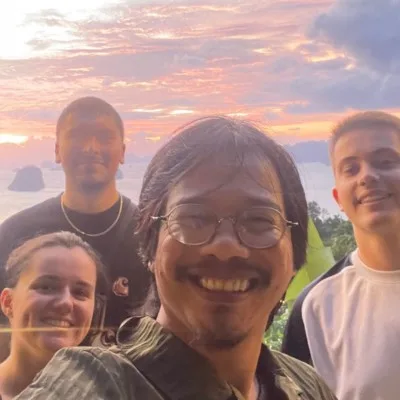
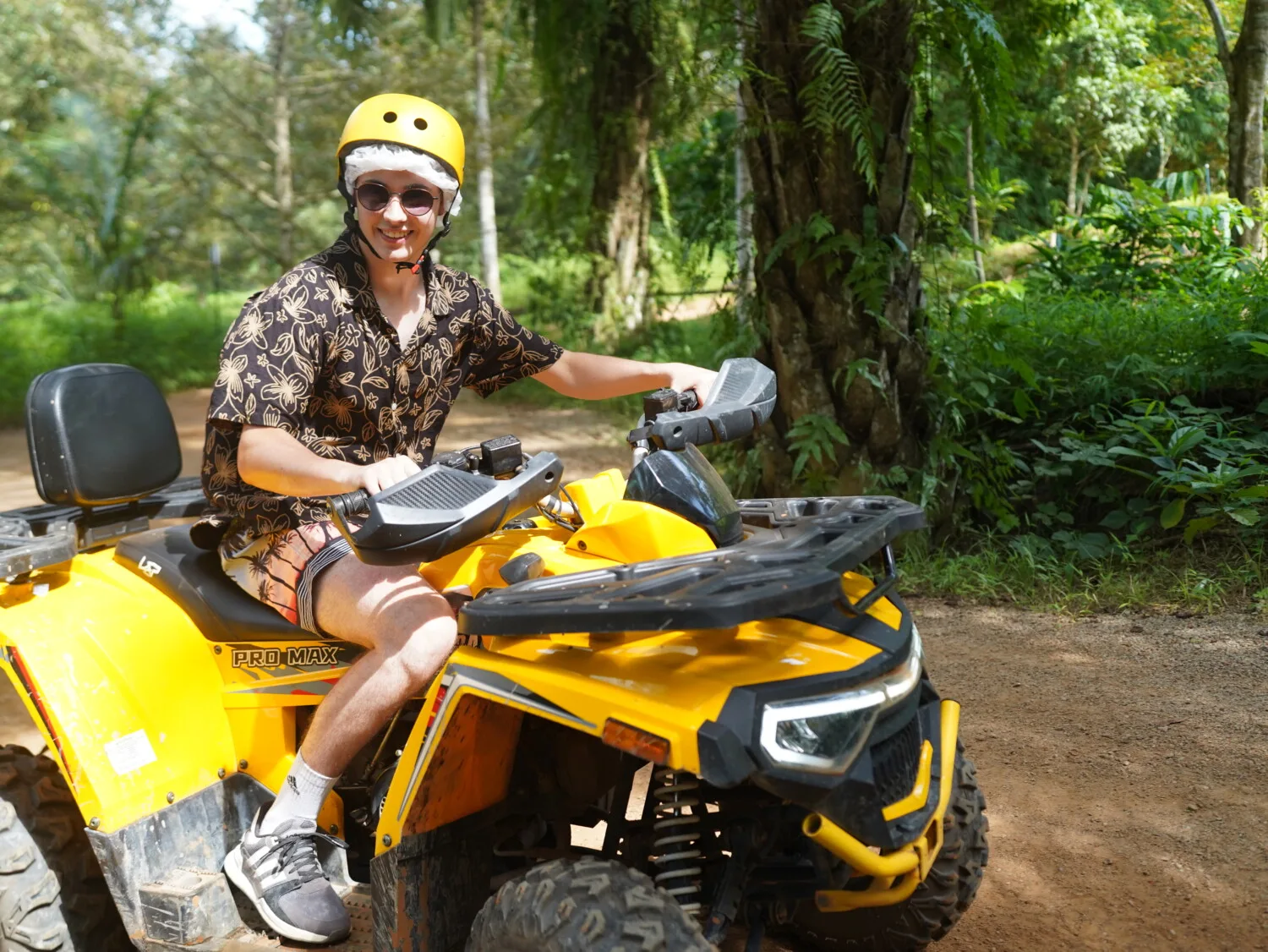
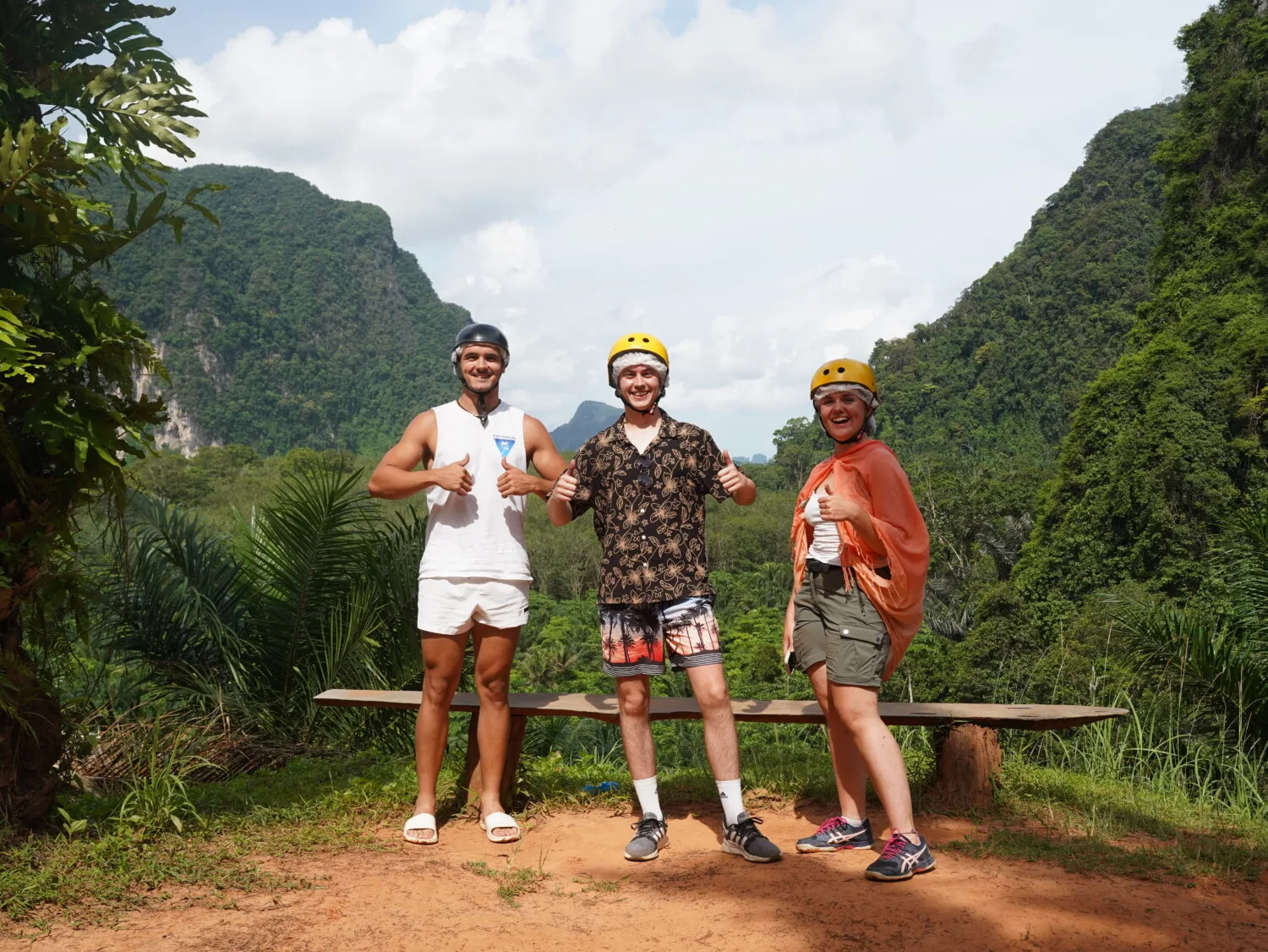
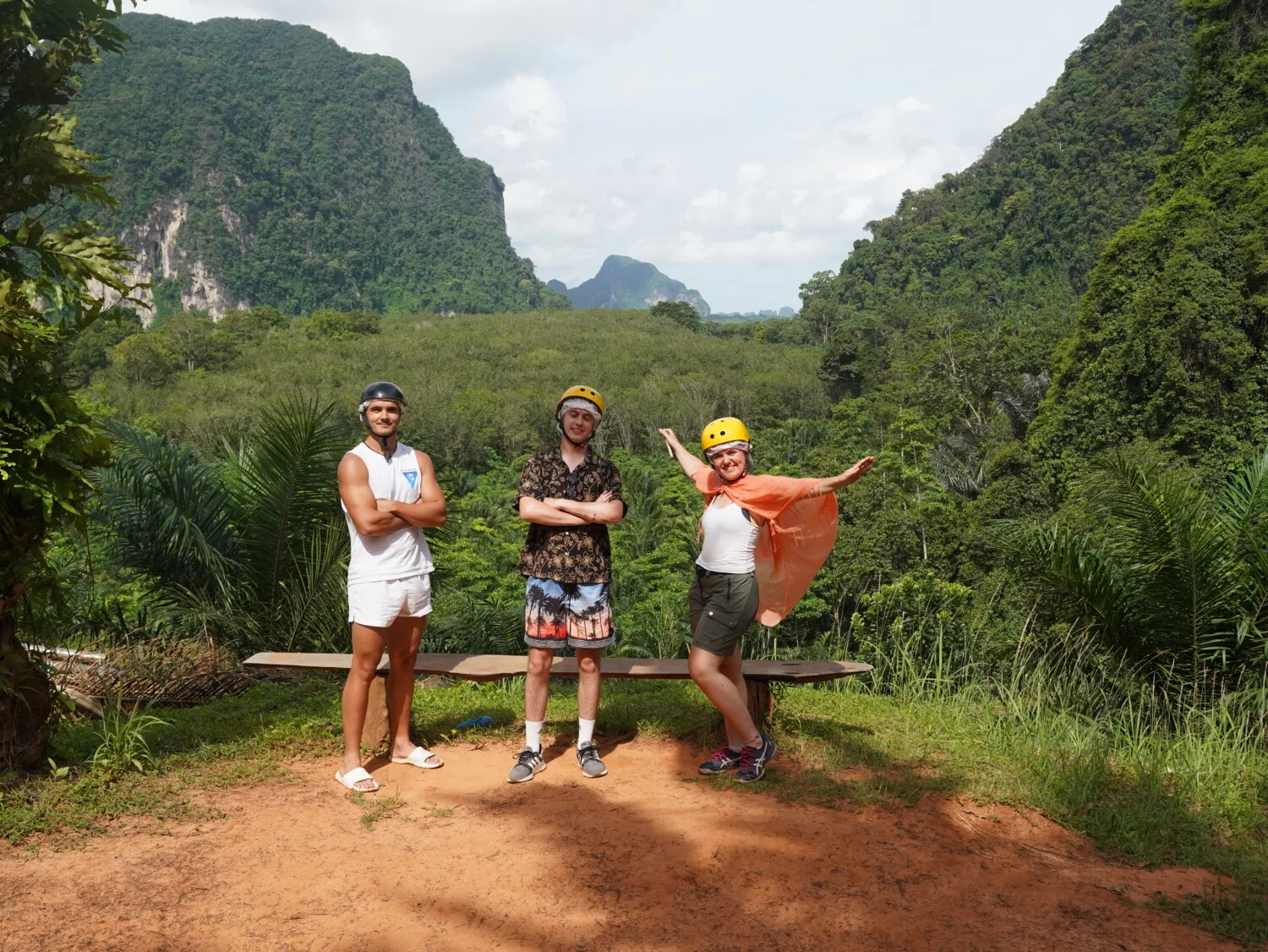
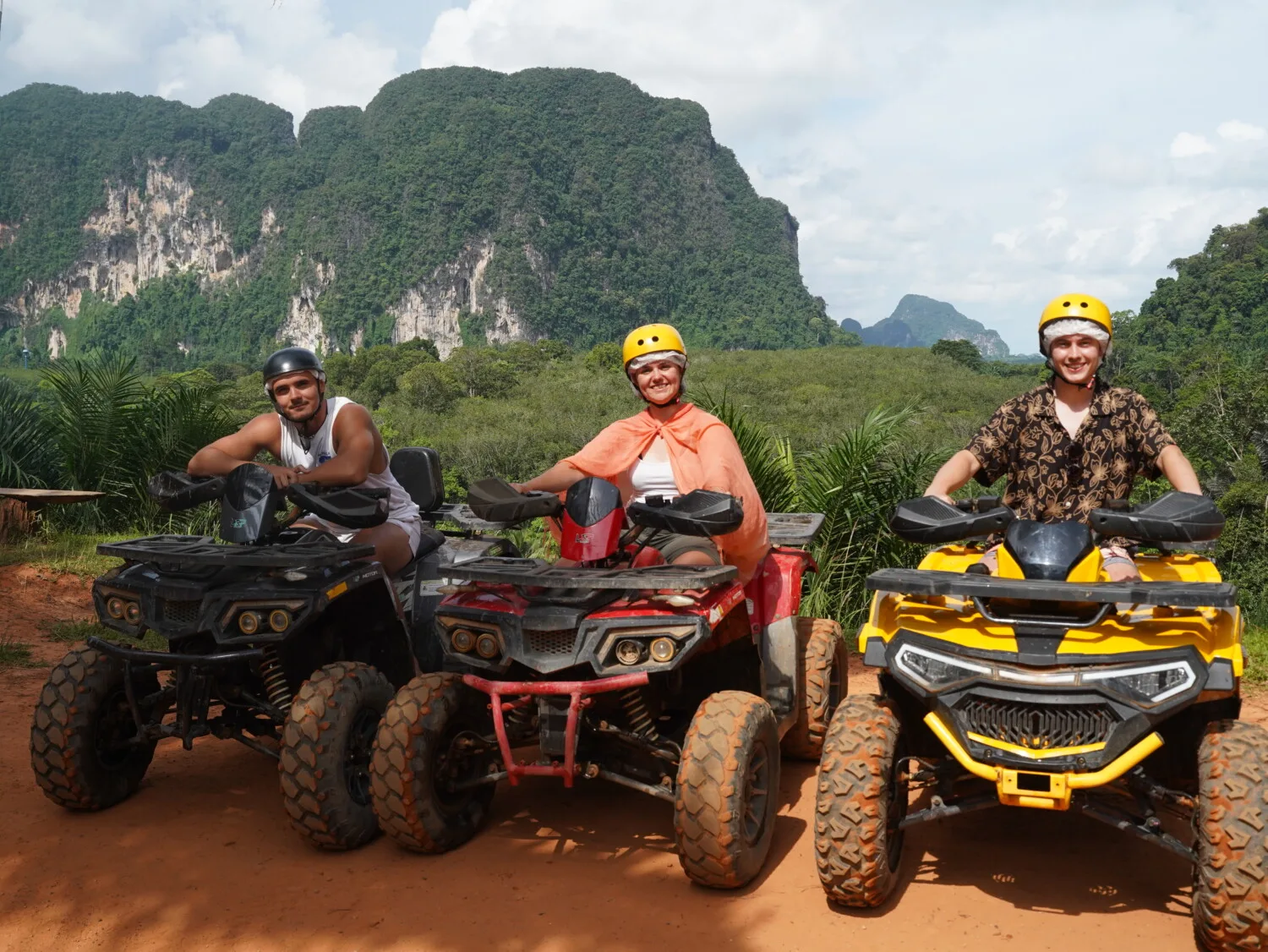
And then there’s Tum, our tutor and daily point of reference, who holds a truly special place in this adventure. Tum looks after us with constant attention: always attentive, enthusiastic, brimming with energy and unfailing generosity, he makes sure we lack nothing on site and even takes the time to document each of our achievements in photos, so we keep a living record of everything we’ve accomplished. But his role goes far beyond the construction site: he’s the one constantly suggesting new activities, personally taking us to them, and living these moments alongside us with infectious joy. Without him, this experience clearly wouldn’t have the same flavor.


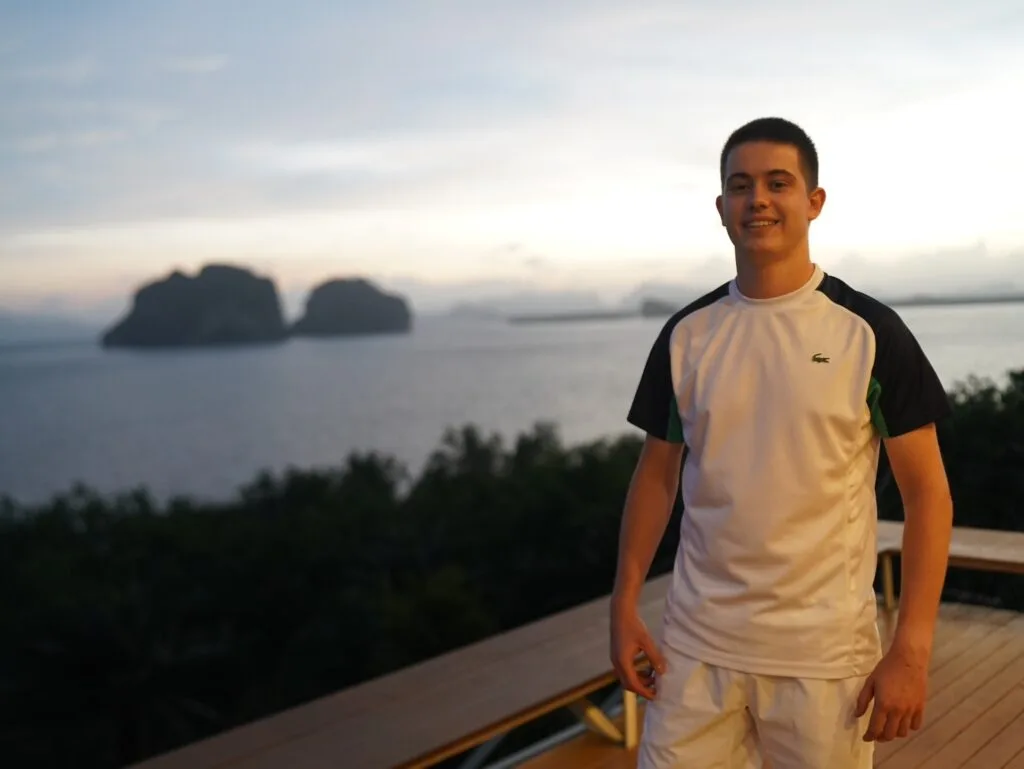
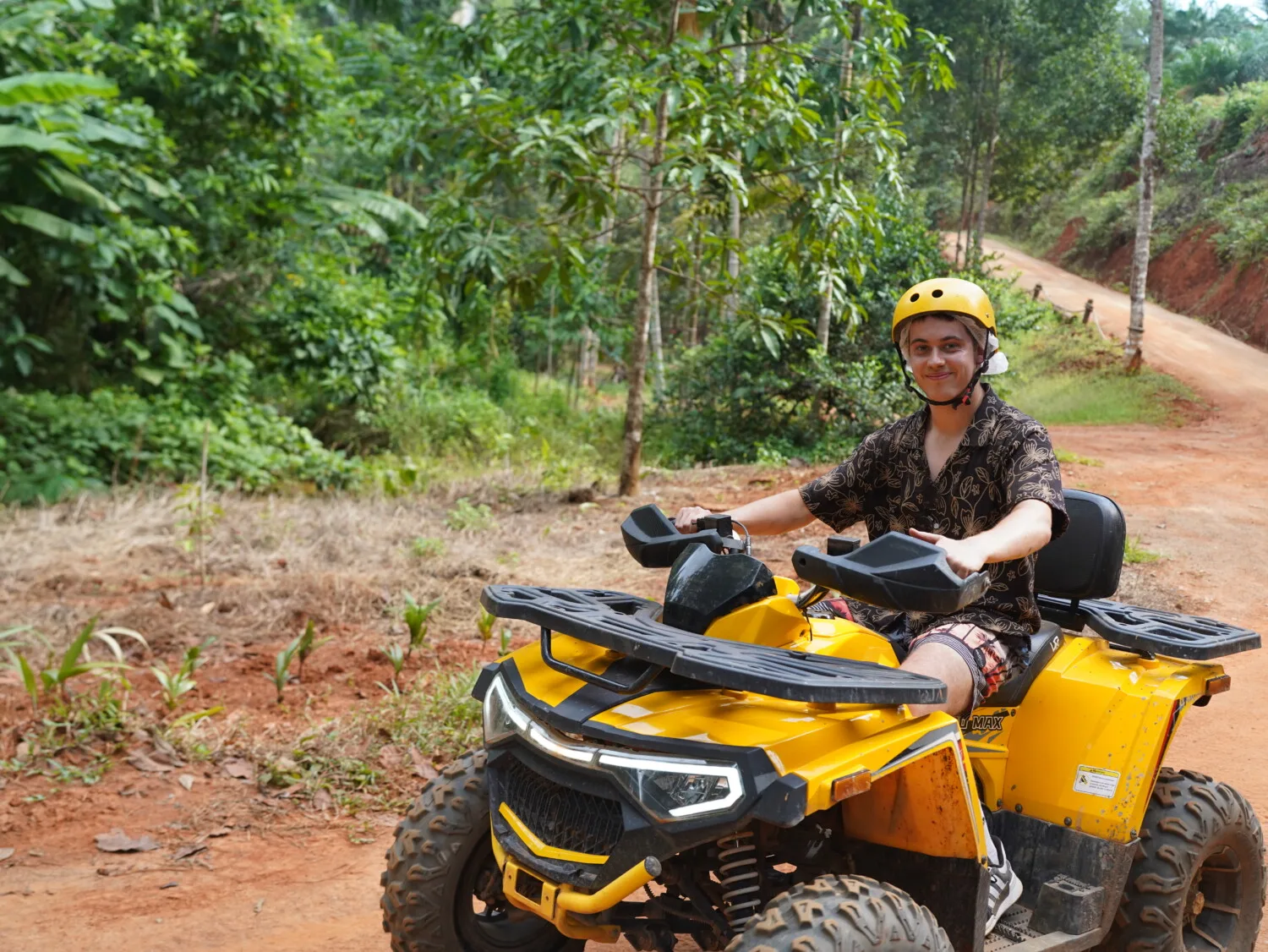
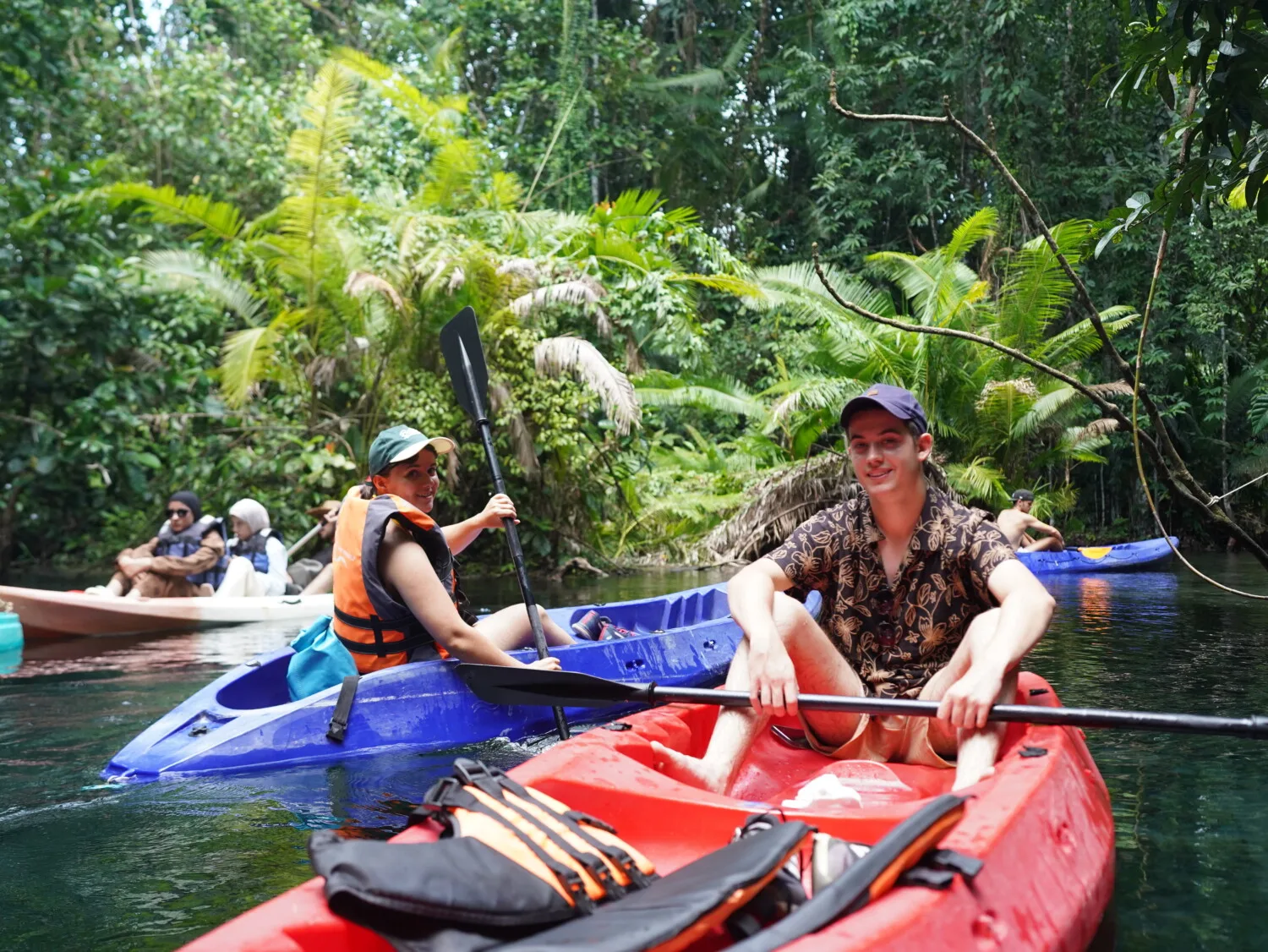
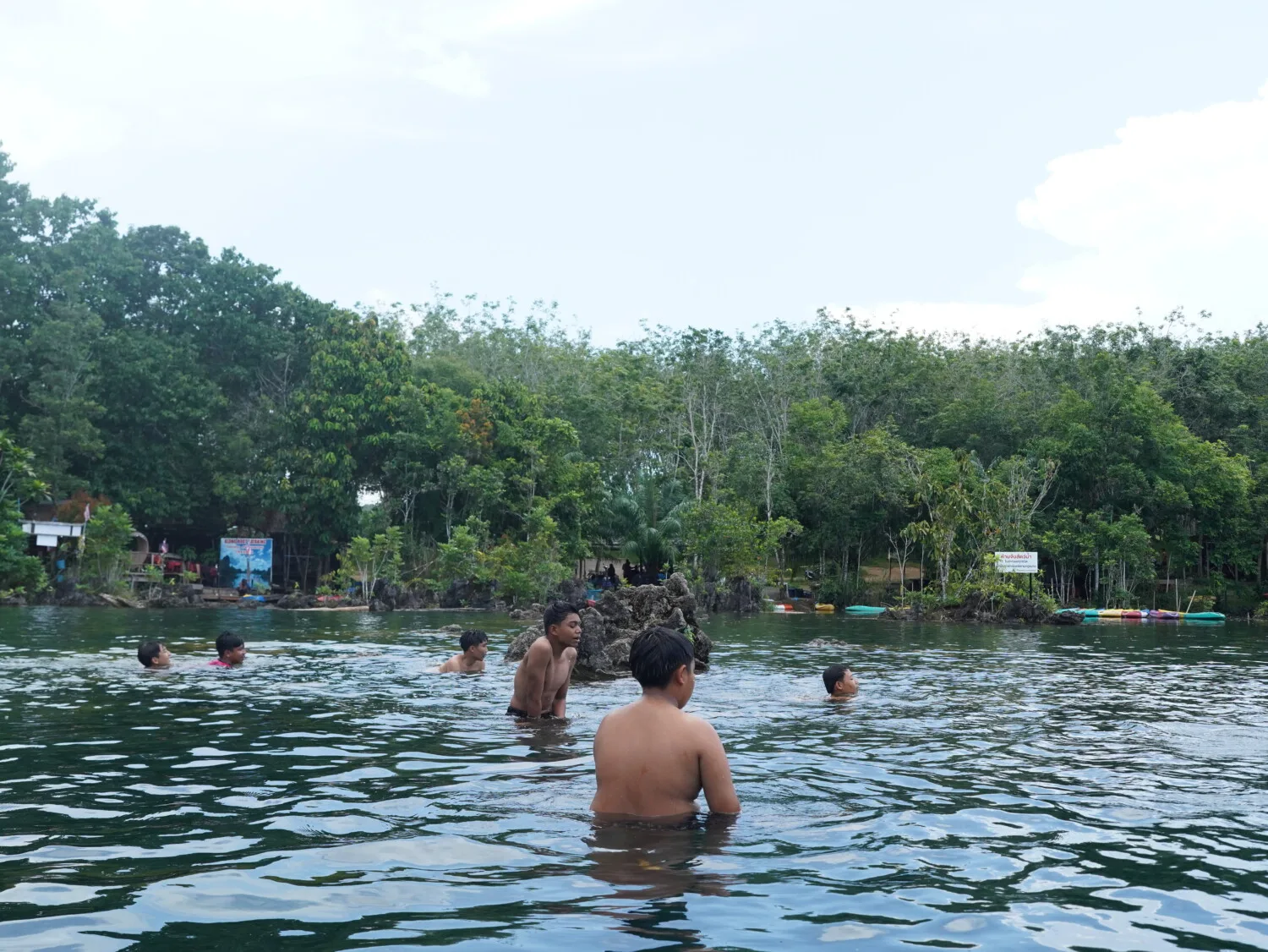
It’s hard to single out just one best moment, since every outing has been a success in its own way. The 4 Islands excursion, the Dragon’s Crest hike, the day at Khao Lak (with the magnificent Ton Chong Fa waterfall), and the exploration of the Phi Phi Islands stand out in particular — each for different reasons: the first for the spectacular diversity of landscapes packed into a single day, Dragon’s Crest for the effort rewarded with a breathtaking 360° view over Krabi Bay, Khao Lak for discovering an absolutely stunning tiered waterfall, and Phi Phi for the iconic Maya Bay.
I was also deeply moved by visiting several temples, notably Wat Mahathat Wachiramongkol Phra Aram Luang and Wat Chalong — places filled with a serenity and architectural richness that offer a beautiful counterpoint to the energy of the islands and the hikes, and that helped me better understand the spiritual depth that runs through everyday Thai life.
And what’s coming next promises to be just as grand: I’ll soon be heading to Koh Phangan and then Koh Tao, where I’ll be getting my PADI diving certification — a first for me — before joining Bangkok for a resolutely urban and electric experience. Northern Thailand remains a promise of adventure that I’ll discover at the end of the trip.
Thai Spirit Life
Customer Support
Welcome to Thai Spirit Life!
We’re here to help with any questions about our services:
Please feel free to ask about:
We will get back to you as soon as possible!
WhatsApp Us
🟢 Online | Victoria
WhatsApp Us