💬 Live Customer Support / 🌐 Available in 28 Languages / 💳 Secure Payments
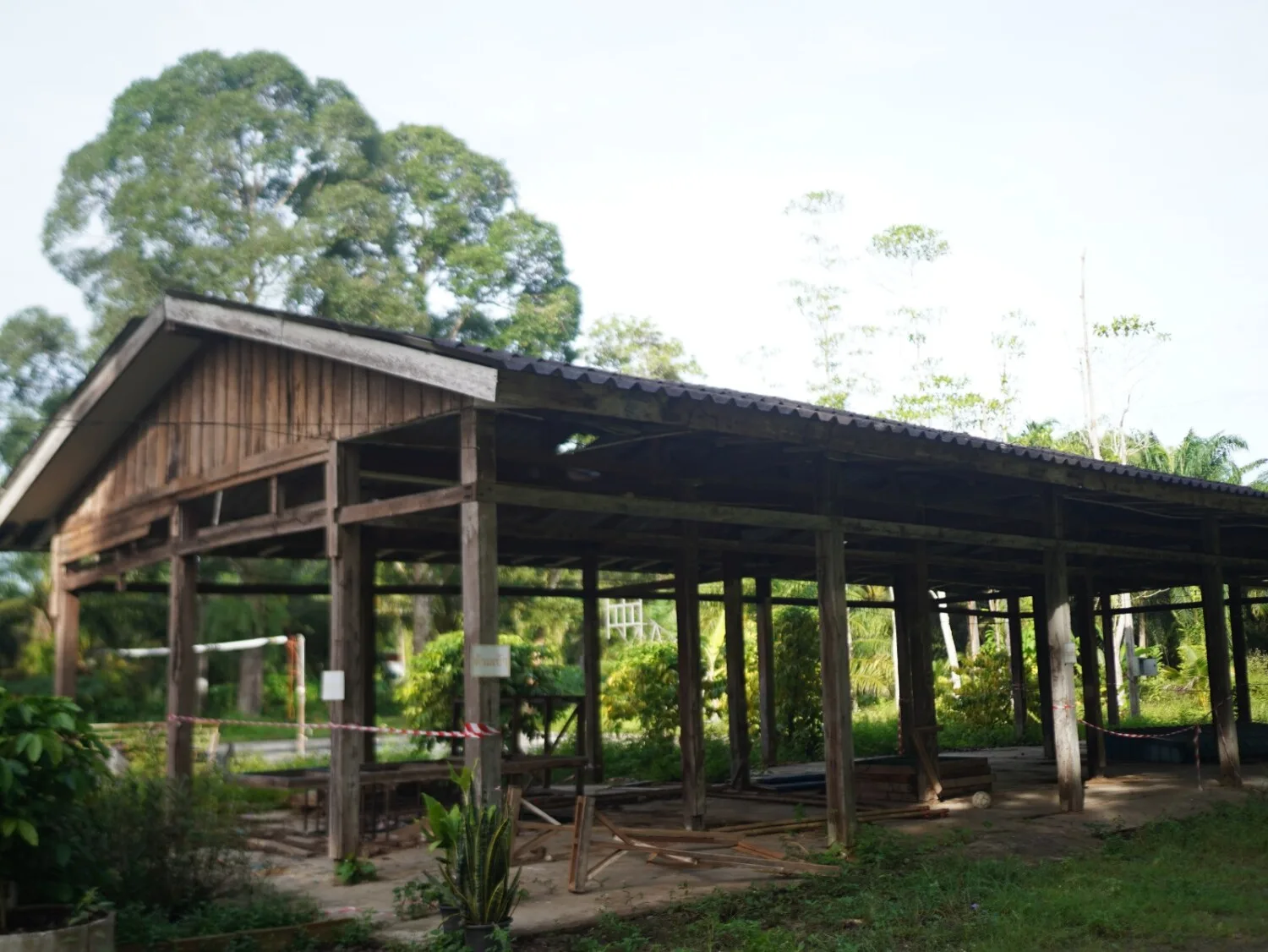
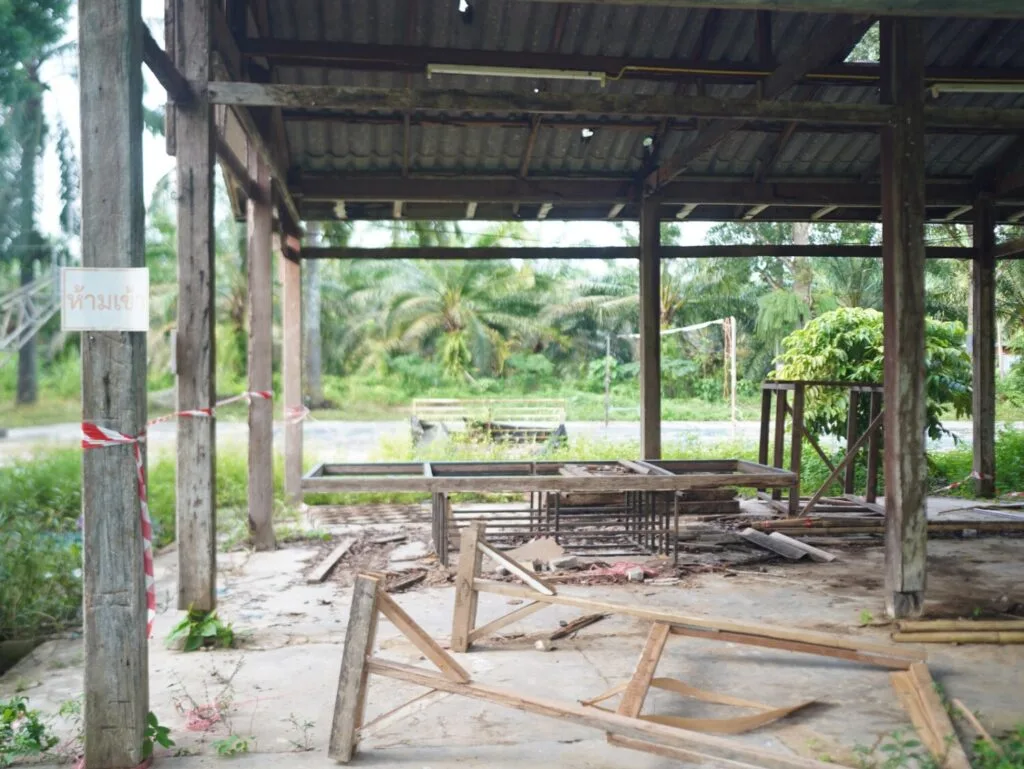
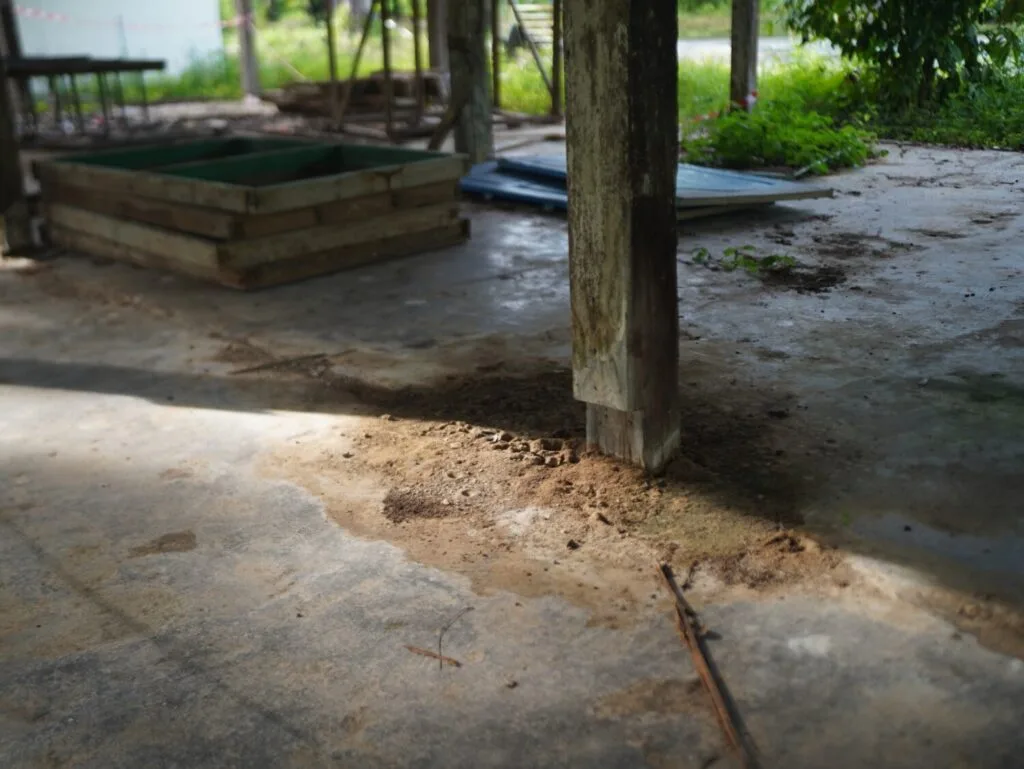
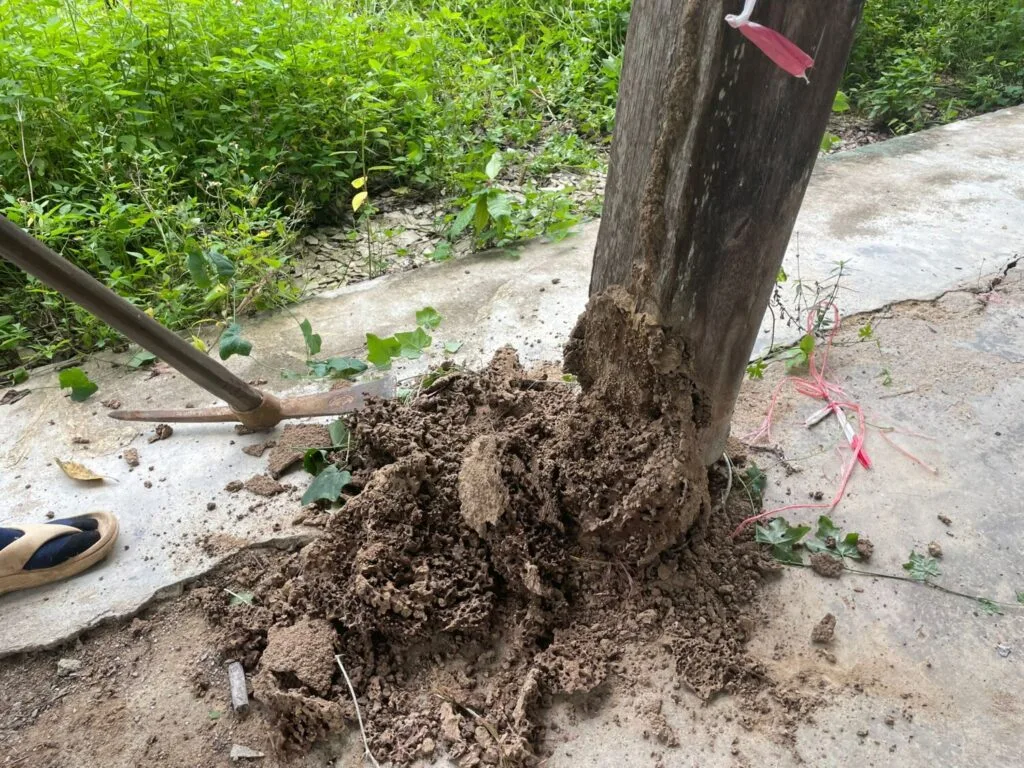
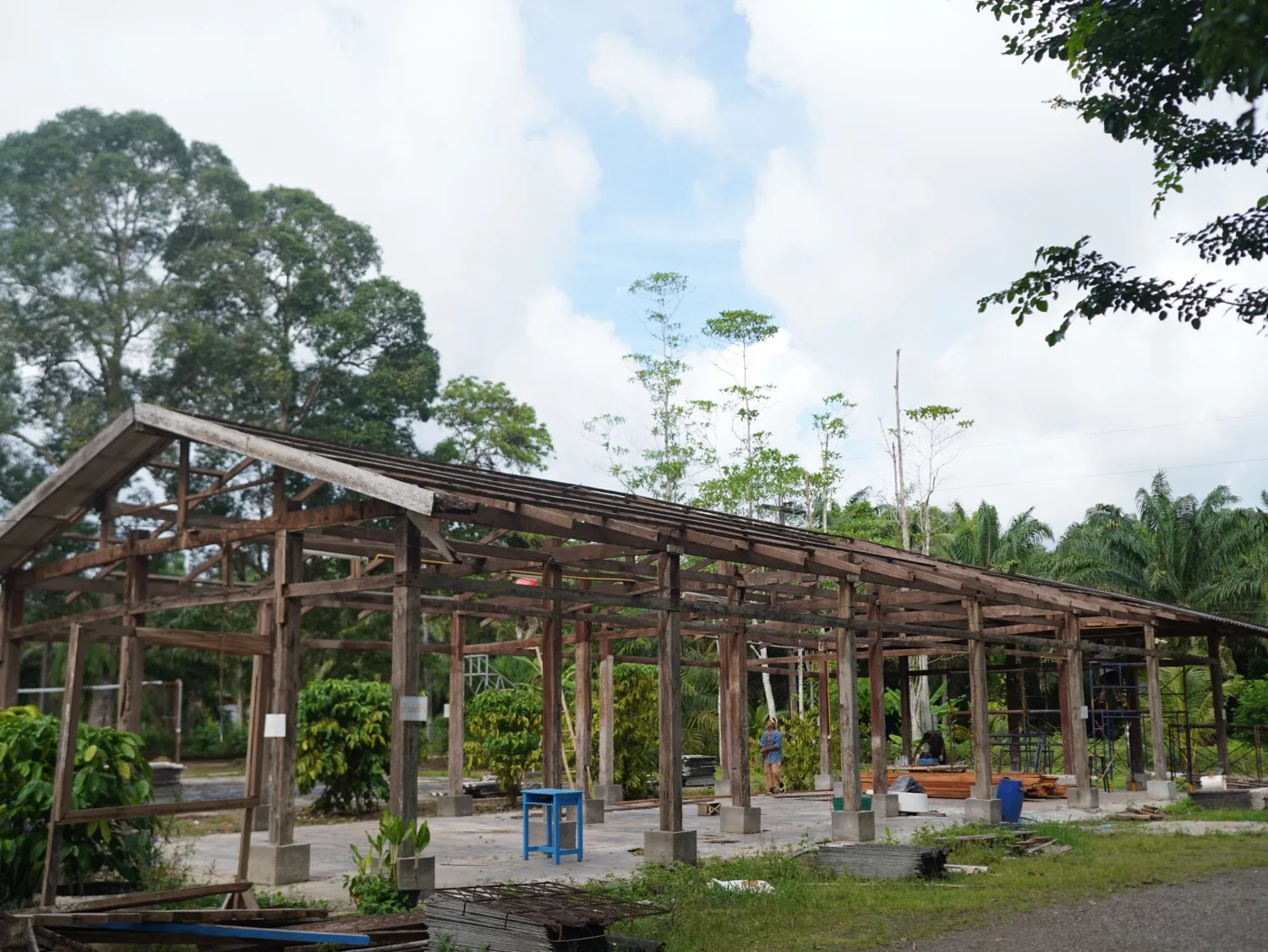
The Eco-Construction Internship 2026 is taking place at Bang Laew School in Krabi, southern Thailand. At its centre stands an abandoned wooden classroom block, built roughly 111 years ago, when the school itself was founded. Years of termite damage, tropical weather, and the ordinary ageing of untreated timber had left the structure weakened to the point that, without intervention, it would eventually have to be pulled down.
Thai Spirit Life chose a different path. Rather than clearing the site for something new, the organisation set out to restore what was already there — repairing the frame, replacing what timber could not be saved, and returning the building to a condition where it can serve the school again. The objective was never simply to renovate an old building. It was to turn that restoration into a living classroom, where international students could gain real, hands-on construction experience while contributing to a project that directly benefits a local school and the community around it.
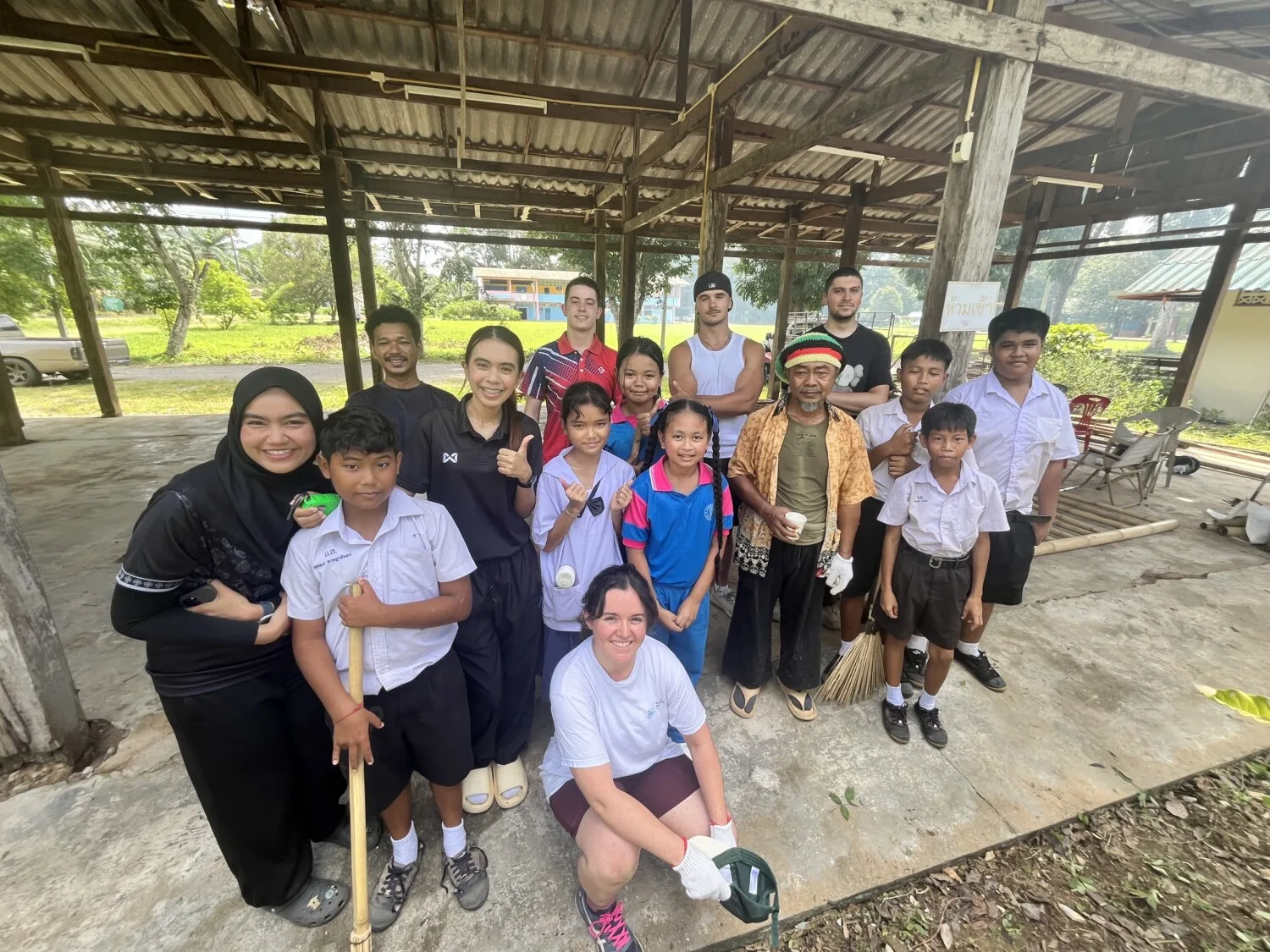
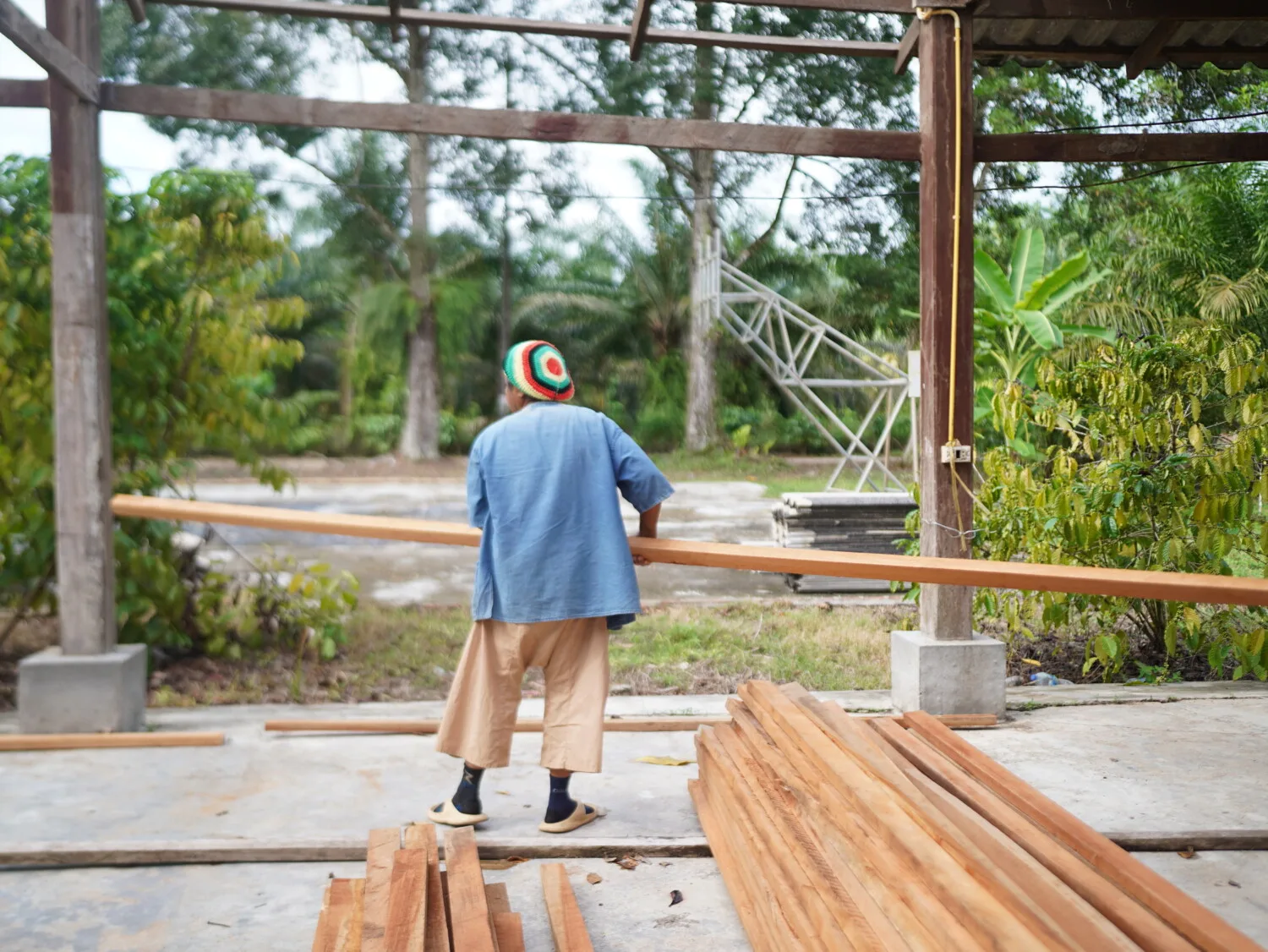
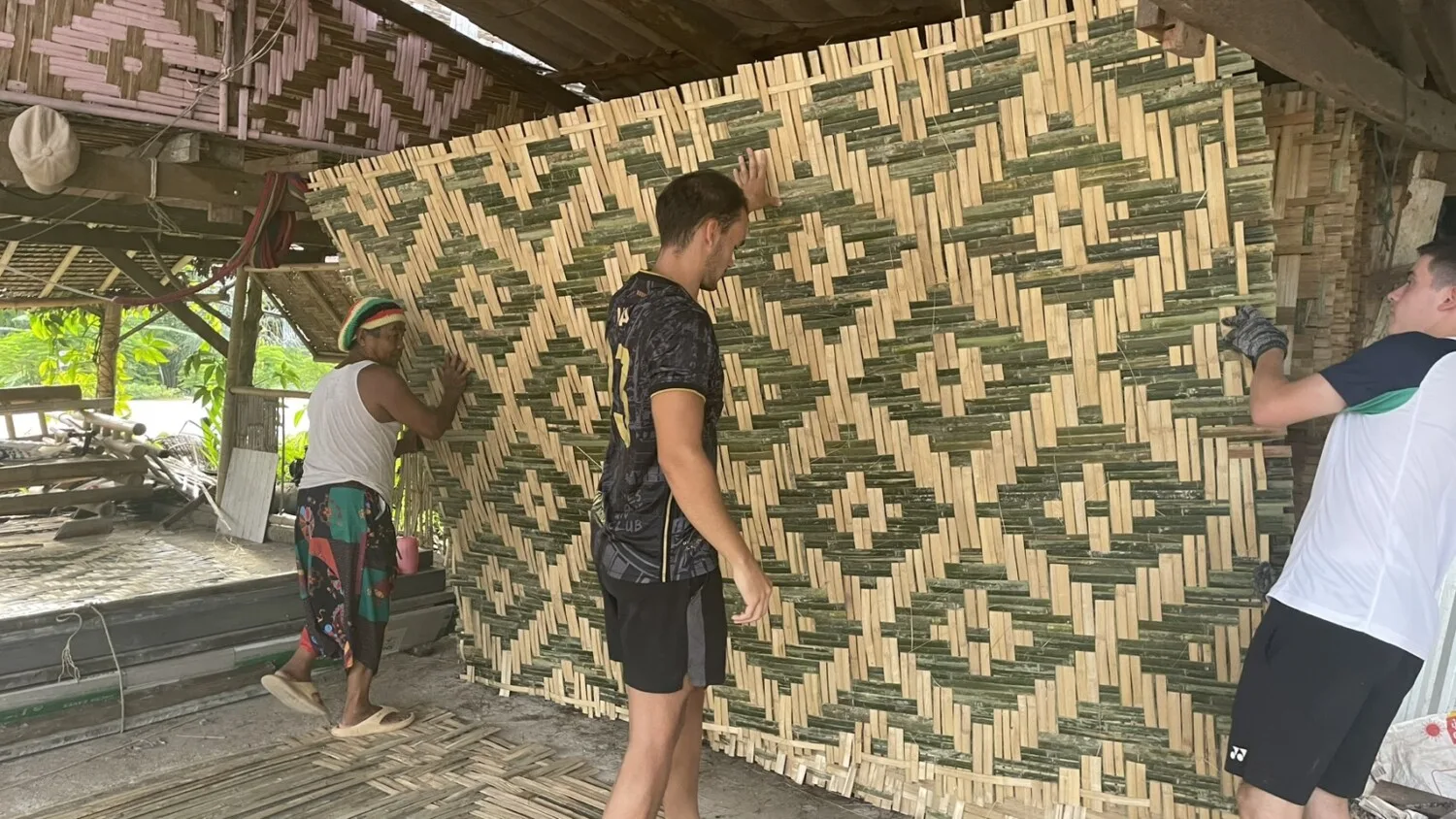
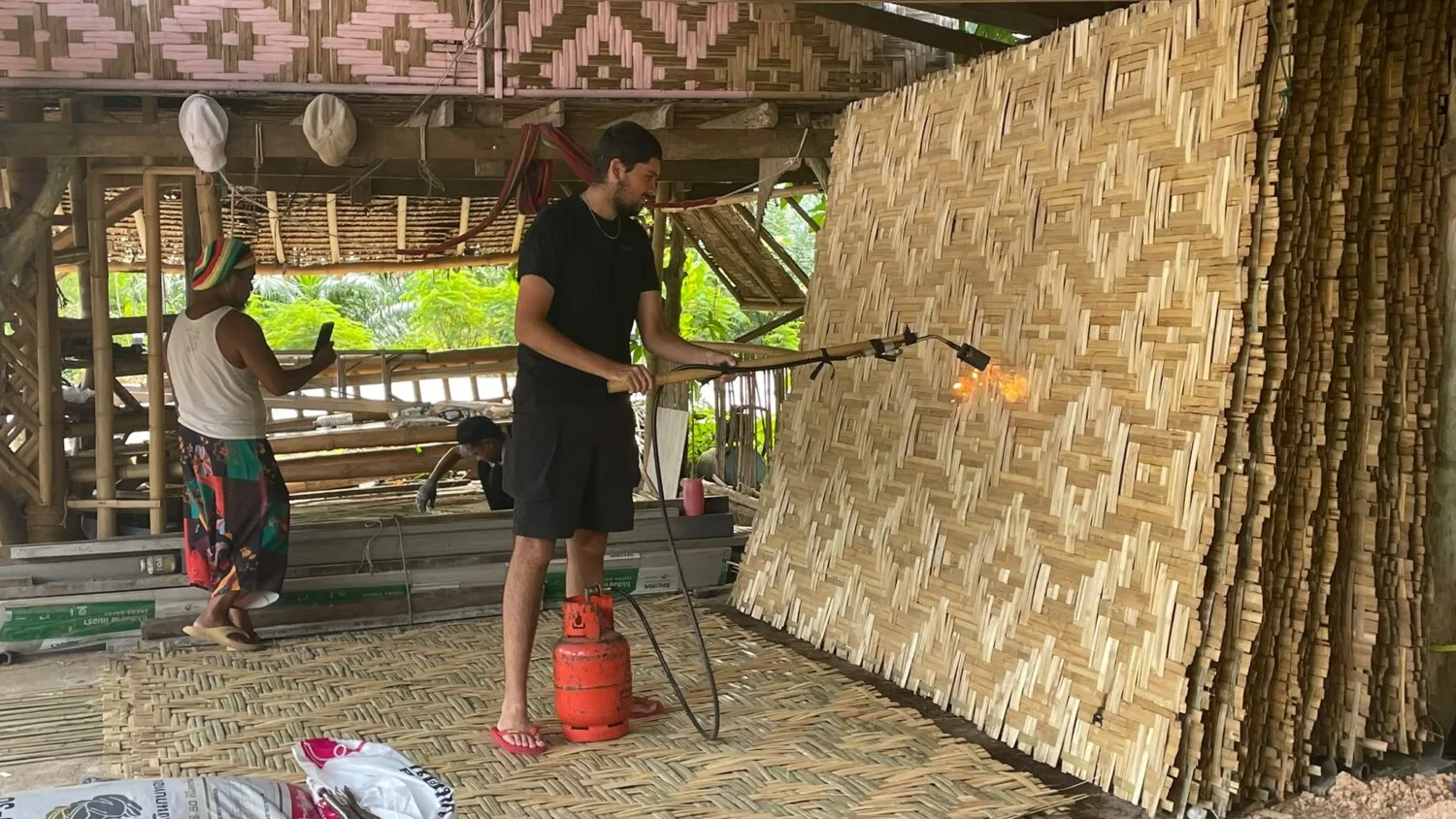
Unlike a training exercise built to simulate a job site, nothing here is staged. Every wall the students brace, every beam they help lift into place, is part of a building that will be used by children in this community for years to come. Students are not constructing a demonstration wall that will be torn down at the end of the programme — they are learning construction, carpentry, and structural repair directly from experienced local craftsmen, on a building whose survival depends on getting the work right.
The internship weaves together several threads at once: sustainable construction, heritage preservation, humanitarian learning, traditional craftsmanship, community engagement, cultural exchange, and environmental responsibility. None of these sit apart from the others. The carpentry lesson is also a heritage lesson; the heritage lesson is also a lesson in reducing waste; the reduction in waste is also, in its own way, an act of respect for the people who built the school in the first place and the children who will study in it next.
Working on a real project, with real consequences, produces a different kind of learning than any classroom simulation can. A mistake in a demonstration build costs nothing. A mistake in a century-old timber frame has to be understood, corrected, and learned from — which is precisely why the lessons here tend to stay with students long after the internship ends.
There is a common assumption that an old, damaged building should simply be replaced — that demolition and new construction are the practical choice, and preservation is sentimental. In many cases the opposite is true. A wooden structure that has already stood for 111 years has proven something a new building cannot: that its design, its materials, and its craftsmanship suit the place it was built in. Preserving it protects that proof, along with the memories and local identity bound up in the building itself.
Restoration also tends to generate far less waste than demolition and rebuilding. Timber that can be repaired, reinforced, or spliced rather than replaced stays out of a landfill. Foundations and structural elements that remain sound are simply built upon, rather than broken apart and re-poured. Extending the working life of an existing structure is, in a very literal sense, one of the most sustainable choices a community can make — long before anyone installs solar panels or talks about “green building.”
Restoration also demands a specific kind of knowledge that new construction does not: reading a structure that already exists, understanding why it was built the way it was, and working out how to intervene without erasing the evidence of its history. Learning to see the marks of the original builders — the way a joint was cut, the way a beam was oriented to shed water — is itself a form of education you cannot get from a textbook.
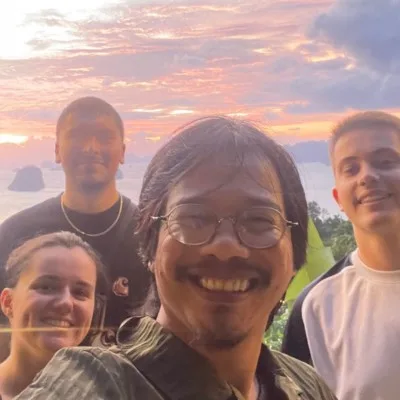
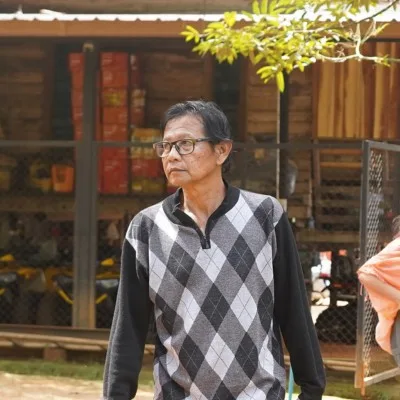
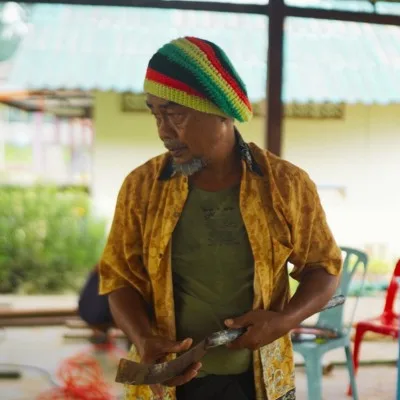
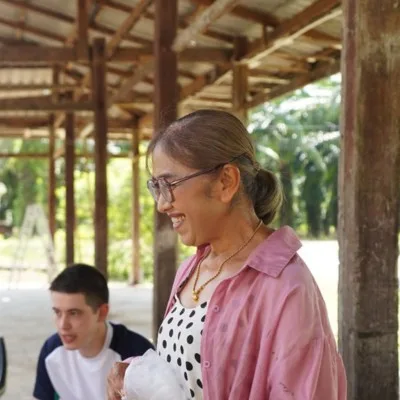
No restoration happens in isolation. Behind the Eco-Construction Internship is a small group of people — a builder, a host, a cook, and a director — whose knowledge and hospitality shape the experience as much as the construction work itself.
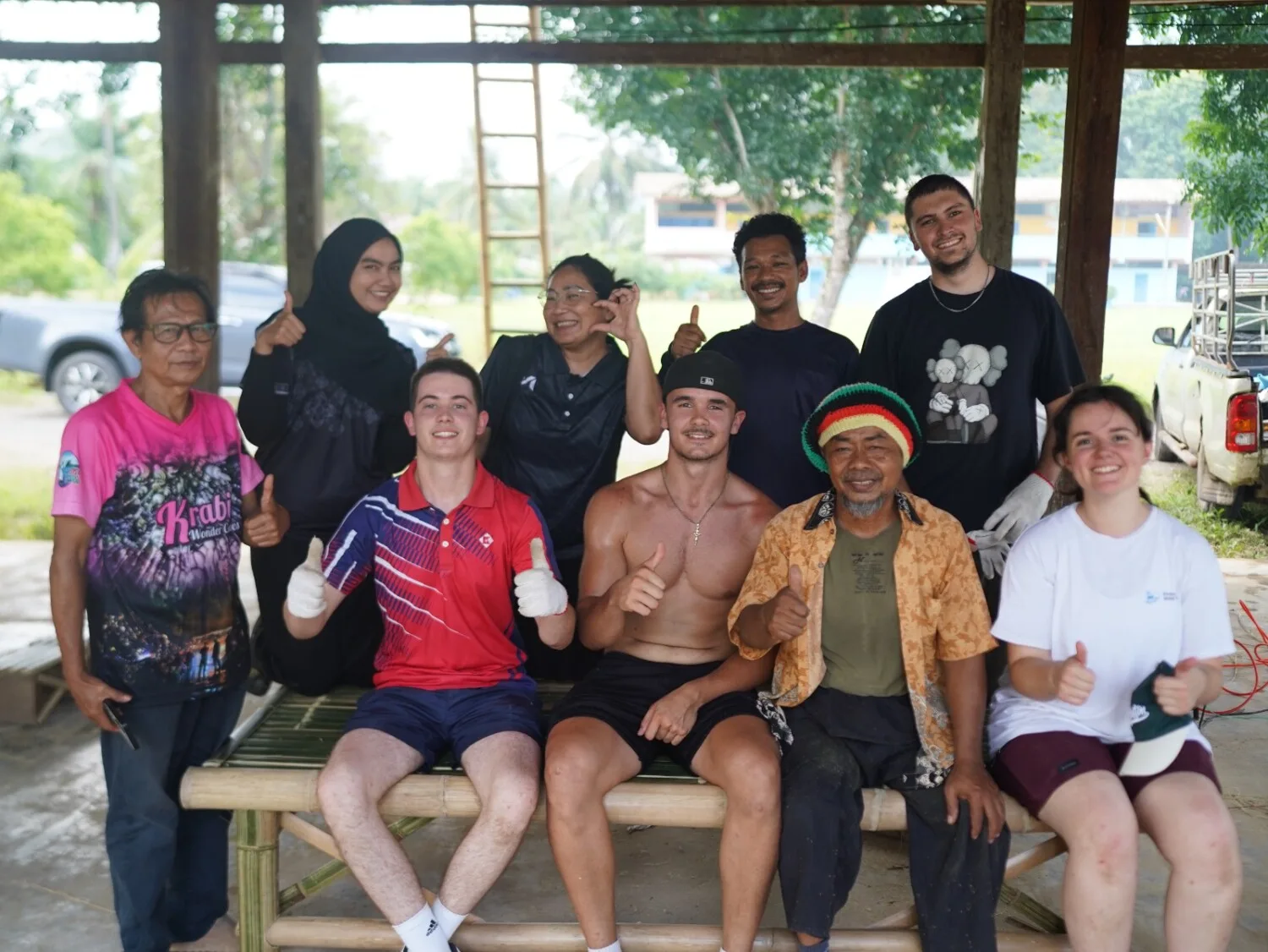
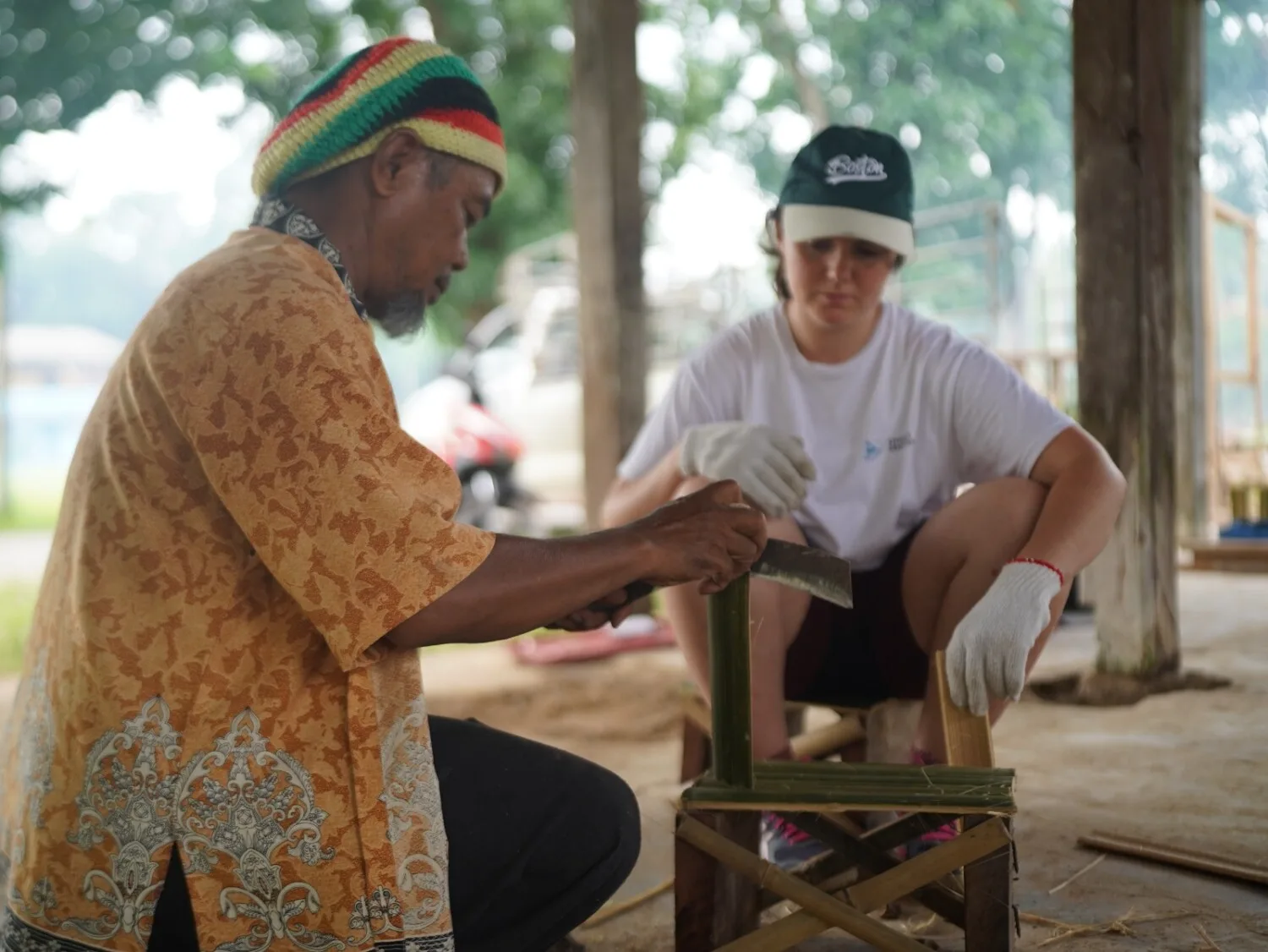
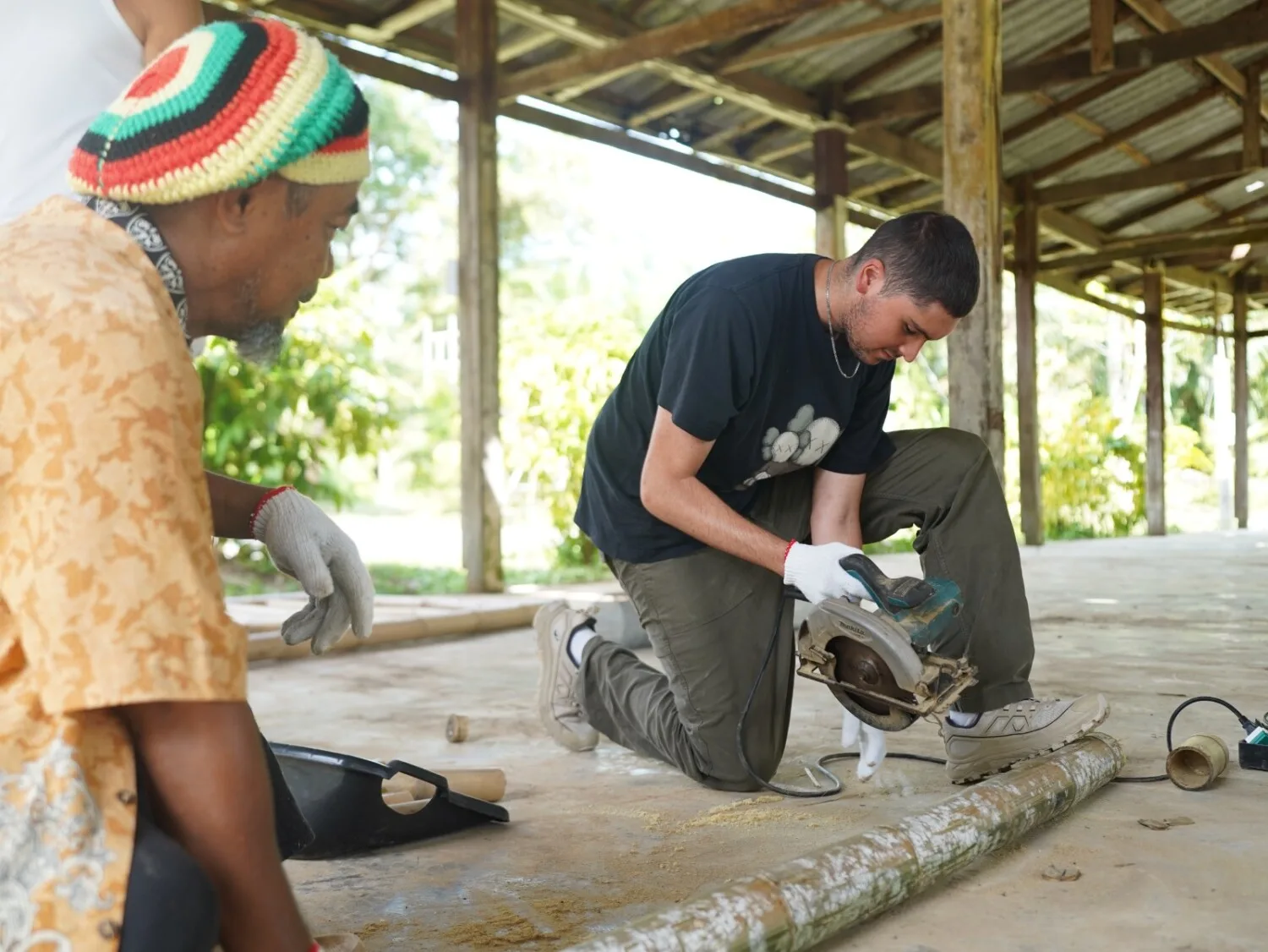
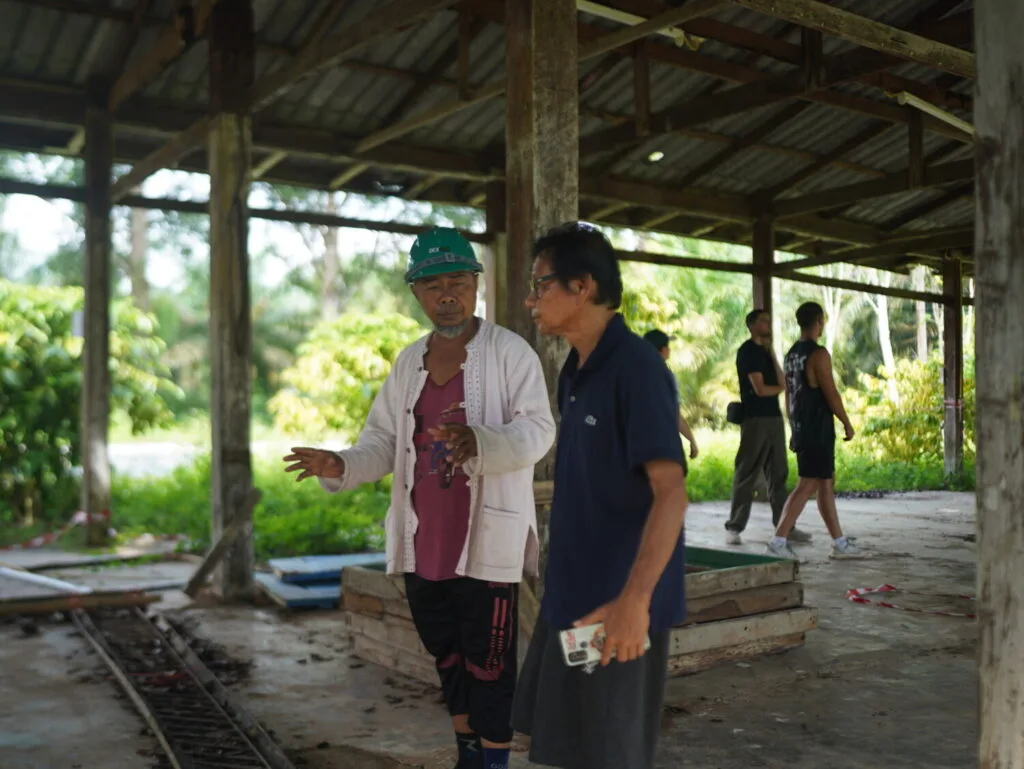
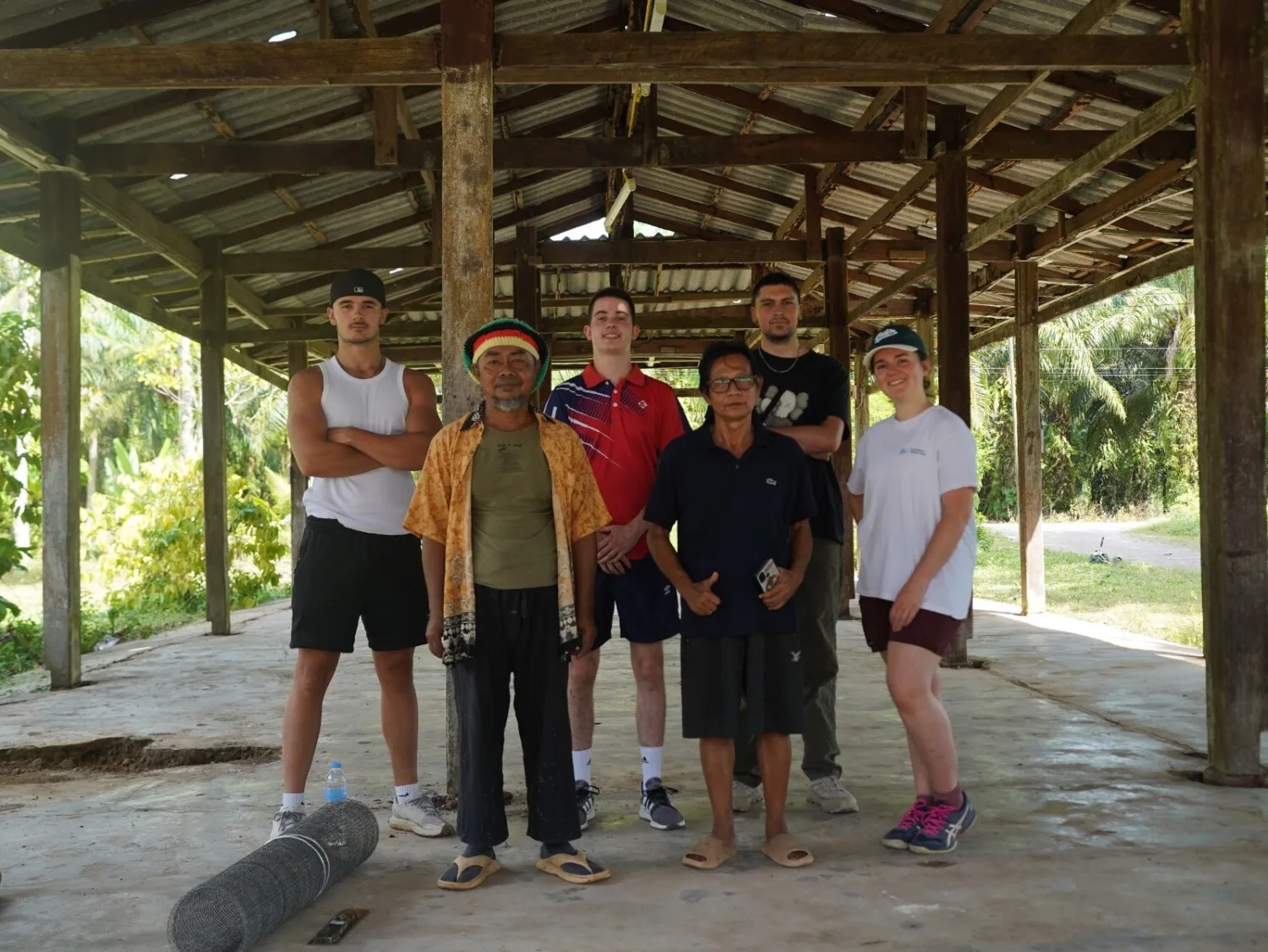
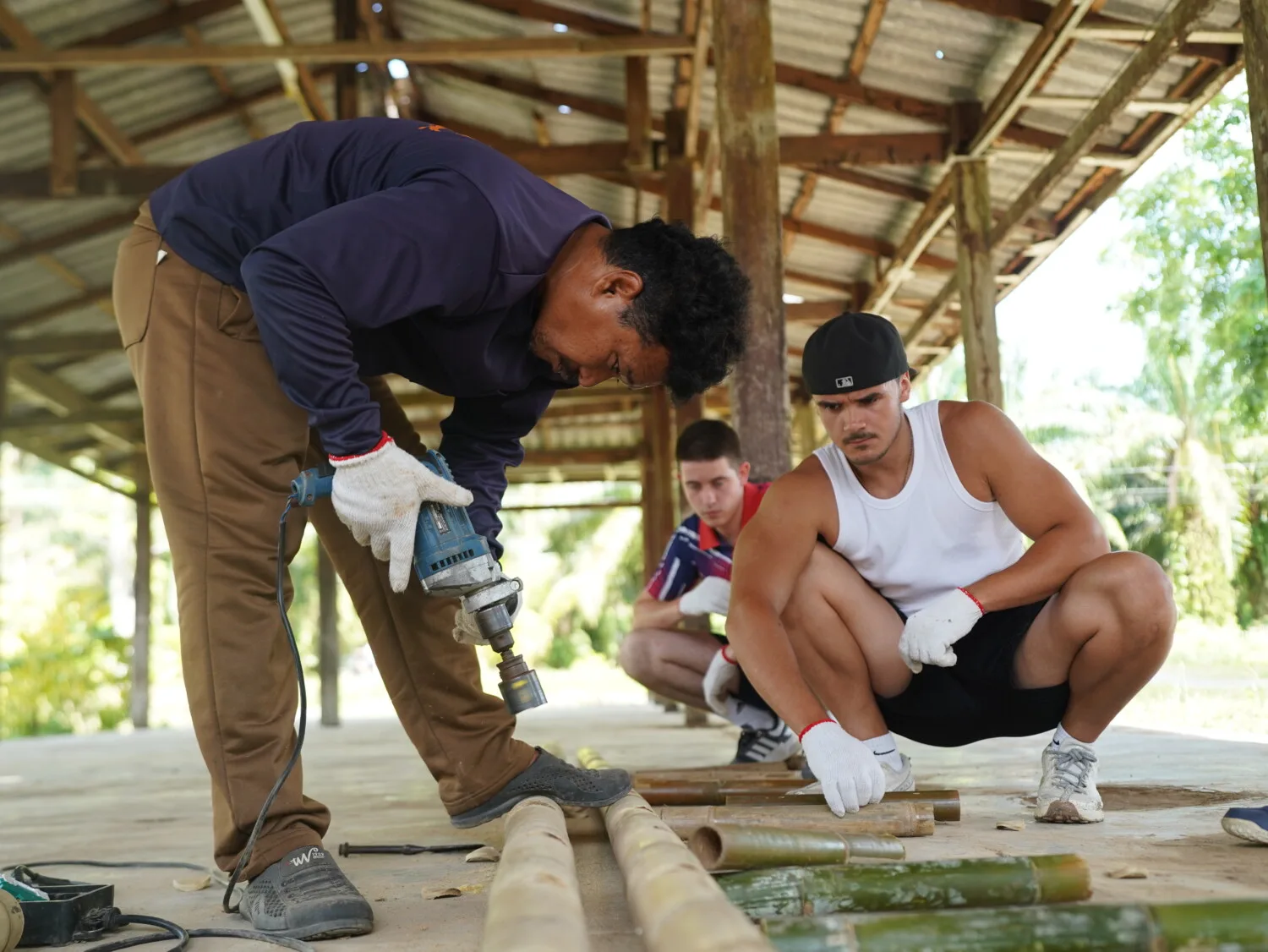
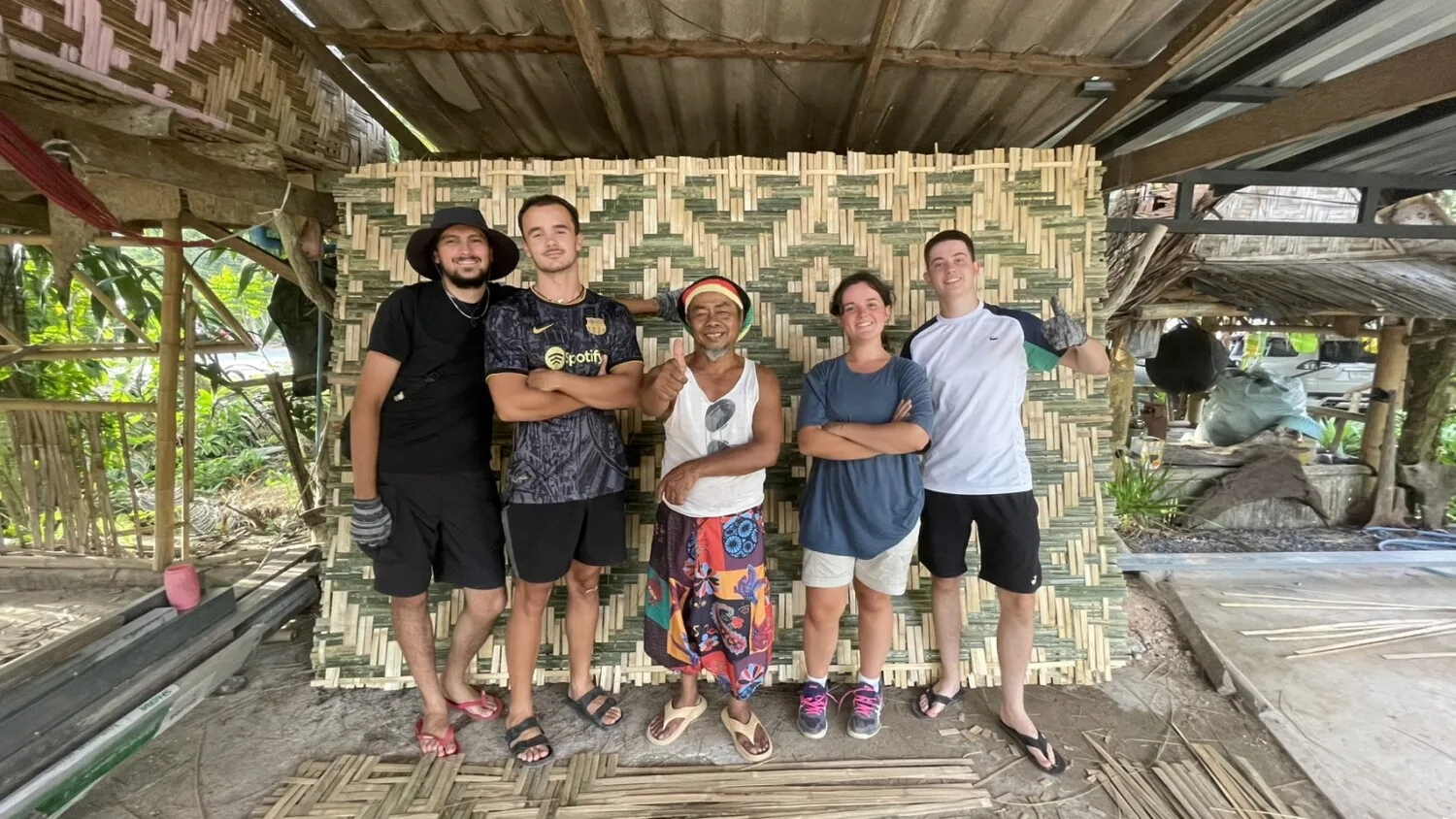
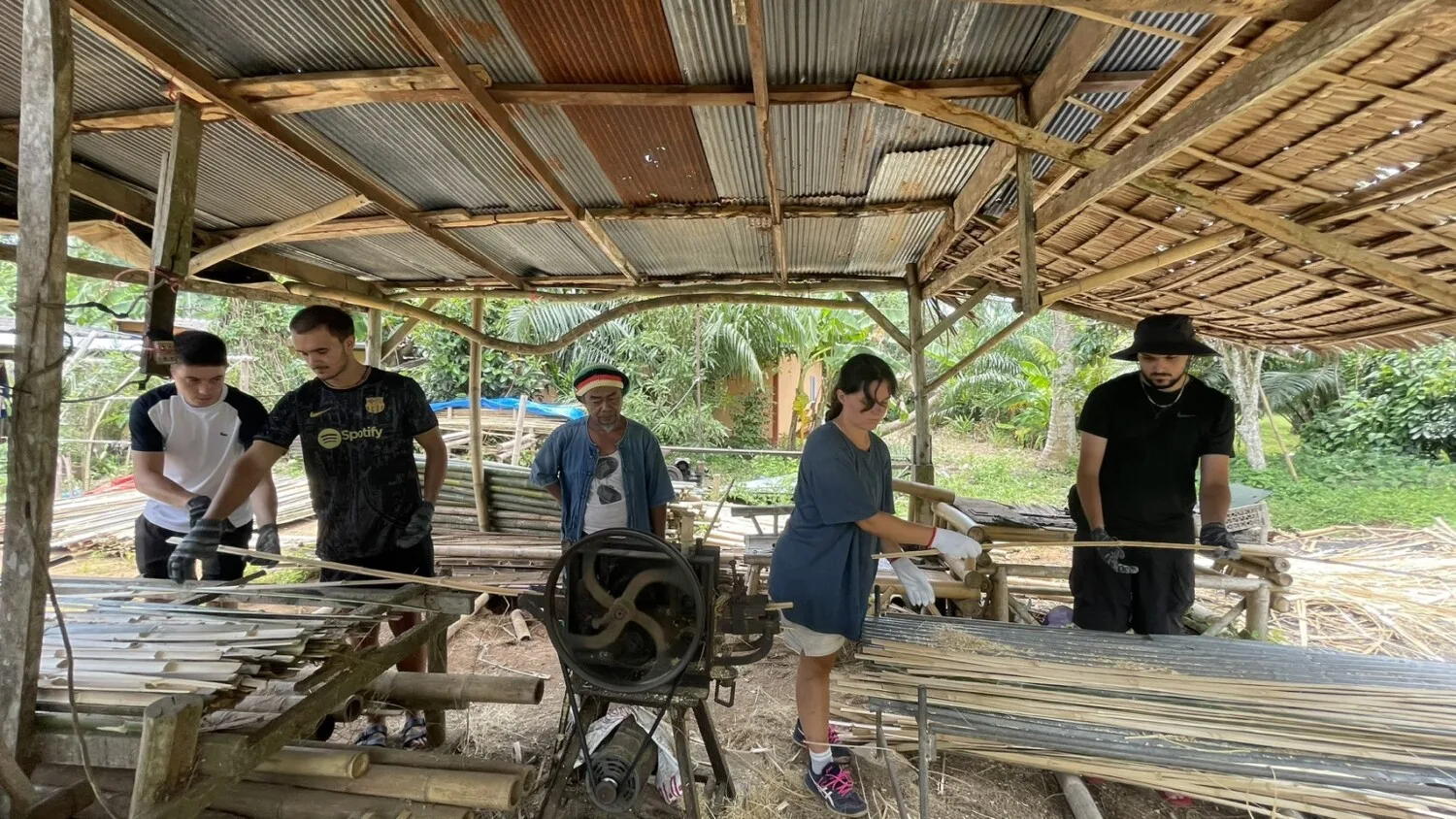
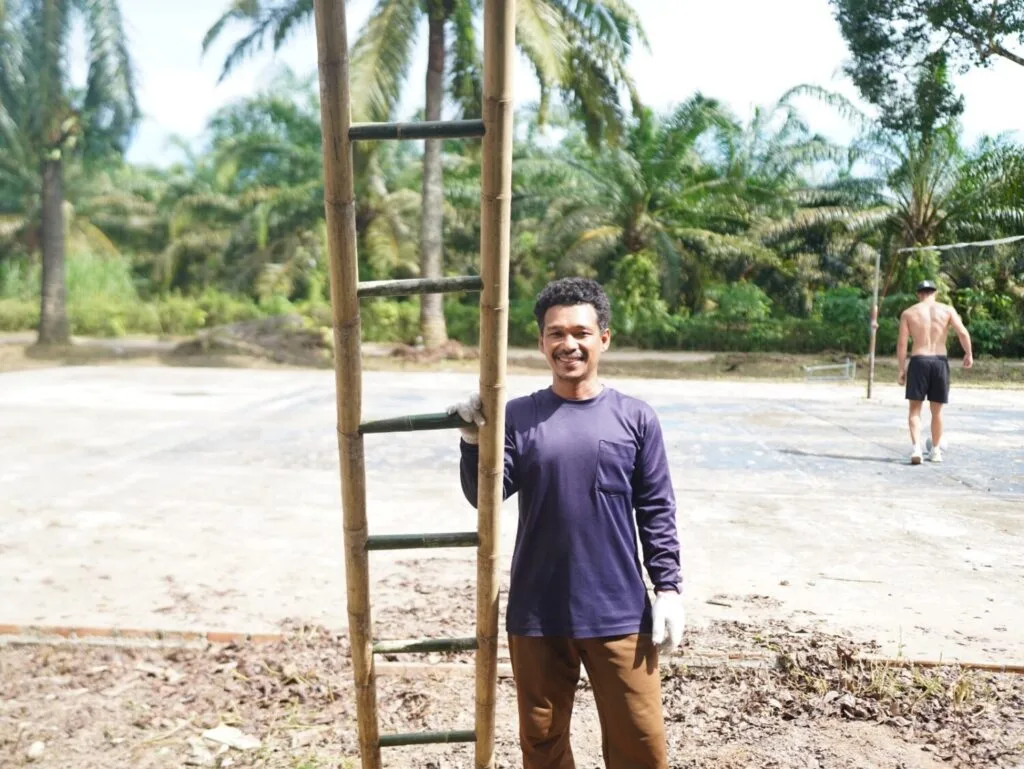
Bang Ree has spent more than 33 years working with bamboo construction, and that experience shapes everything he teaches, even though this project centres on restoring an old wooden building rather than raising a new bamboo structure. His understanding of structural systems, timber preservation, and traditional joinery gives students a way of seeing the school that goes beyond its visible damage. Under his guidance, they learn to read how the building was originally put together, and — just as importantly — to recognise when a damaged section can be reinforced and preserved rather than torn out and replaced.
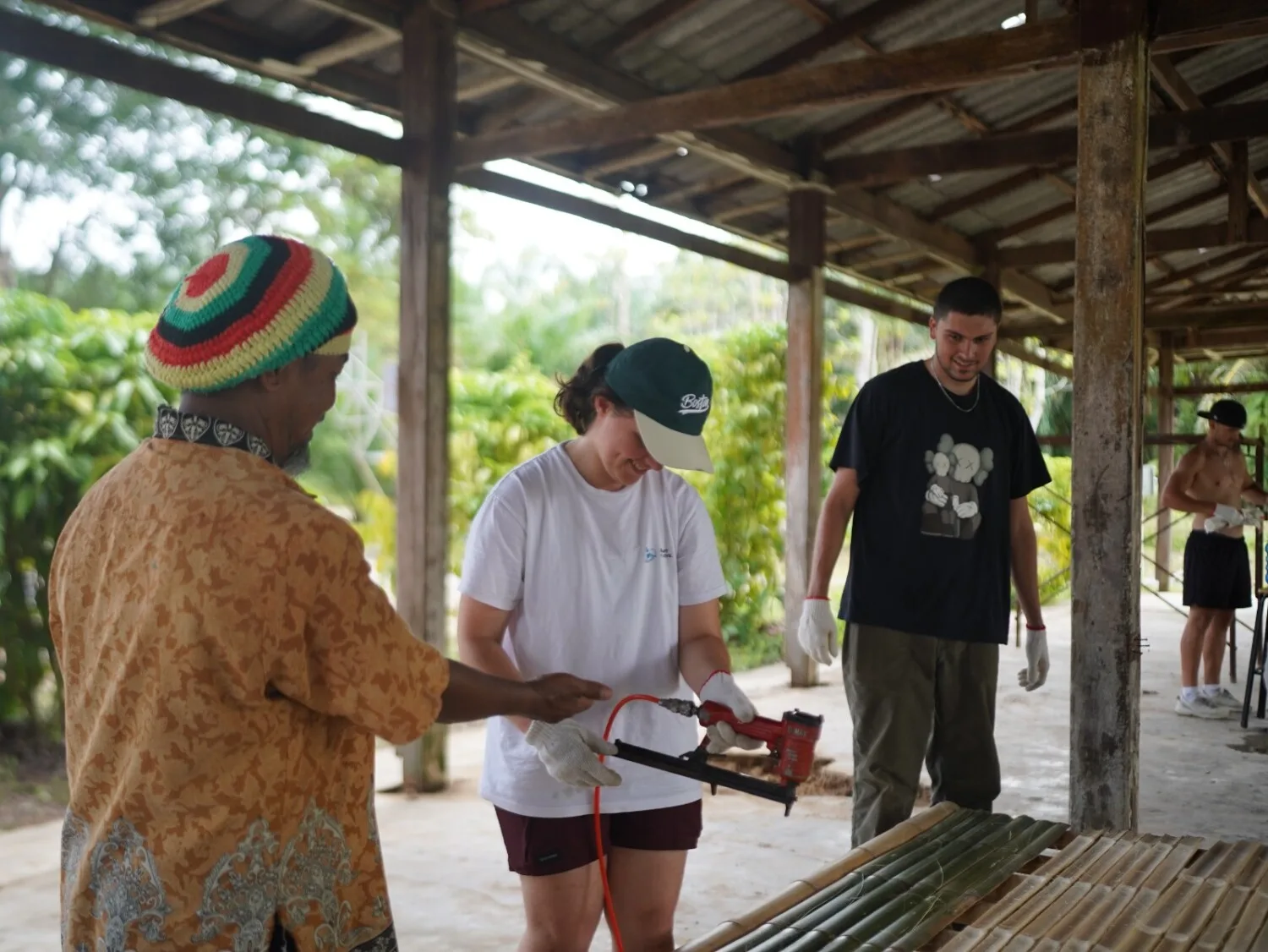
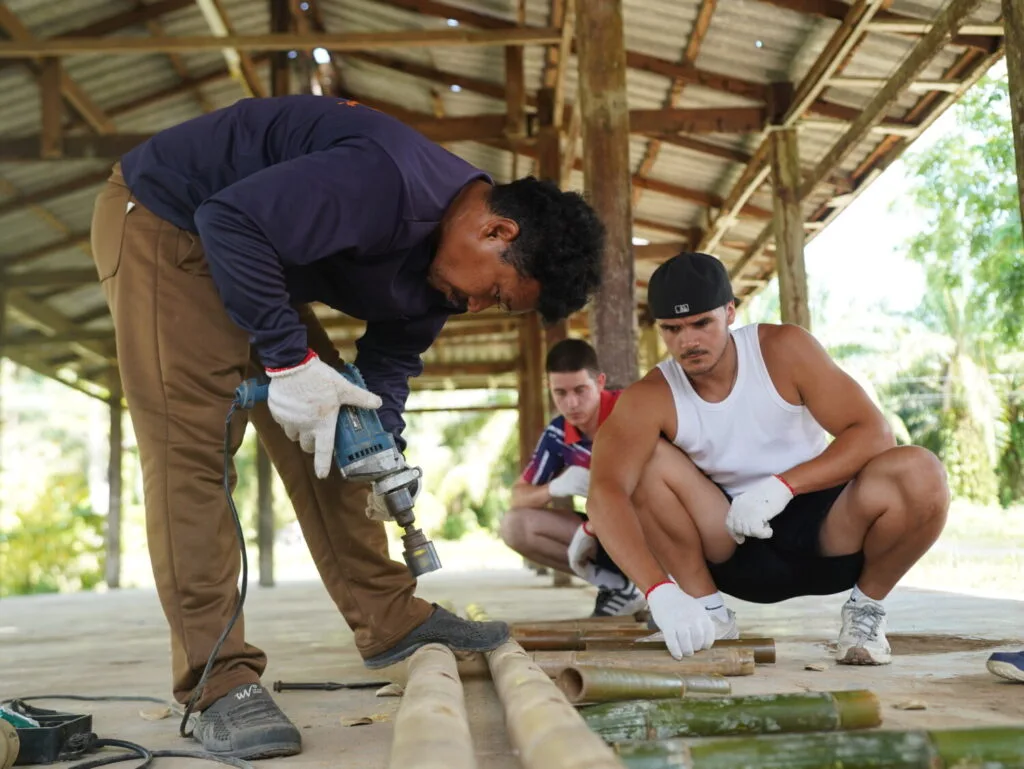
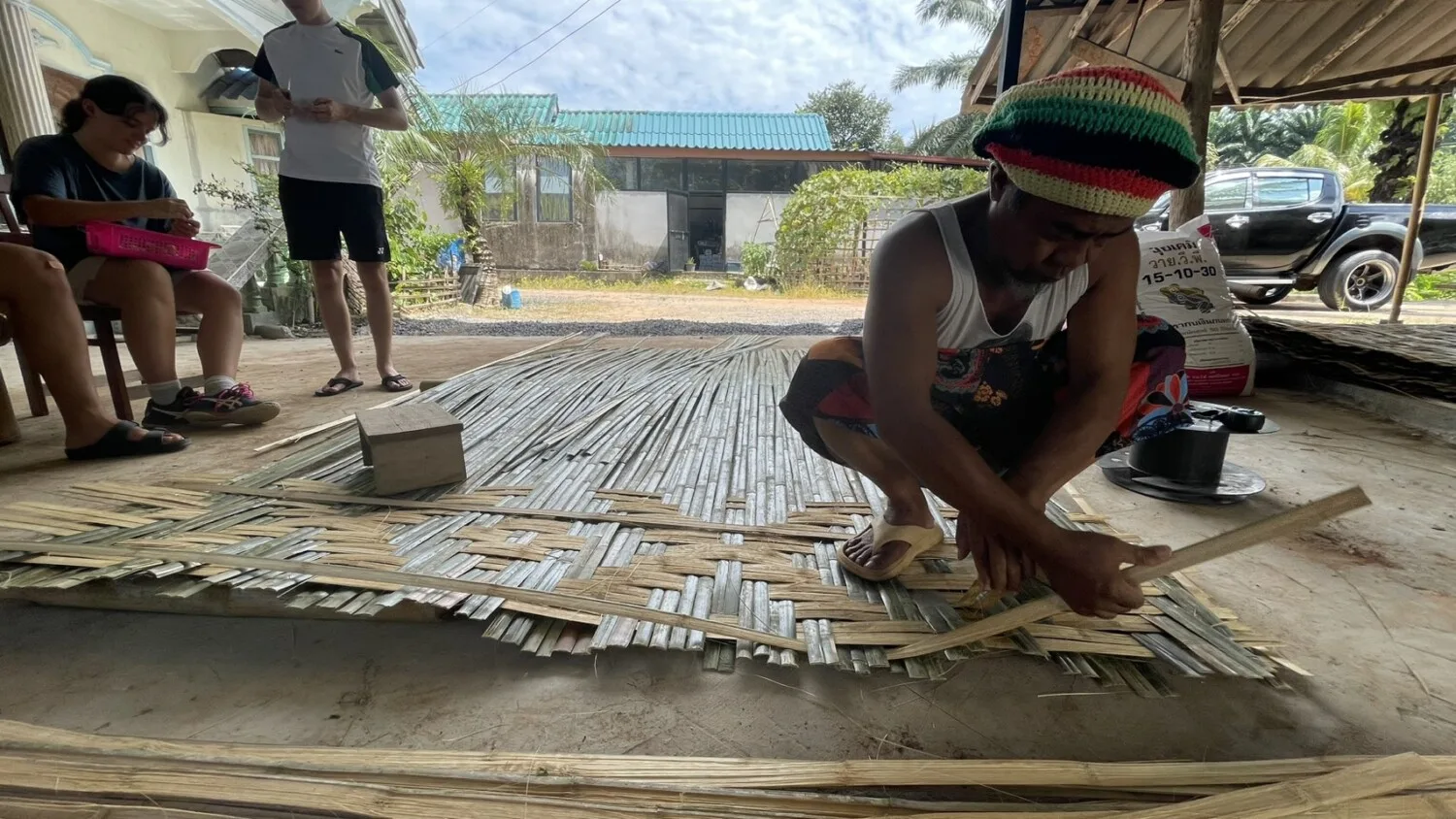
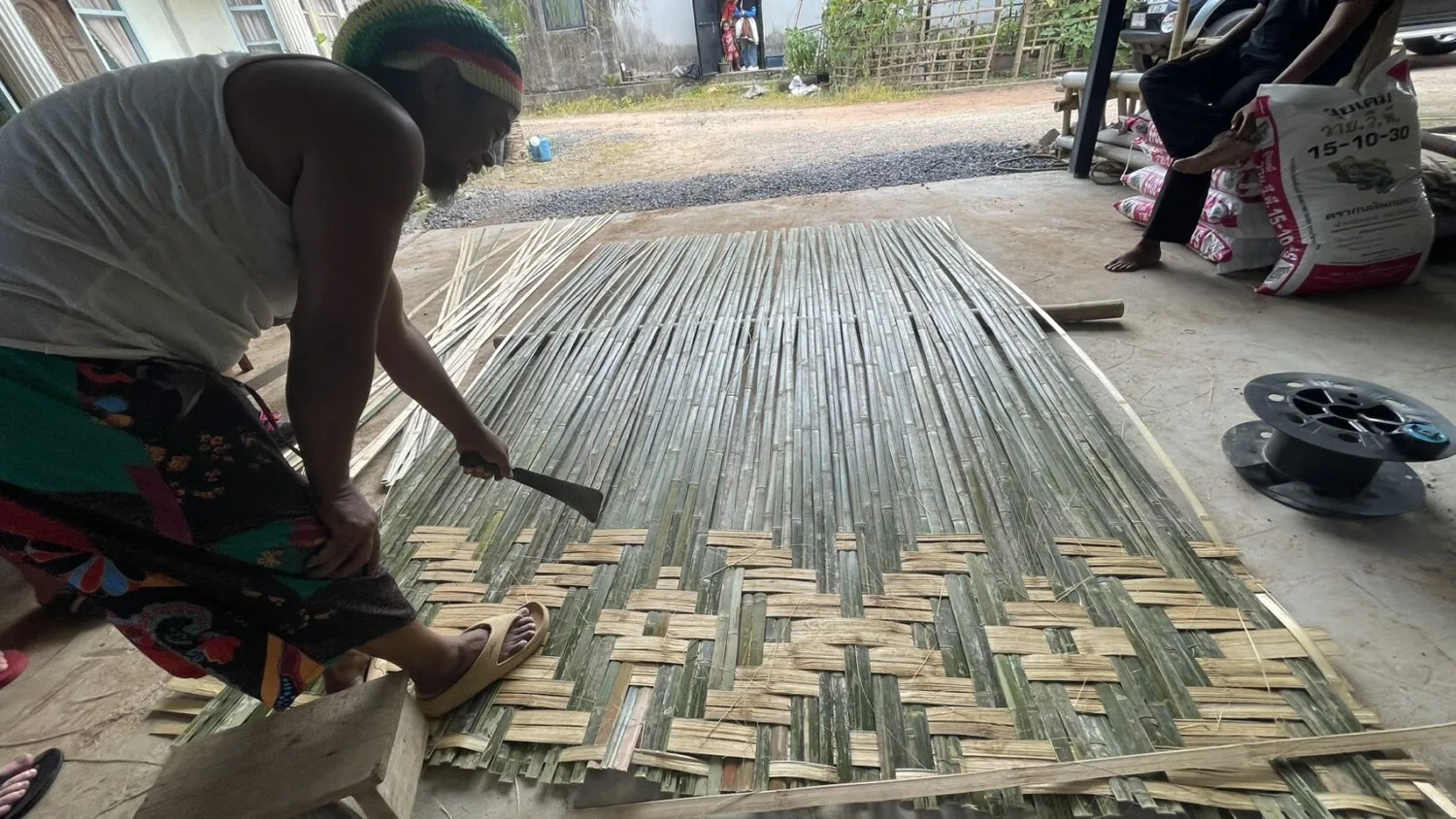
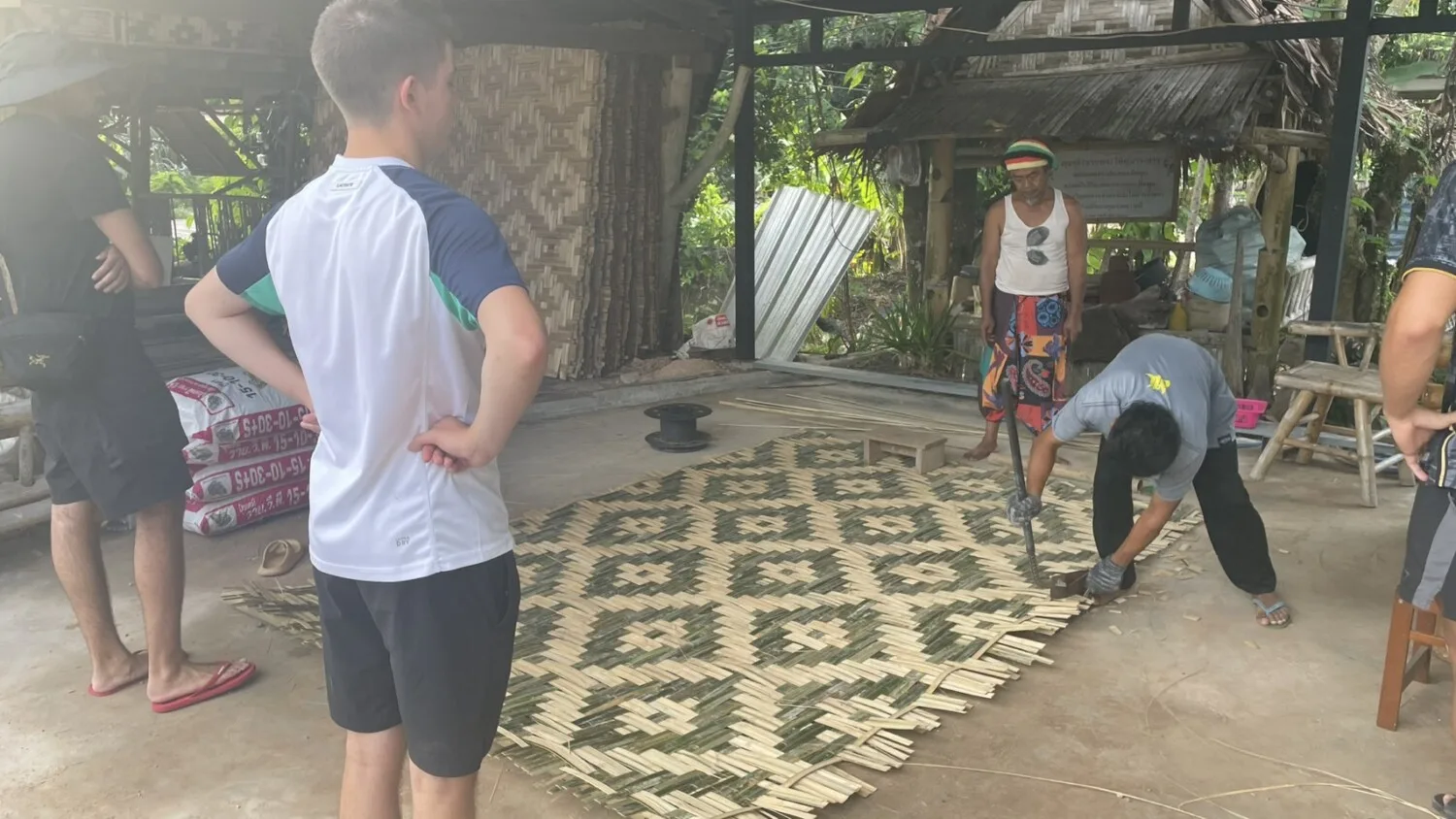
Bang Ree teaches the way a craftsman teaches: by demonstration, correction, and repetition, rather than by lecture. His lessons emphasise patience and observation as much as technique — students often spend a long time simply watching before they are handed a tool. It is knowledge passed from one generation to the next, not through documentation, but through hands working alongside hands.
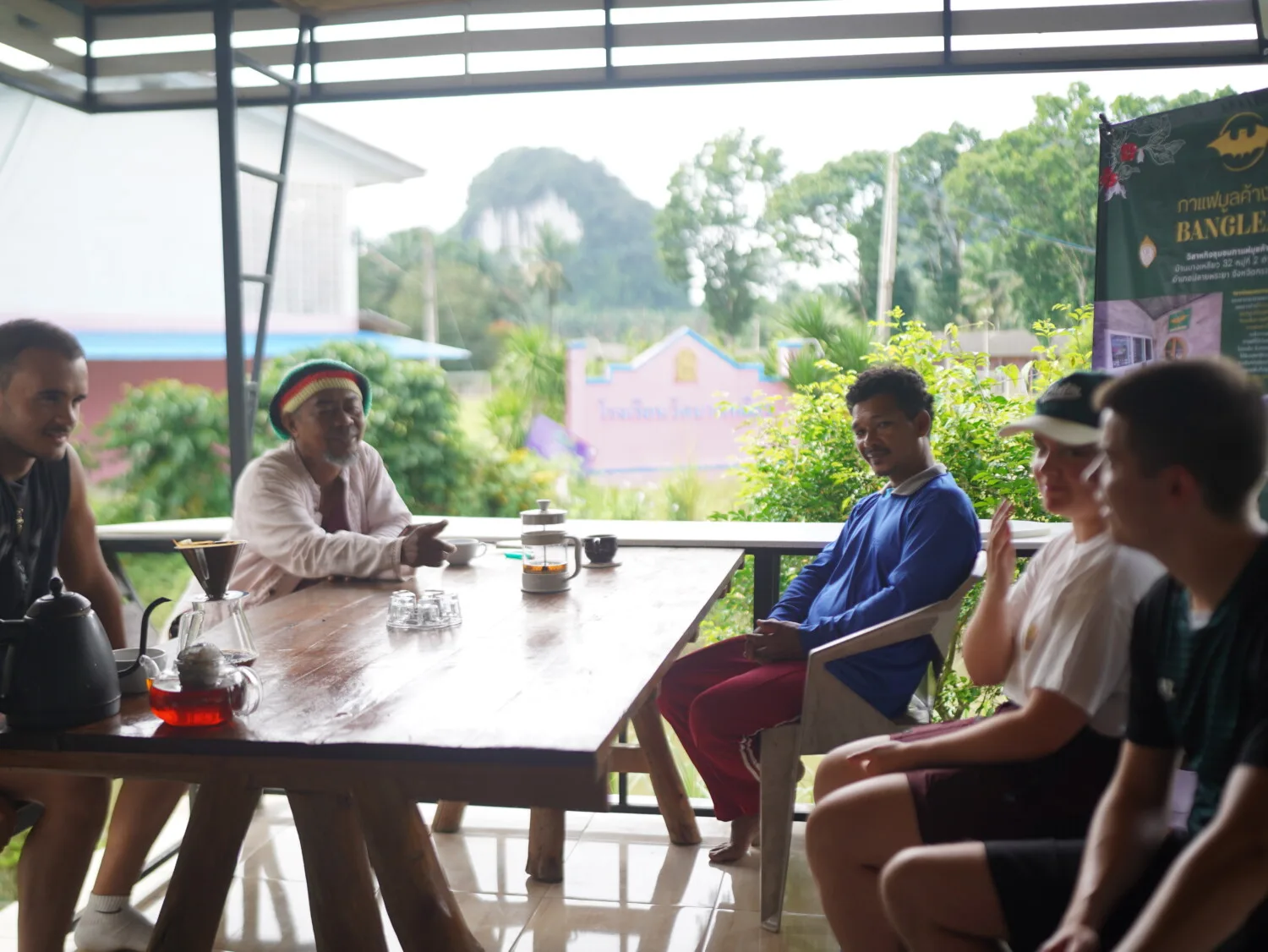
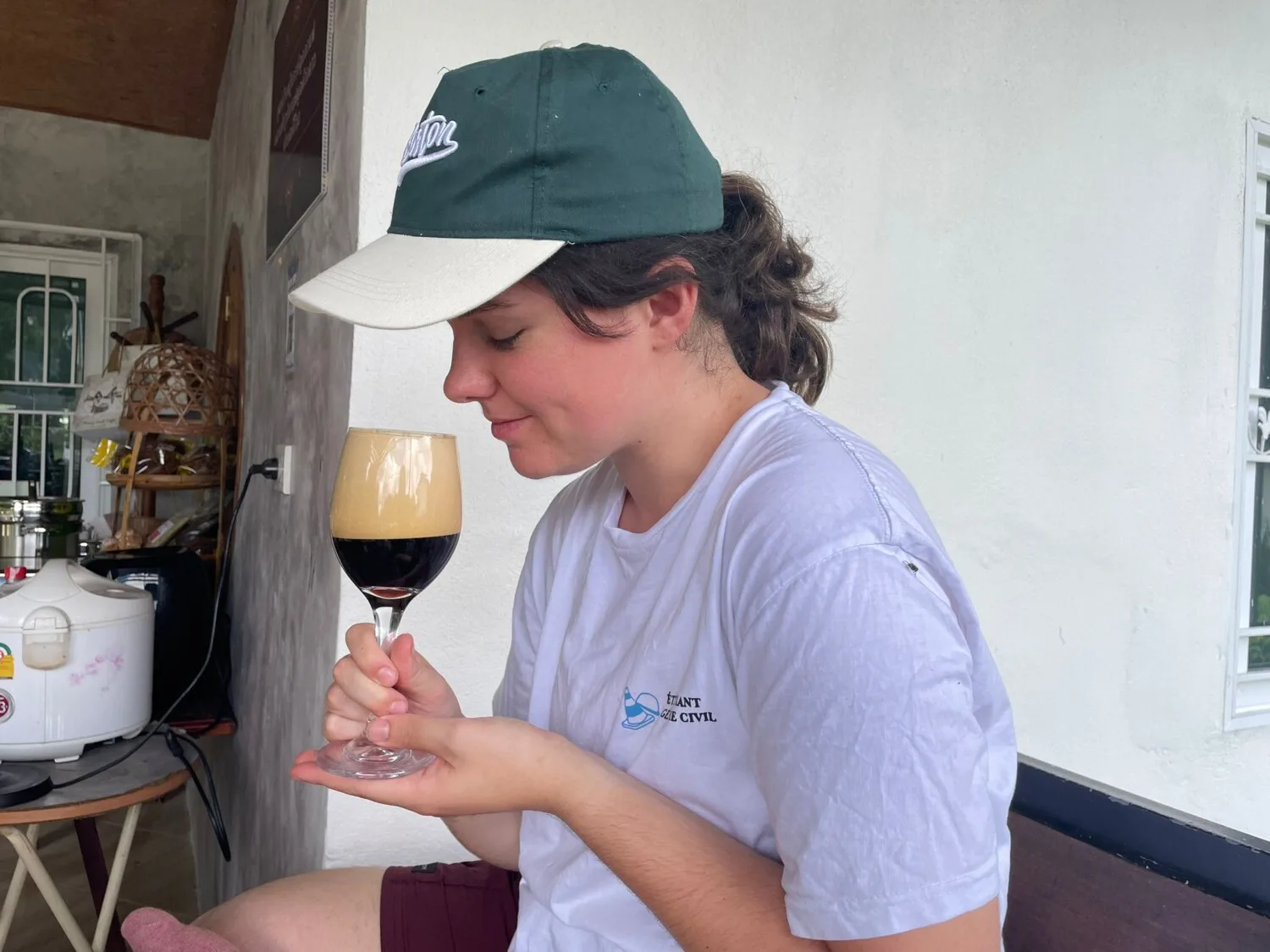
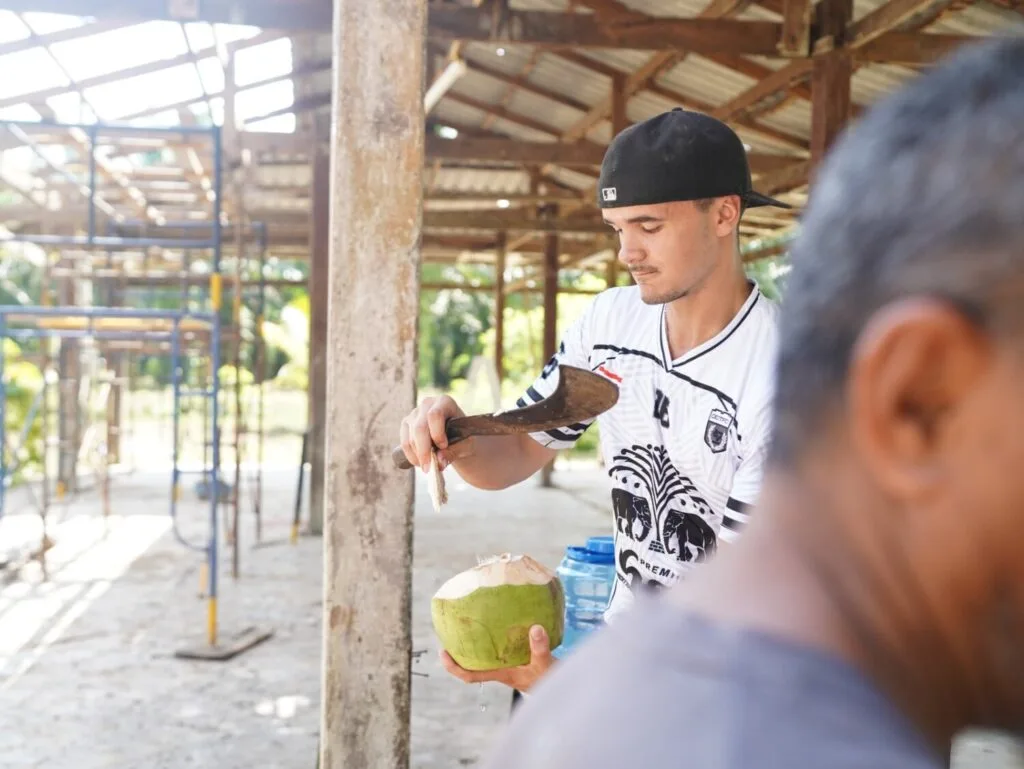
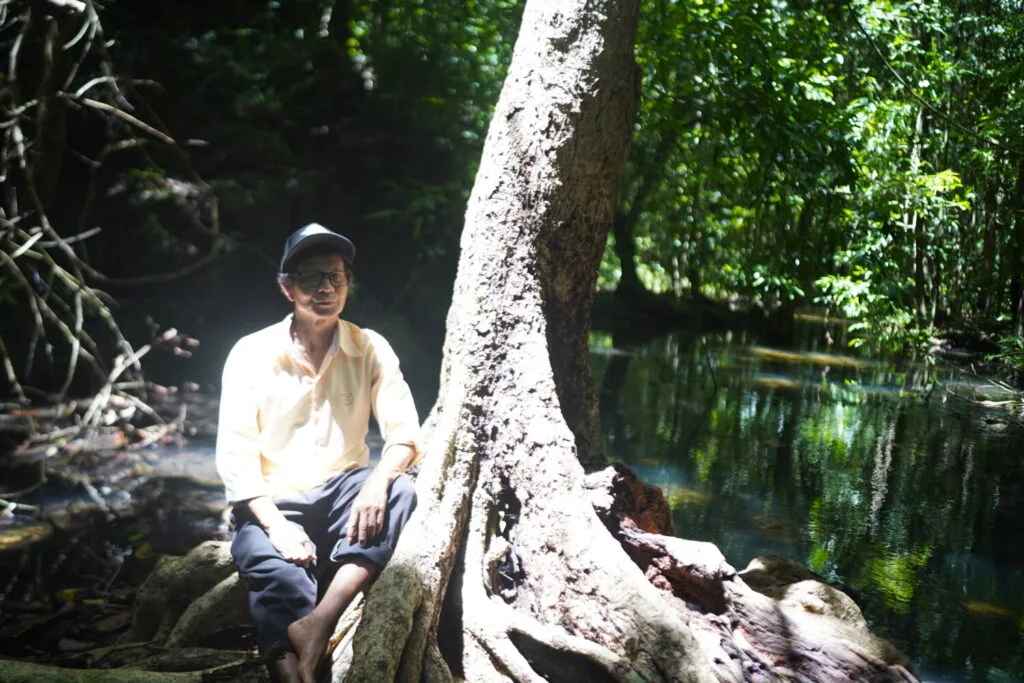
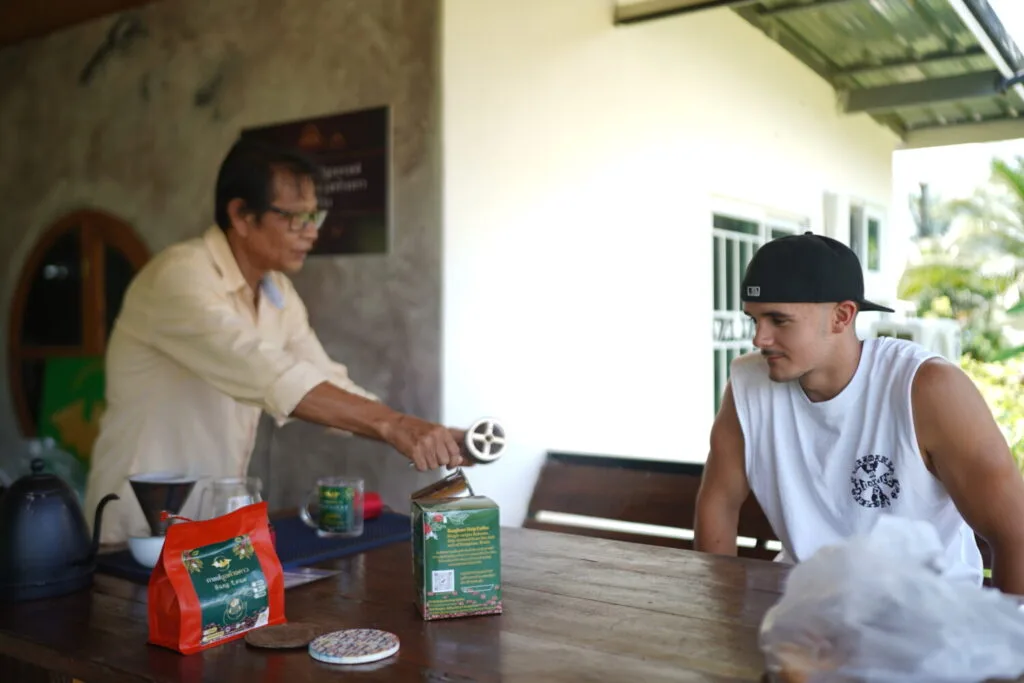
Khun Khet welcomed the students into the local community, offering far more than a place to stay. Through his own locally grown Bat Coffee, he introduced students to another form of sustainability entirely — one rooted in the surrounding landscape rather than the construction site. The coffee is fertilised naturally with bat guano collected from nearby caves, a practice that shows how traditional agricultural knowledge and the local ecosystem can support one another without artificial inputs.
The coffee itself becomes an occasion. Sitting together over a cup, students and residents fall into conversation — about farming, about family, about the differences between where the students come from and where they now find themselves. These are small, unplanned moments, but they are where much of the internship’s genuine cultural exchange takes place.
Nui hosted part of the internship group and cooked homemade Thai meals for them every day. After long hours on-site, the dinner table became its own kind of classroom — a place to try regional dishes, learn which ingredients came from which market or garden, and talk through the day’s work over food that had clearly been made with care. Sharing a meal, night after night, built a familiarity between students and hosts that construction work alone could not.
By the end of a few weeks, students could often name the dishes they had eaten, describe how they were made, and explain why a particular meal was served after a particular kind of day. Food became one more way of understanding Thai culture — and, for many, one of the things they missed most once the internship ended.
Tum created Thai Spirit Life and directs the Eco-Construction Project. His vision is straightforward but ambitious: to build experiences where education, sustainability, cultural exchange, and community development reinforce one another, rather than existing as separate items on a programme itinerary.
As director, Tum oversees the planning and coordination of the internship, making sure students gain real construction experience while becoming genuinely immersed in local life. He is careful not to let the programme narrow into a purely technical apprenticeship. Participants are encouraged to understand the cultural, environmental, and social context surrounding every task — why a technique is used here and not elsewhere, why a material was chosen, what the building means to the people who will use it.
His approach draws together real construction work, humanitarian engagement, sustainable development, cultural exchange, traditional craftsmanship, and experiential learning. Throughout the internship he works closely with local craftsmen, hosts, and community members to keep the programme balanced — so that students contribute meaningfully to a real restoration while also building lasting relationships with the people and culture of southern Thailand. His leadership favours collaboration over instruction: students are expected to learn as much from the community — its knowledge, its traditions, its daily rhythms — as they do from the construction site itself.
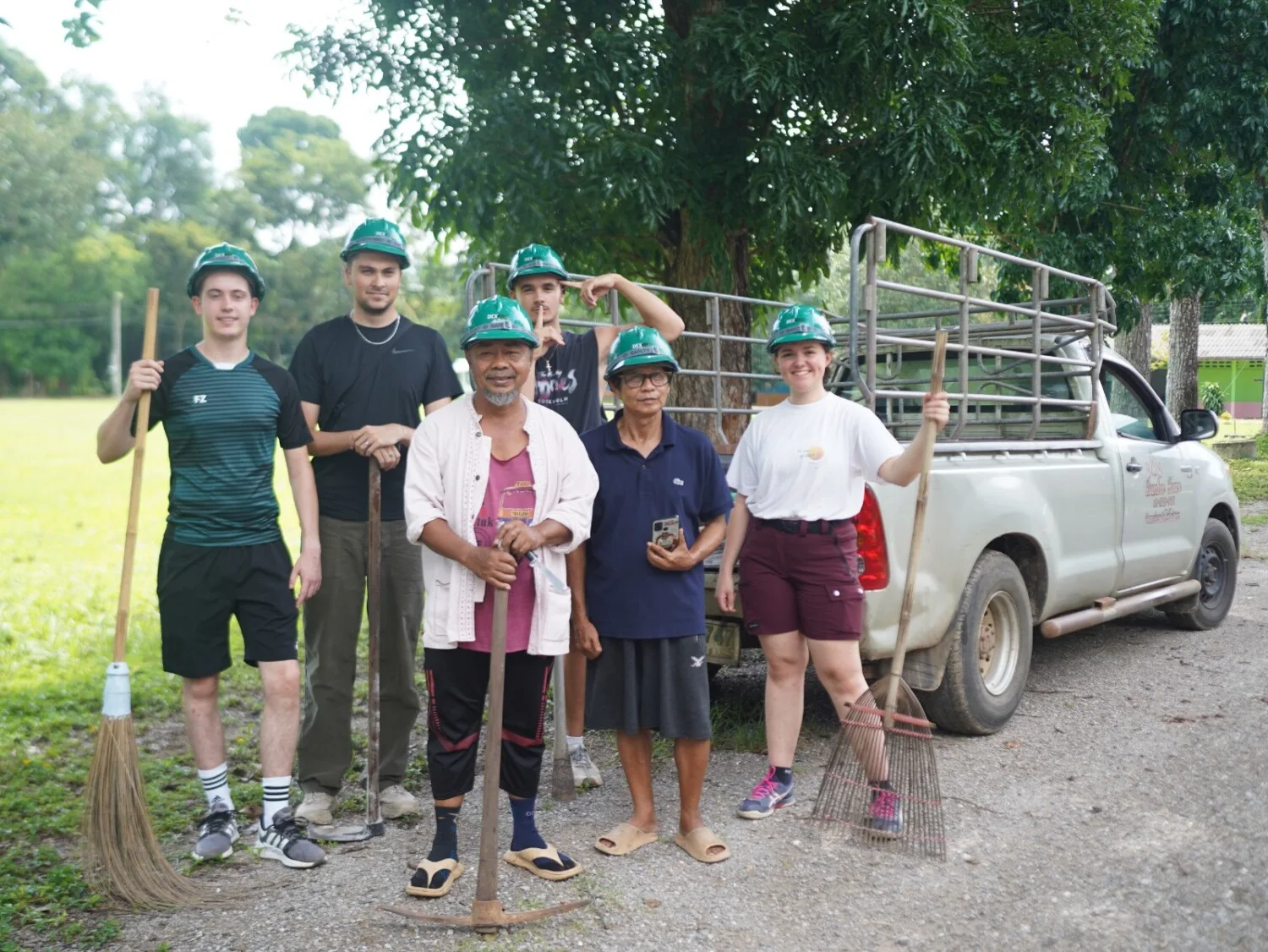
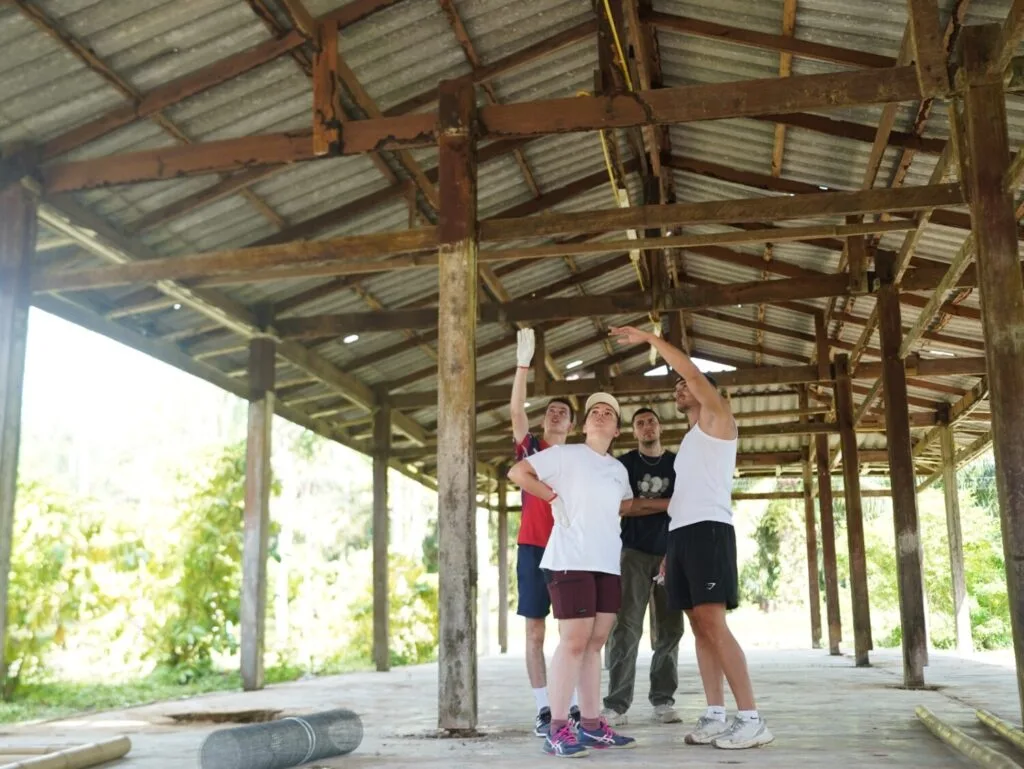
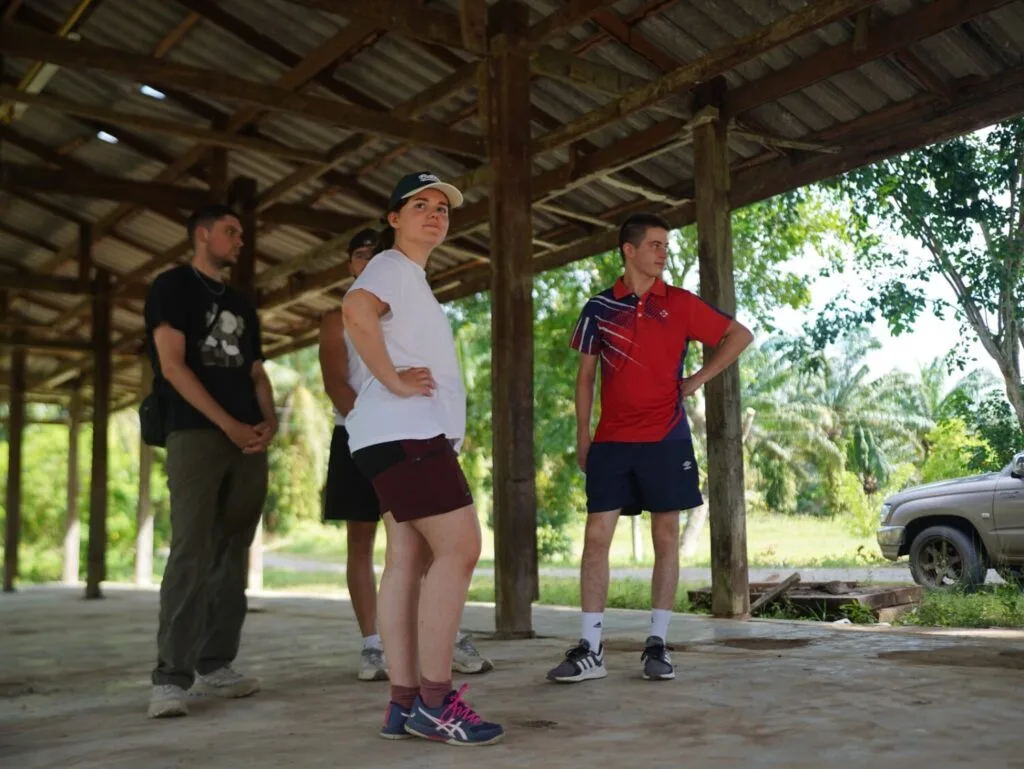
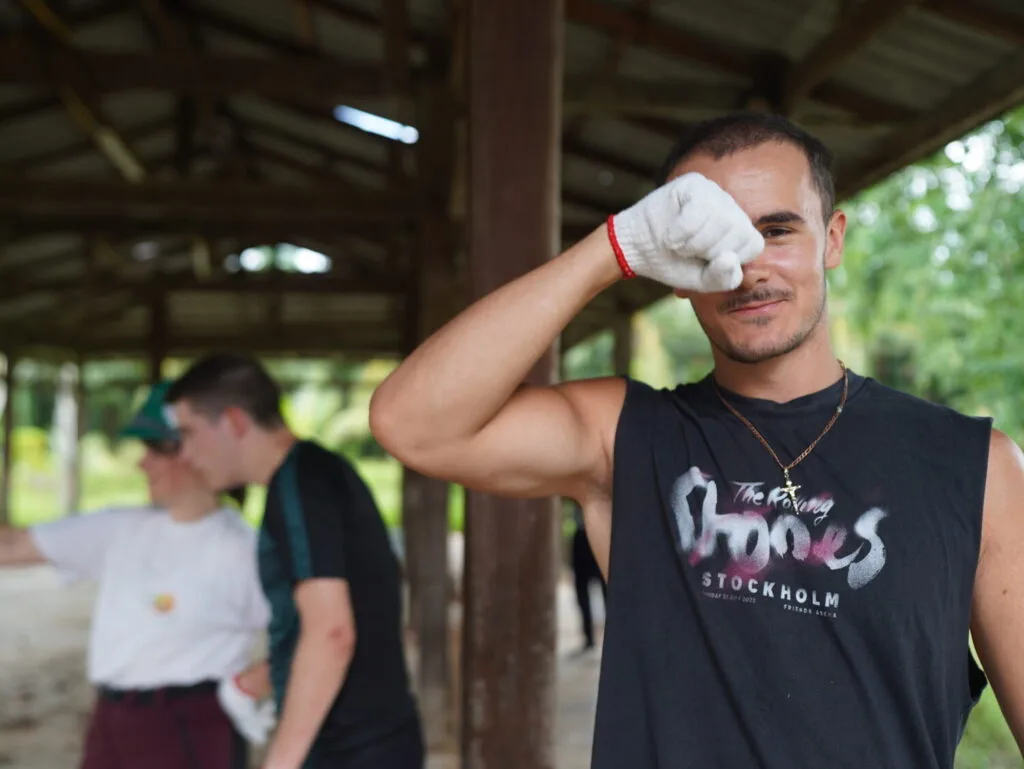
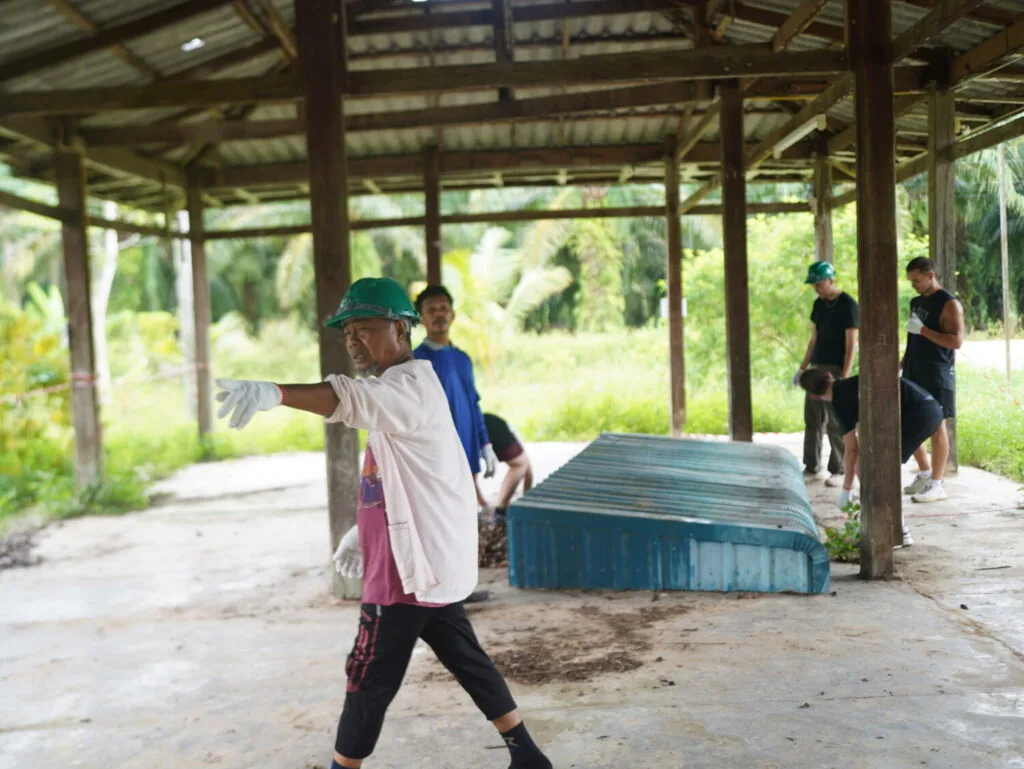
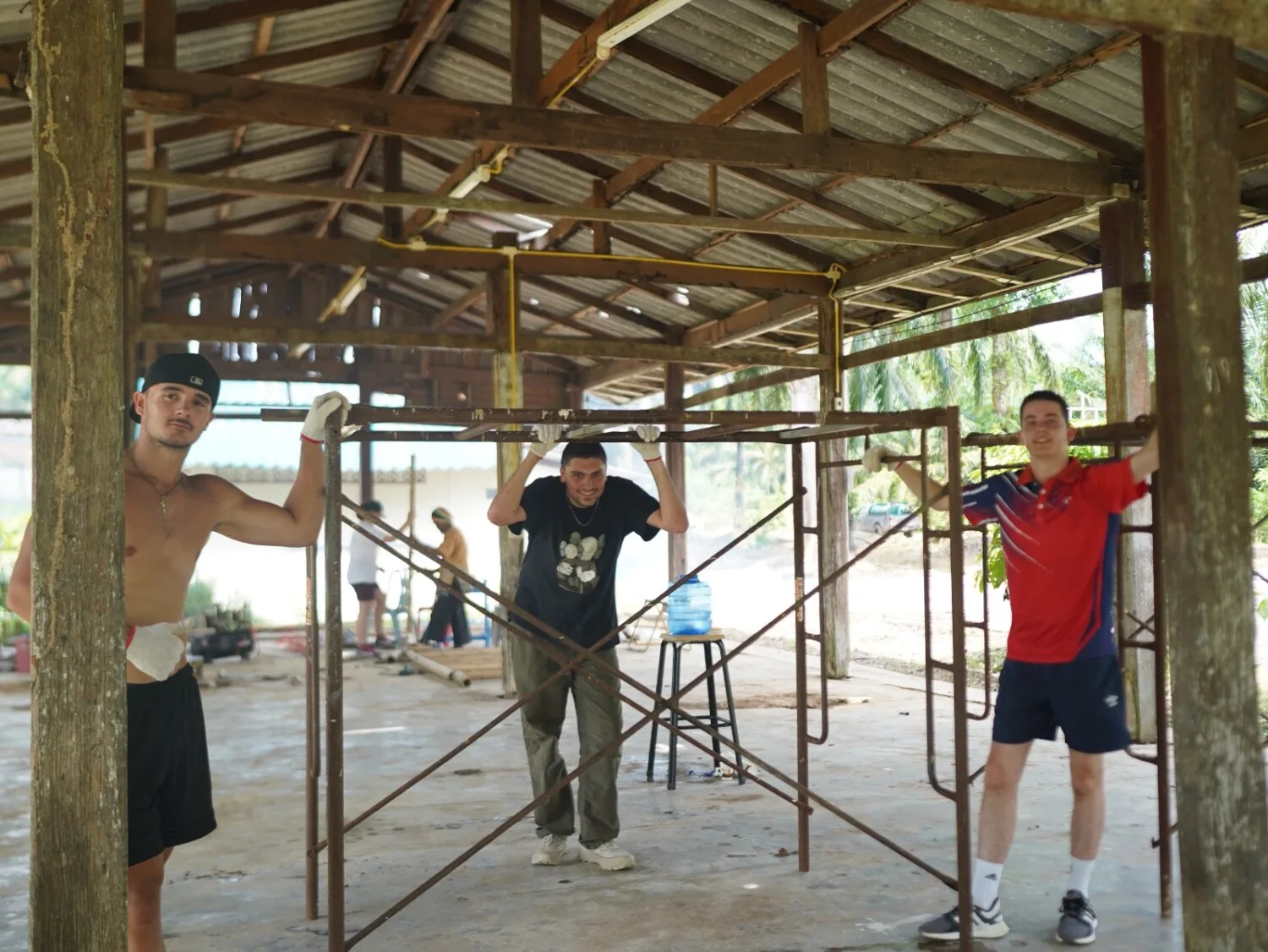
The first week was, above all, about adaptation. Students newly arrived in Thailand had to adjust to the tropical climate, unfamiliar food, and a daily rhythm quite different from home. Before any construction could begin in earnest, the team turned to preparing the site: clearing the abandoned building of years of accumulated debris, removing waste, and assessing what remained of the original flooring, much of which needed to be restored before work could continue.
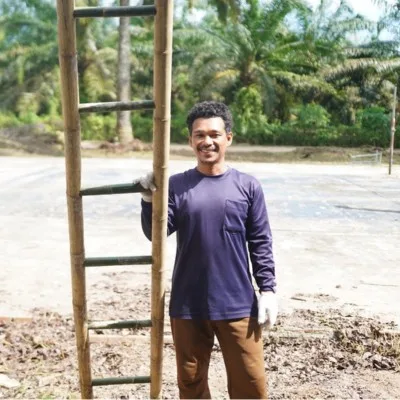
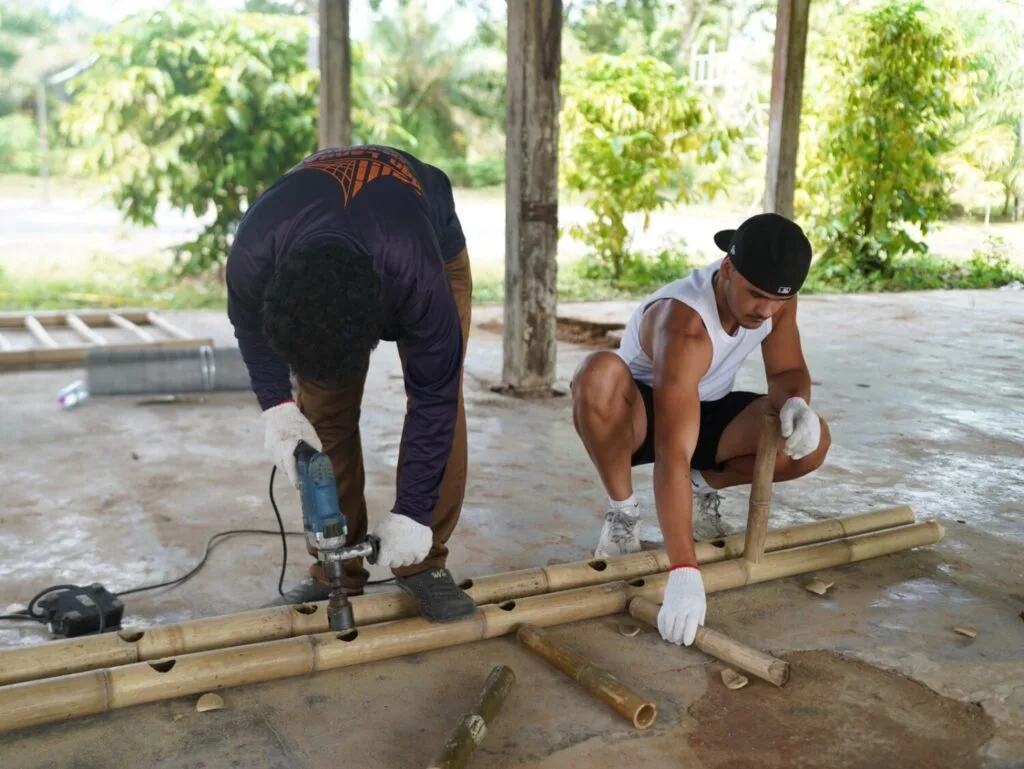
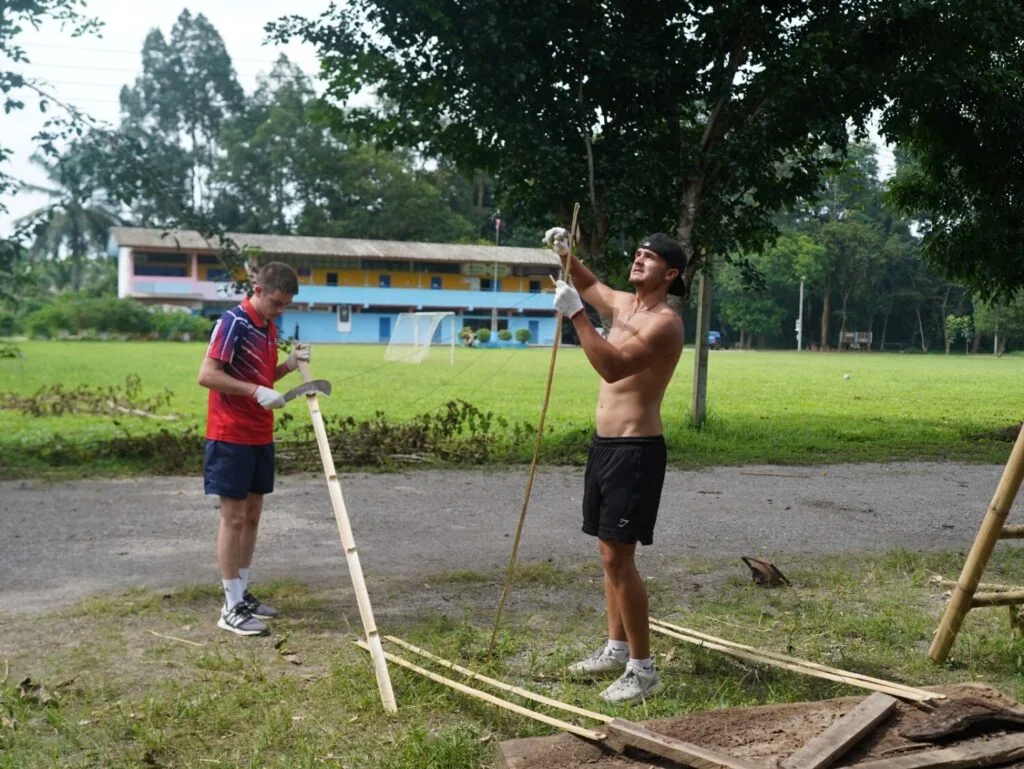
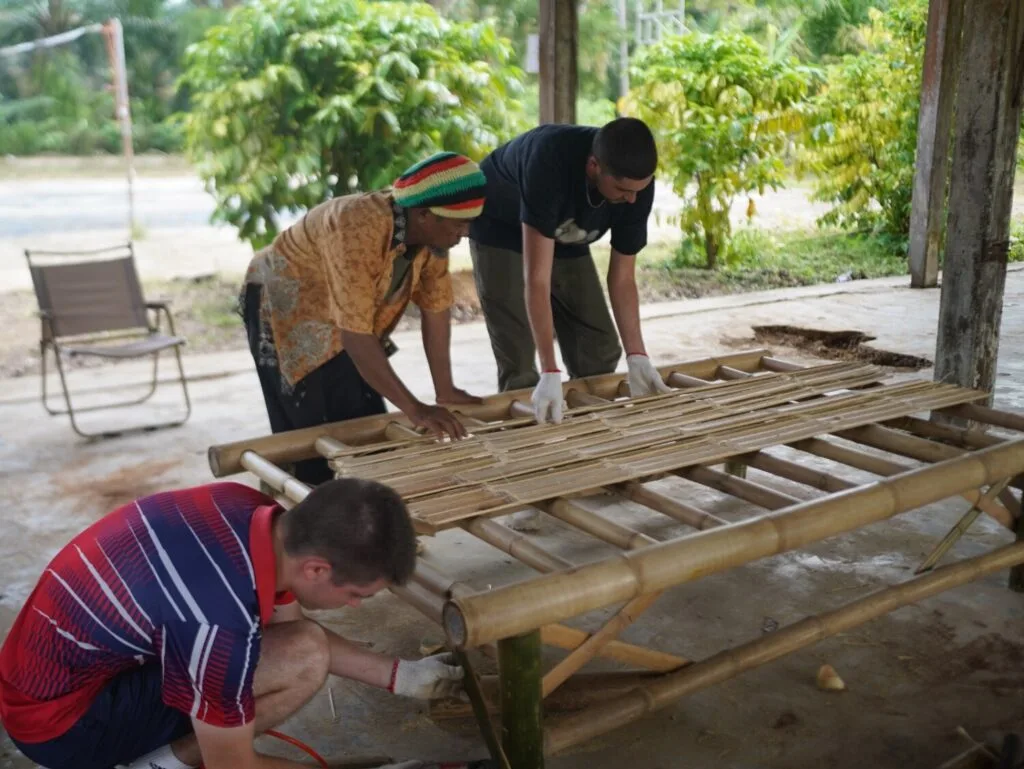
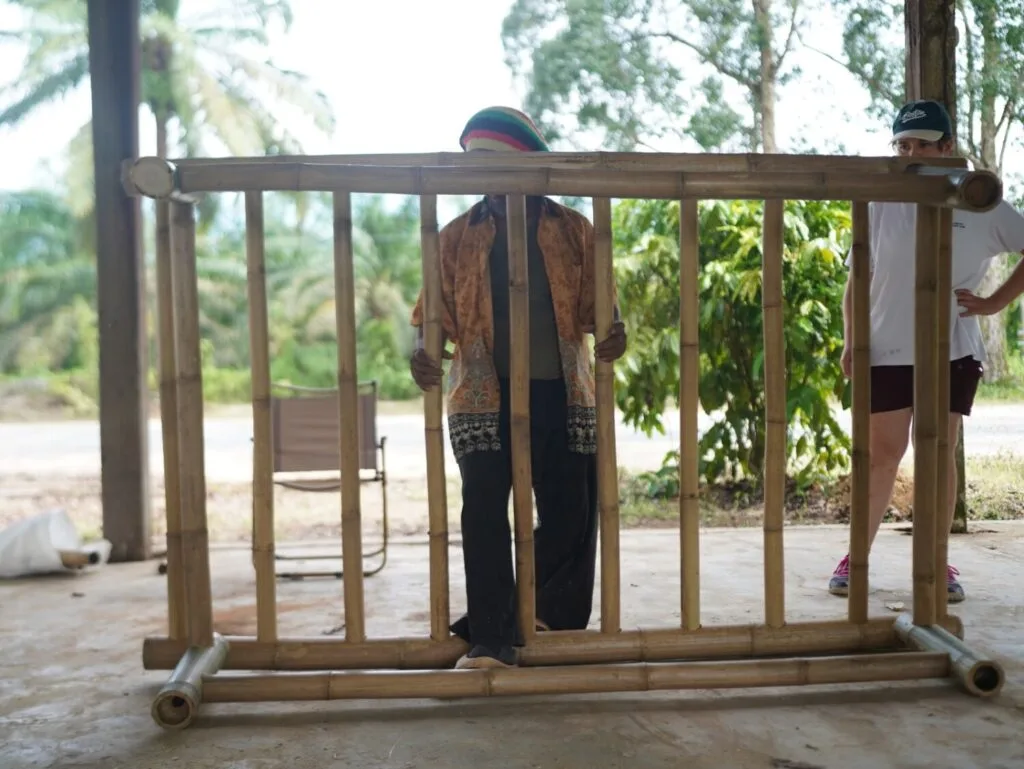
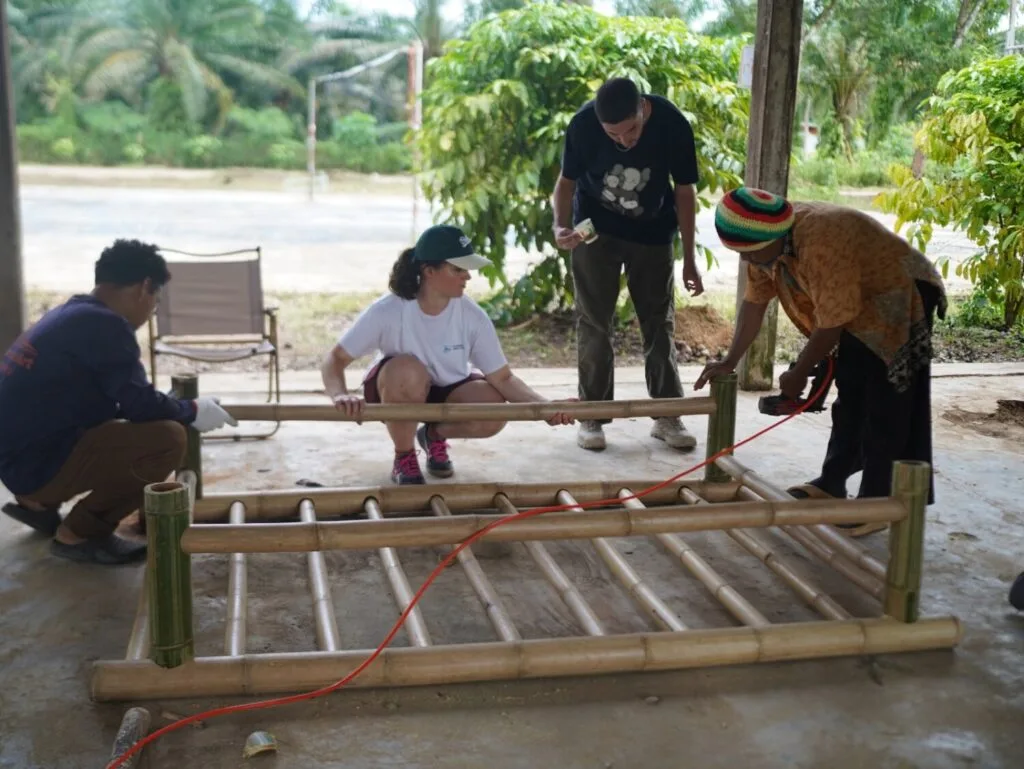
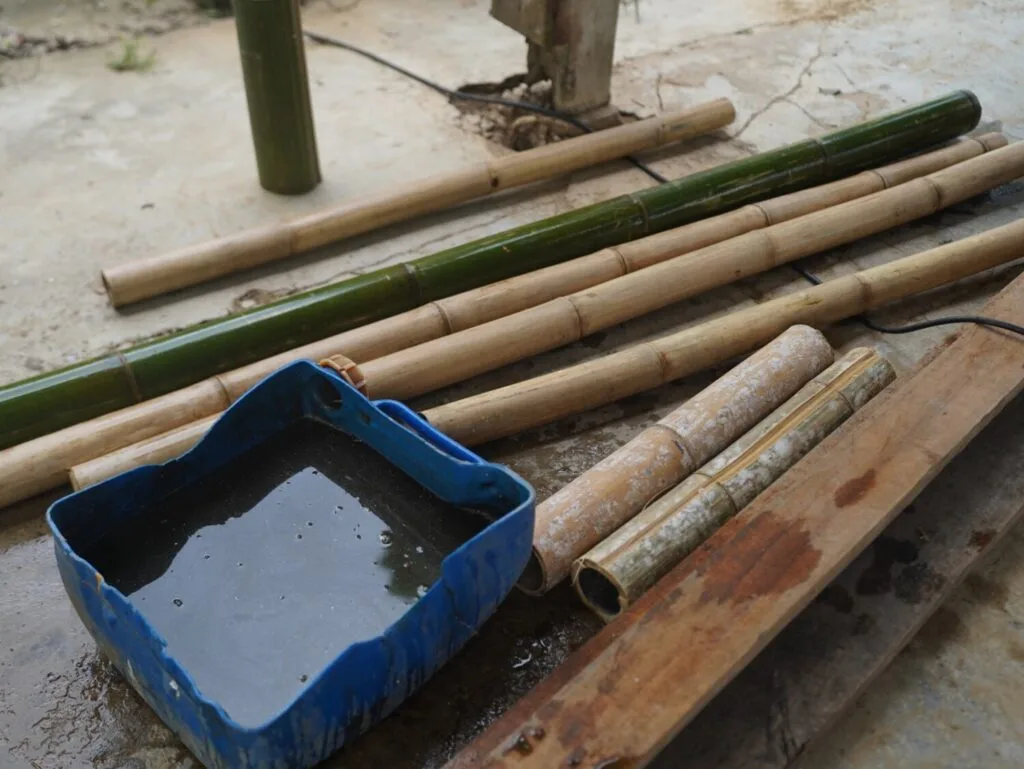
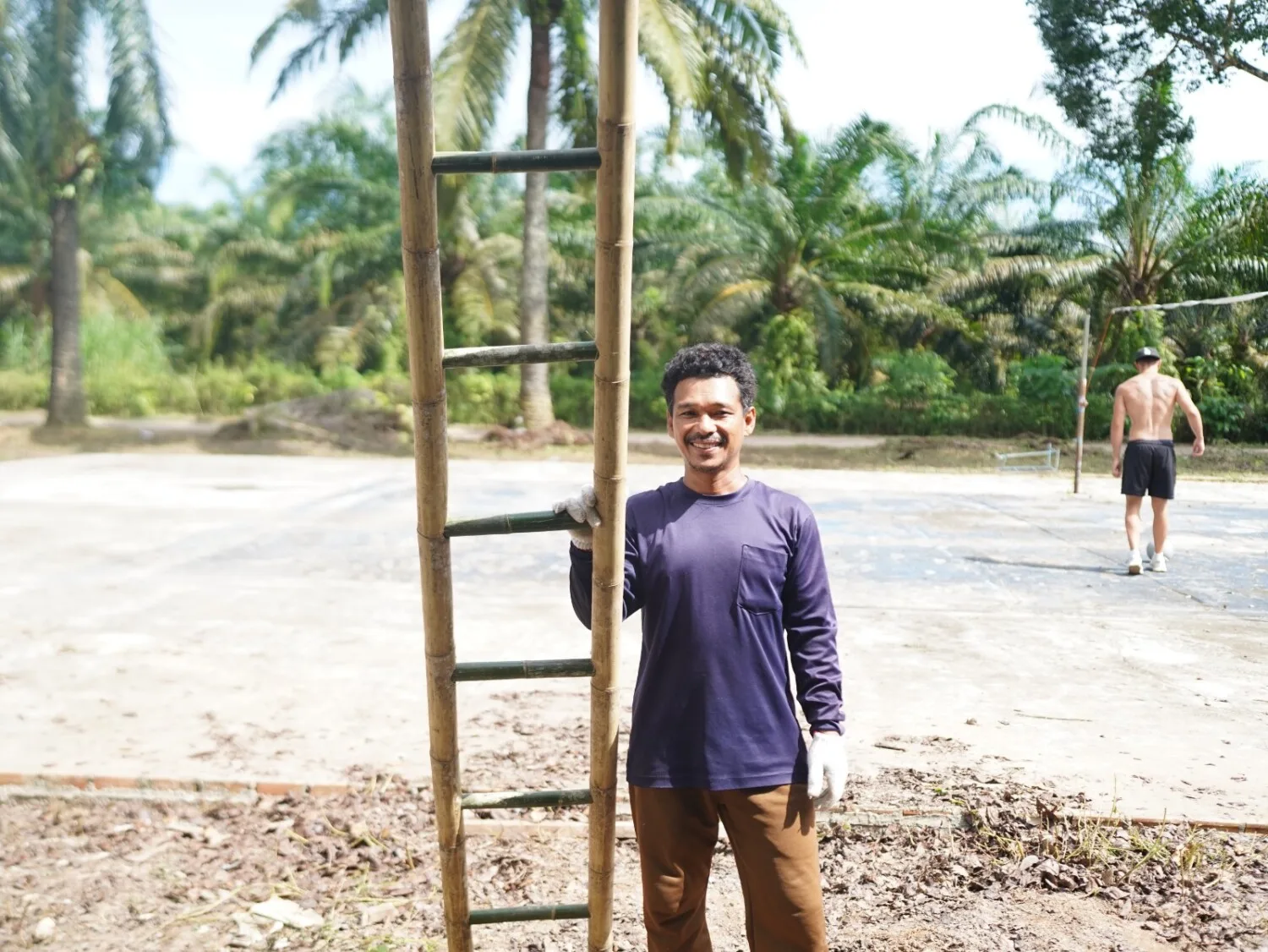
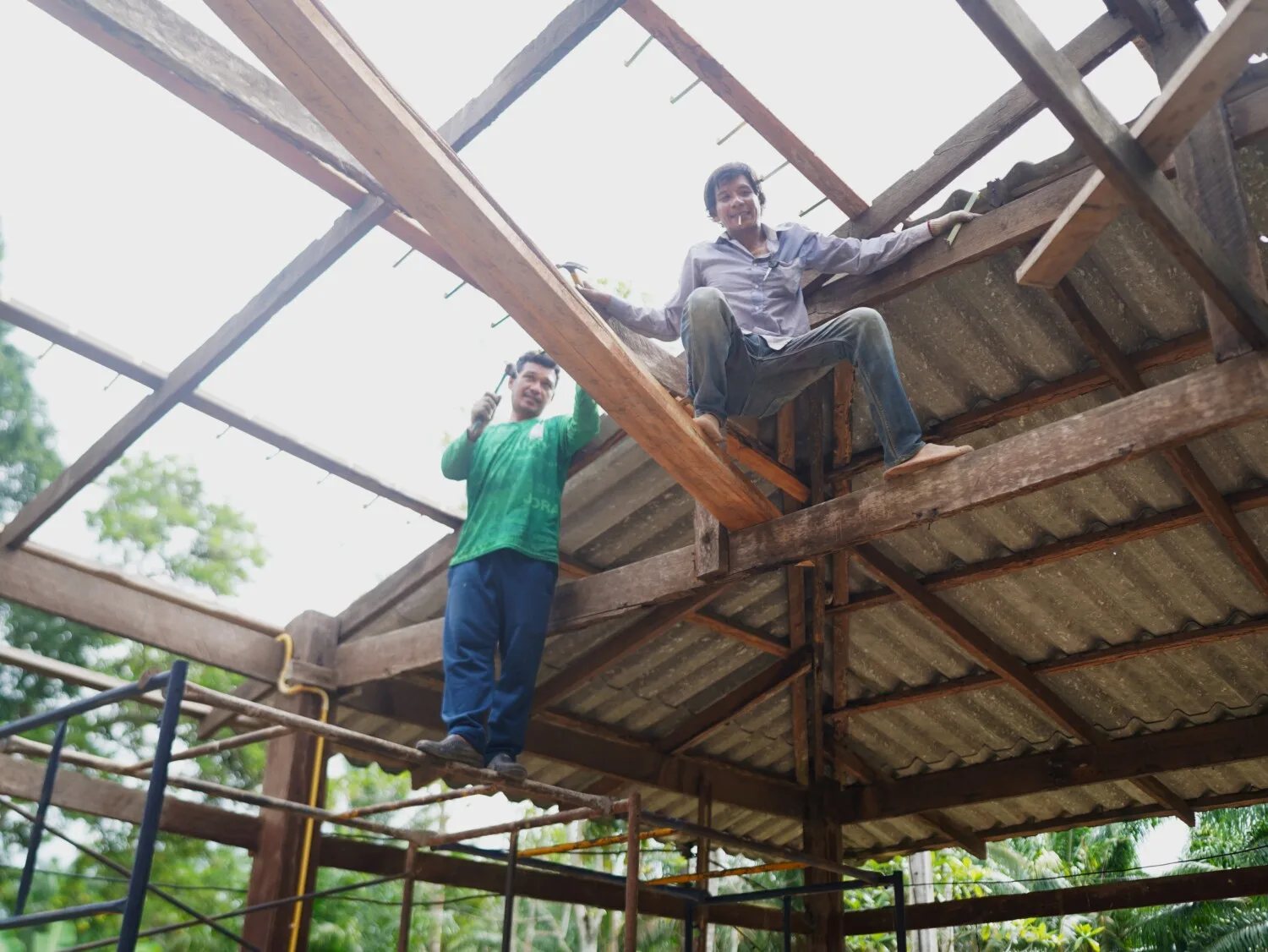
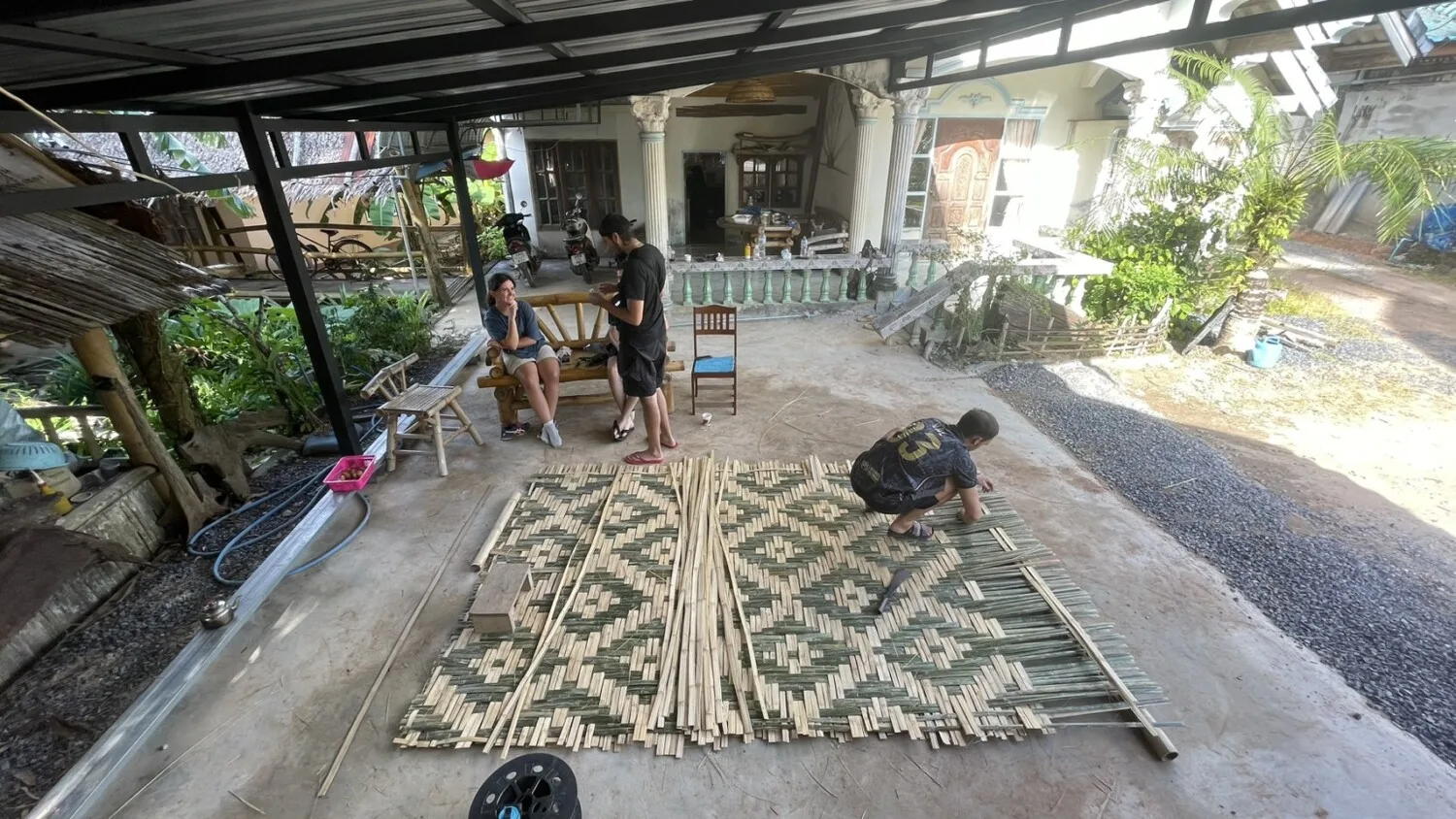
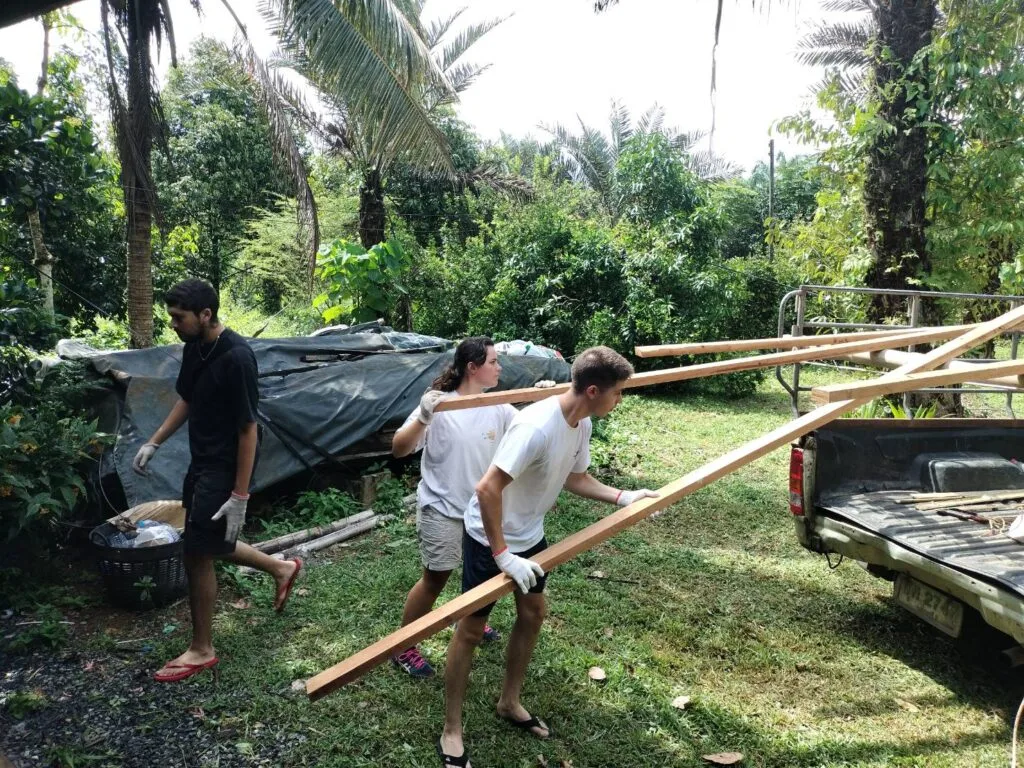
Alongside the clean-up, students built bamboo ladders and bamboo work tables — practical, temporary structures that would support the coming months of work — and began the careful process of removing the school’s old roof while reinforcing parts of the existing structure to keep it stable in the meantime. These early tasks, unglamorous as they were, gave students their first real exposure to tools, safety procedures, and the basic choreography of teamwork on an active restoration site.
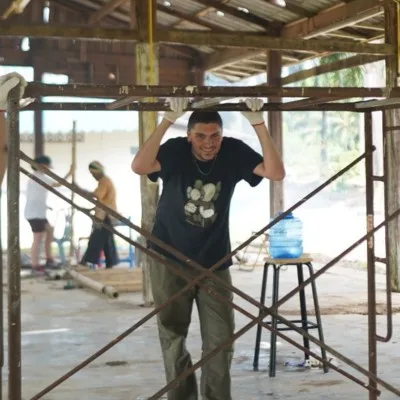
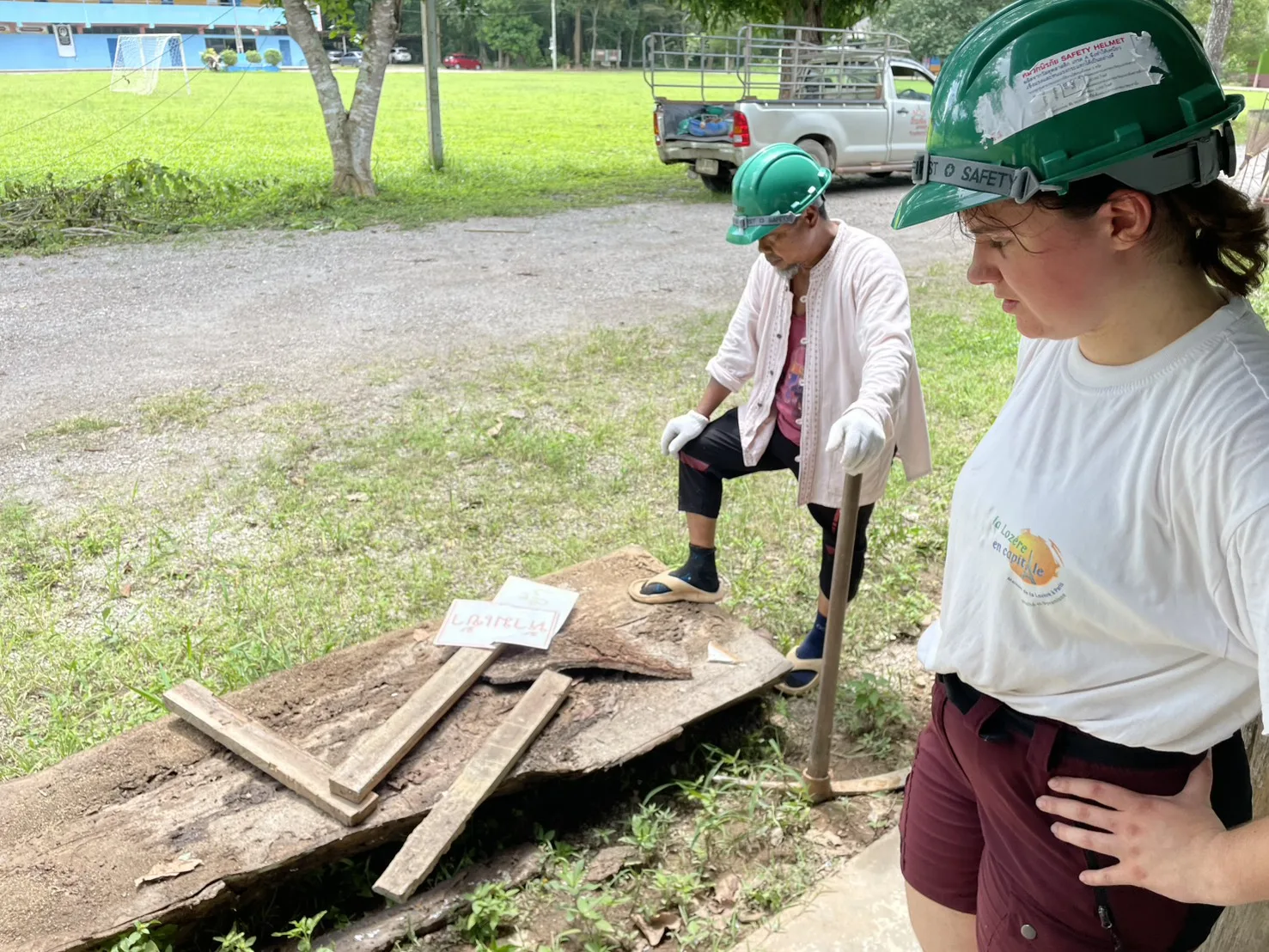
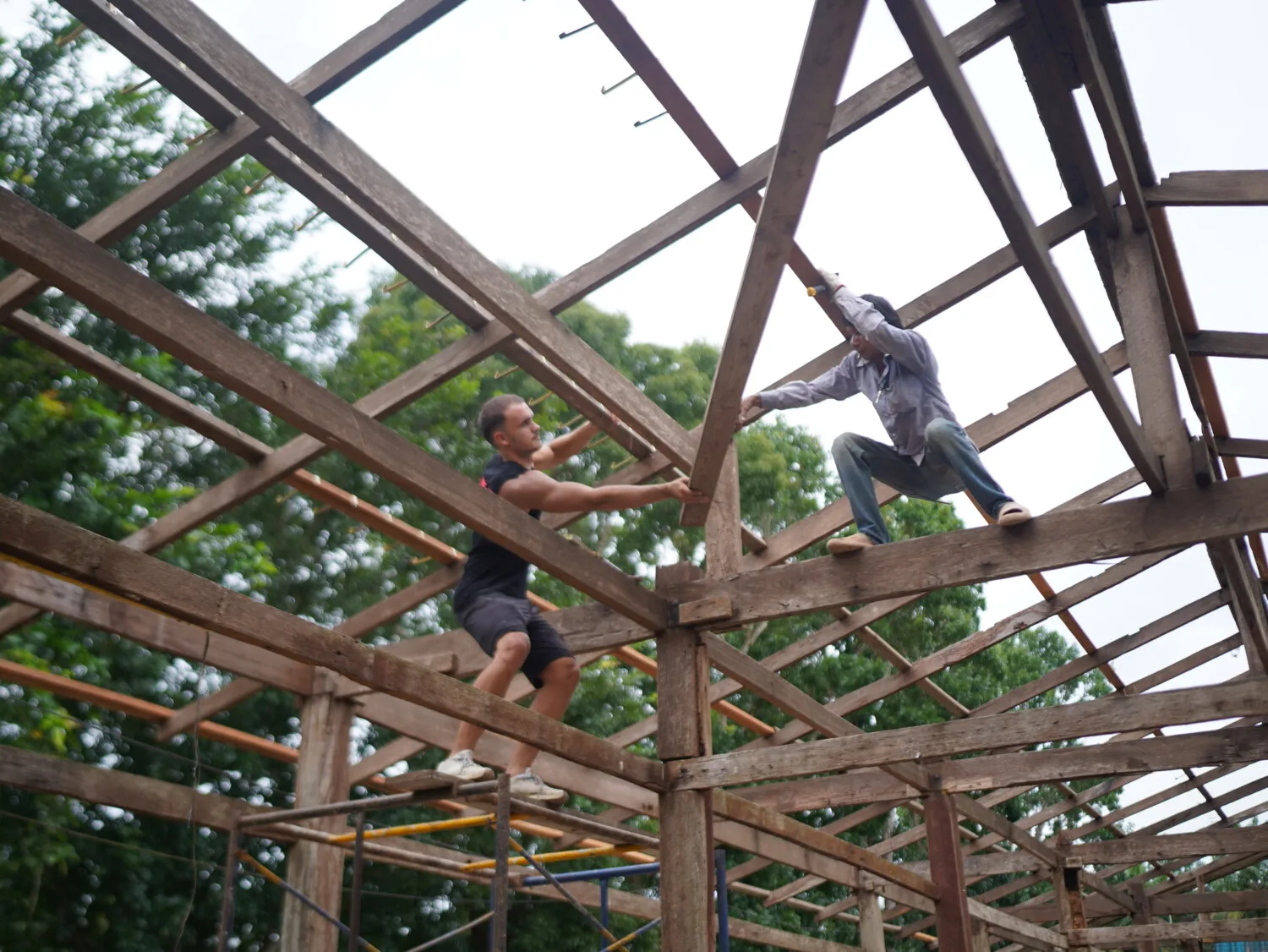
The rainy season made itself known in the second week, with heavy rain preventing construction for much of the first few days. Rather than let the group sit idle, the team turned the interruption into planning time — meeting to review the work already completed, discuss the structural challenges the building was presenting, and prepare the next stages of construction. Once the weather cleared, students focused on reinforcing the wooden support columns to stabilise the historic frame, while continuing the roof removal that had begun the week before.
The unpredictability of the weather became, in its own way, part of the curriculum. Working around monsoon rain demanded flexibility and patience that no schedule could fully account for — a lesson in adaptation as much as construction.
Rain continued to interrupt the schedule through the third week, but the team completed the roof removal while continuing to strengthen the wooden structural frame beneath it. Each stage of demolition uncovered new problems hidden beneath the old roofing — sections of timber more deteriorated than expected, joints that needed a different kind of repair than planned — requiring careful assessment before the next step could begin.
By the end of the week, students were noticeably more confident: handling tools with less hesitation, reading the structure’s behaviour more accurately, and working as a coordinated team rather than a group of individuals following instructions.
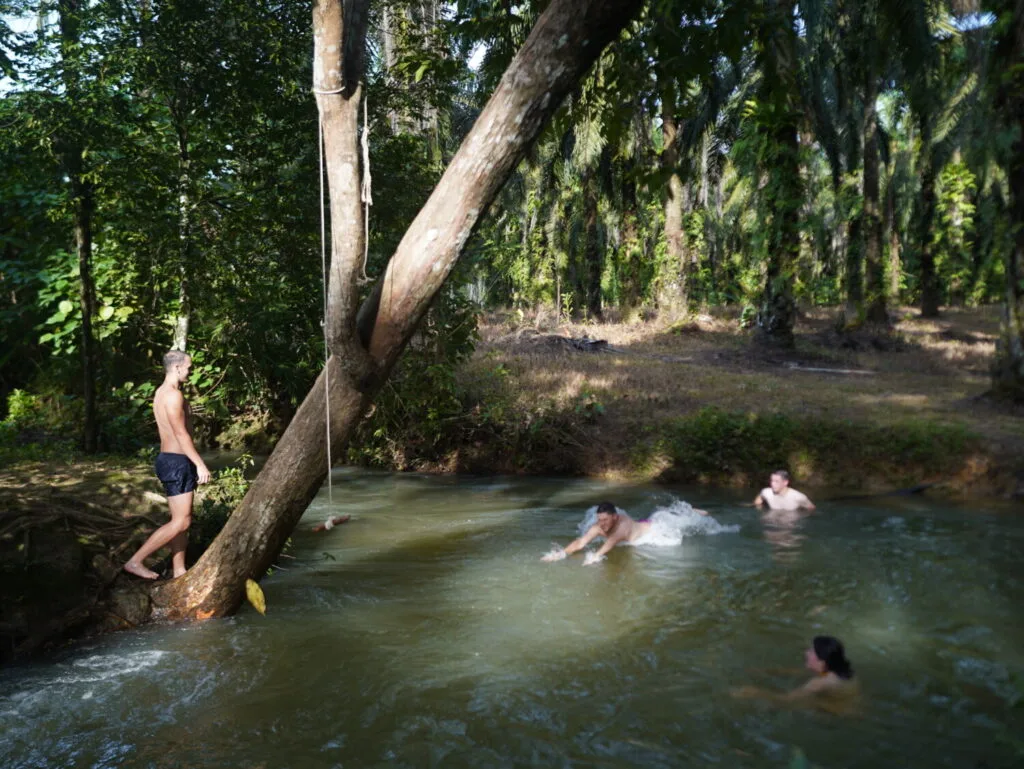
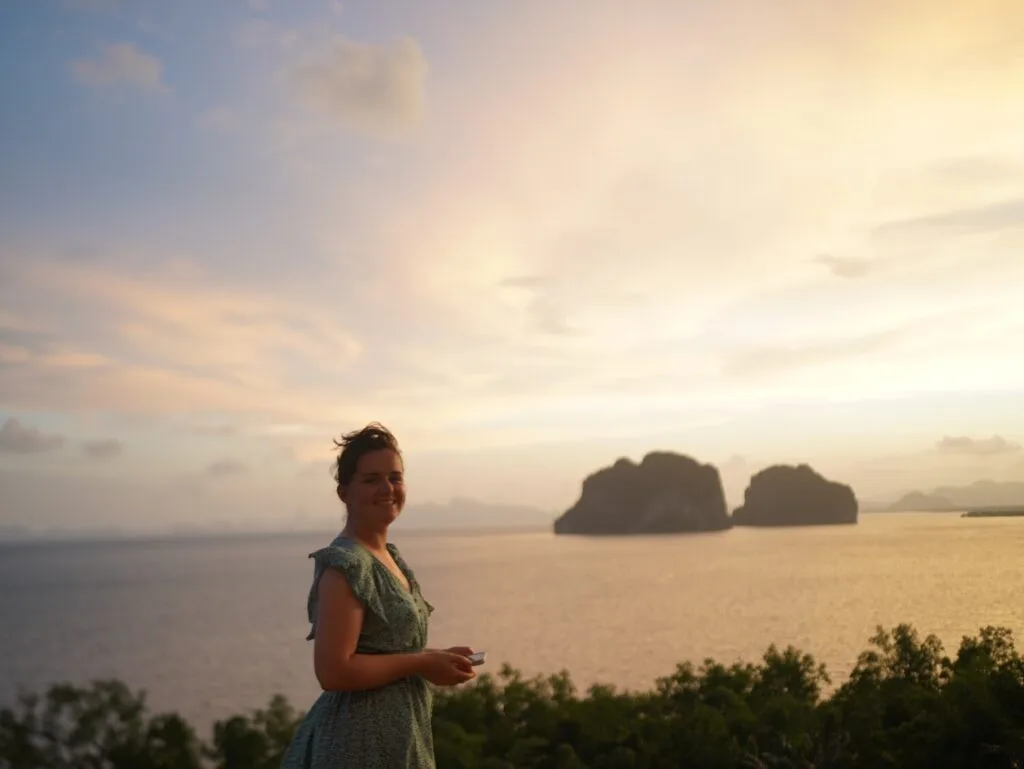
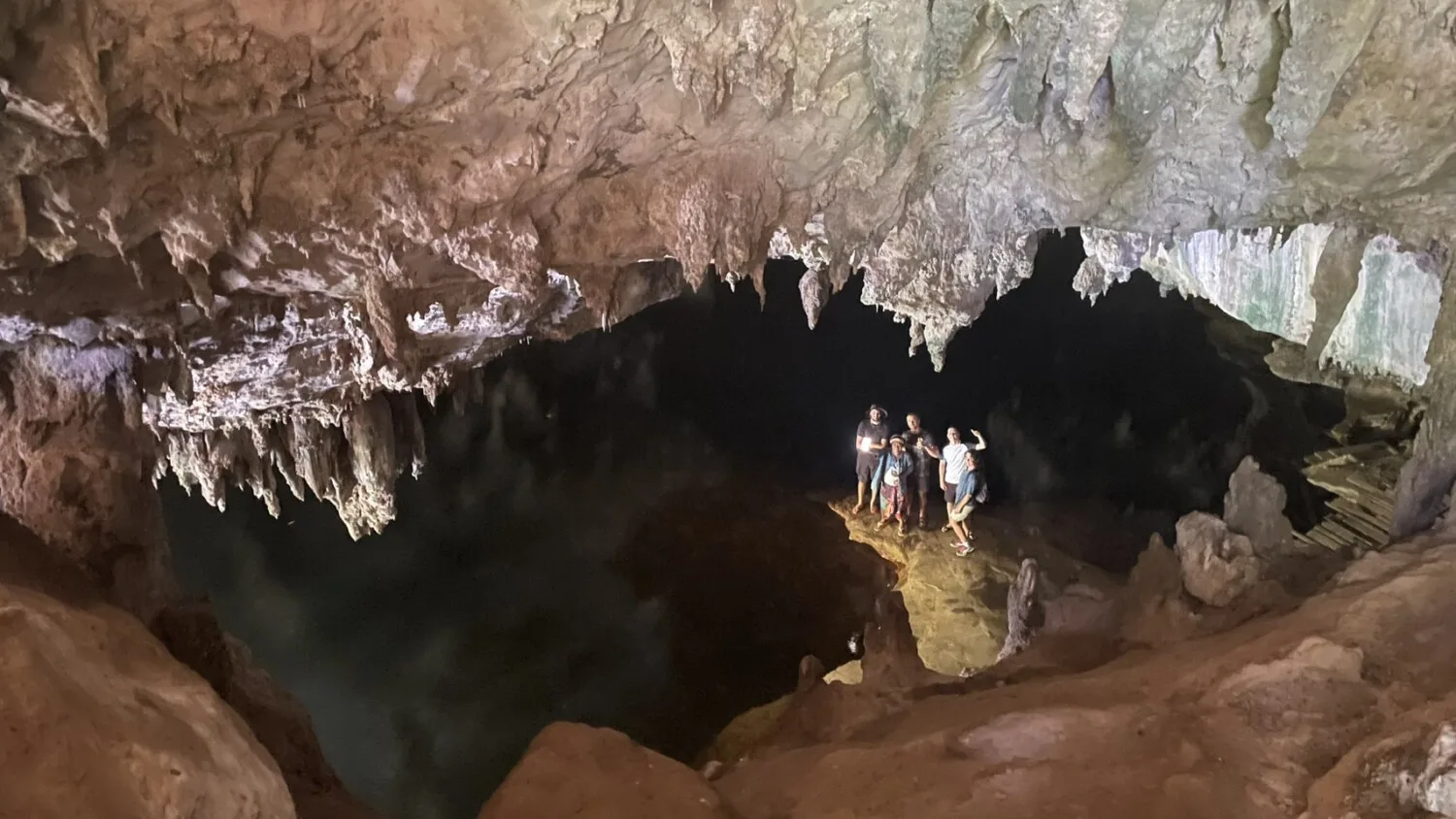
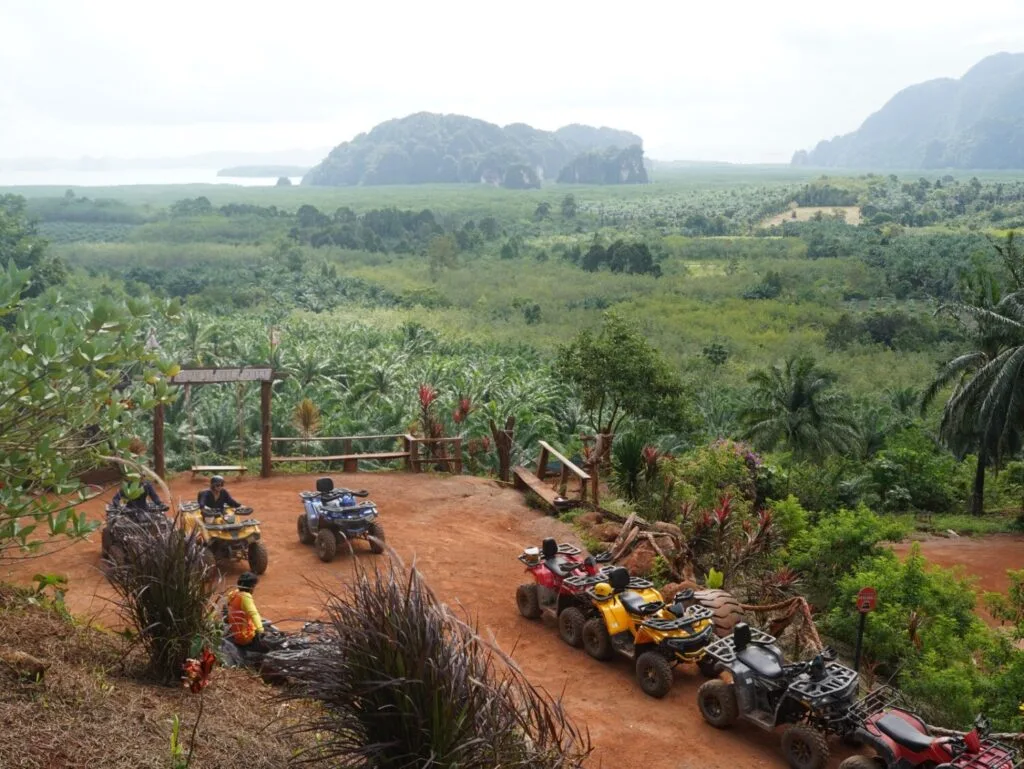
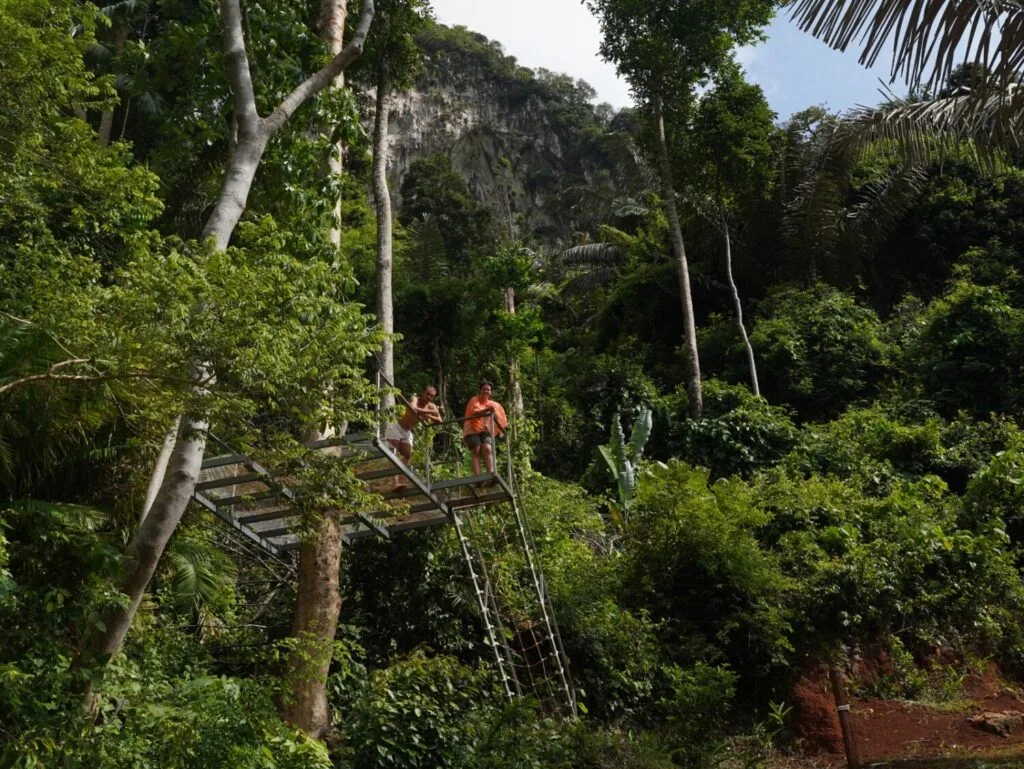
Education did not stop at the edge of the worksite. During the rainy stretches that paused construction, students had the chance to explore southern Thailand and understand, more directly, the environment surrounding their project — the forests, waterways, and coastline that shape life in this part of Krabi.
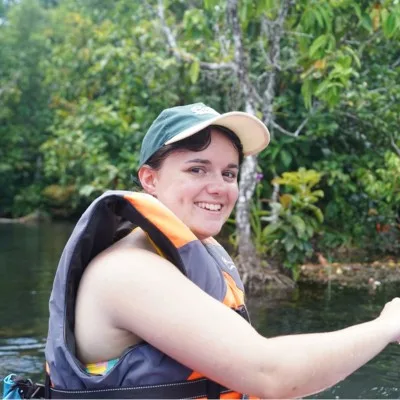
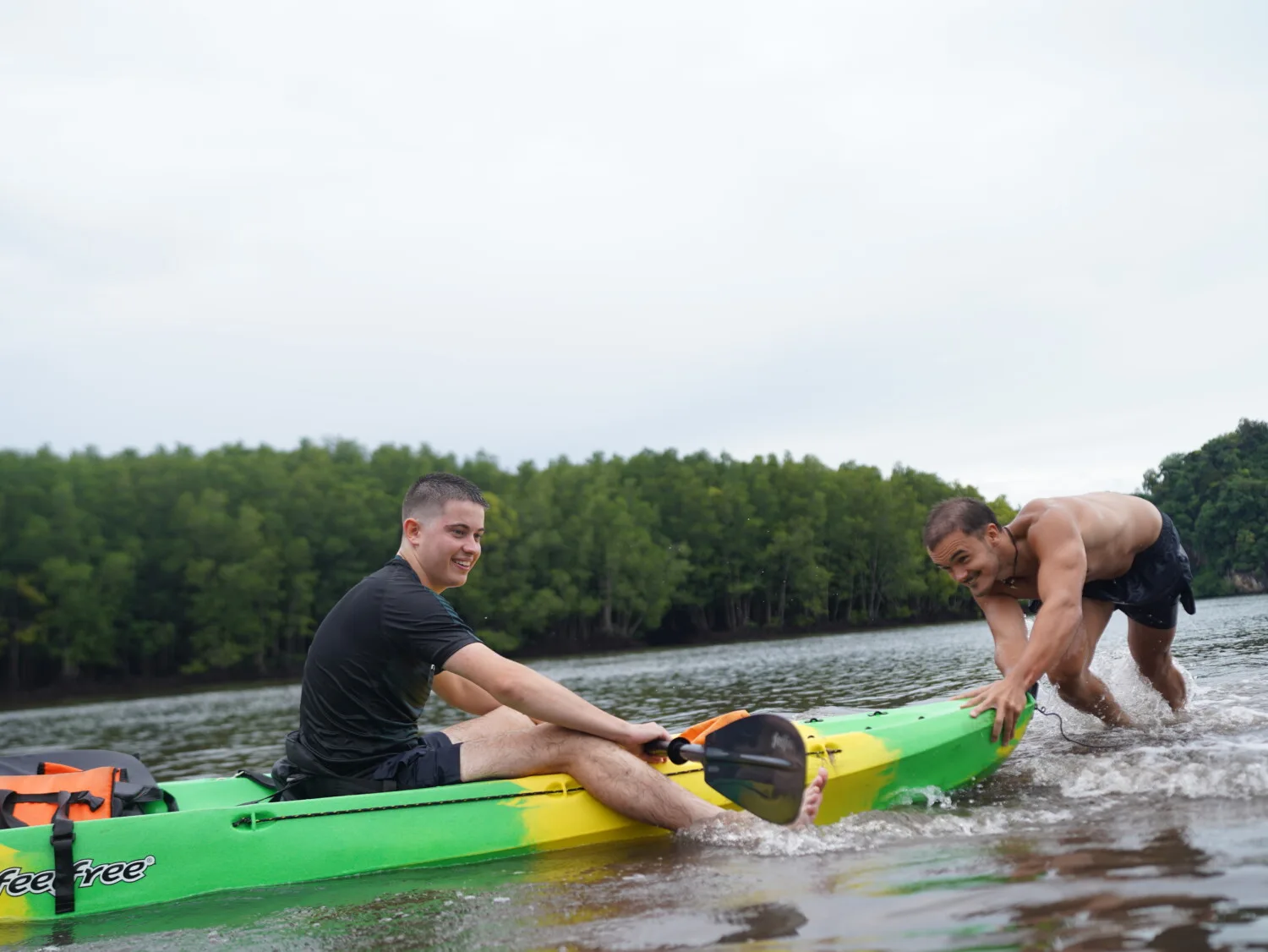
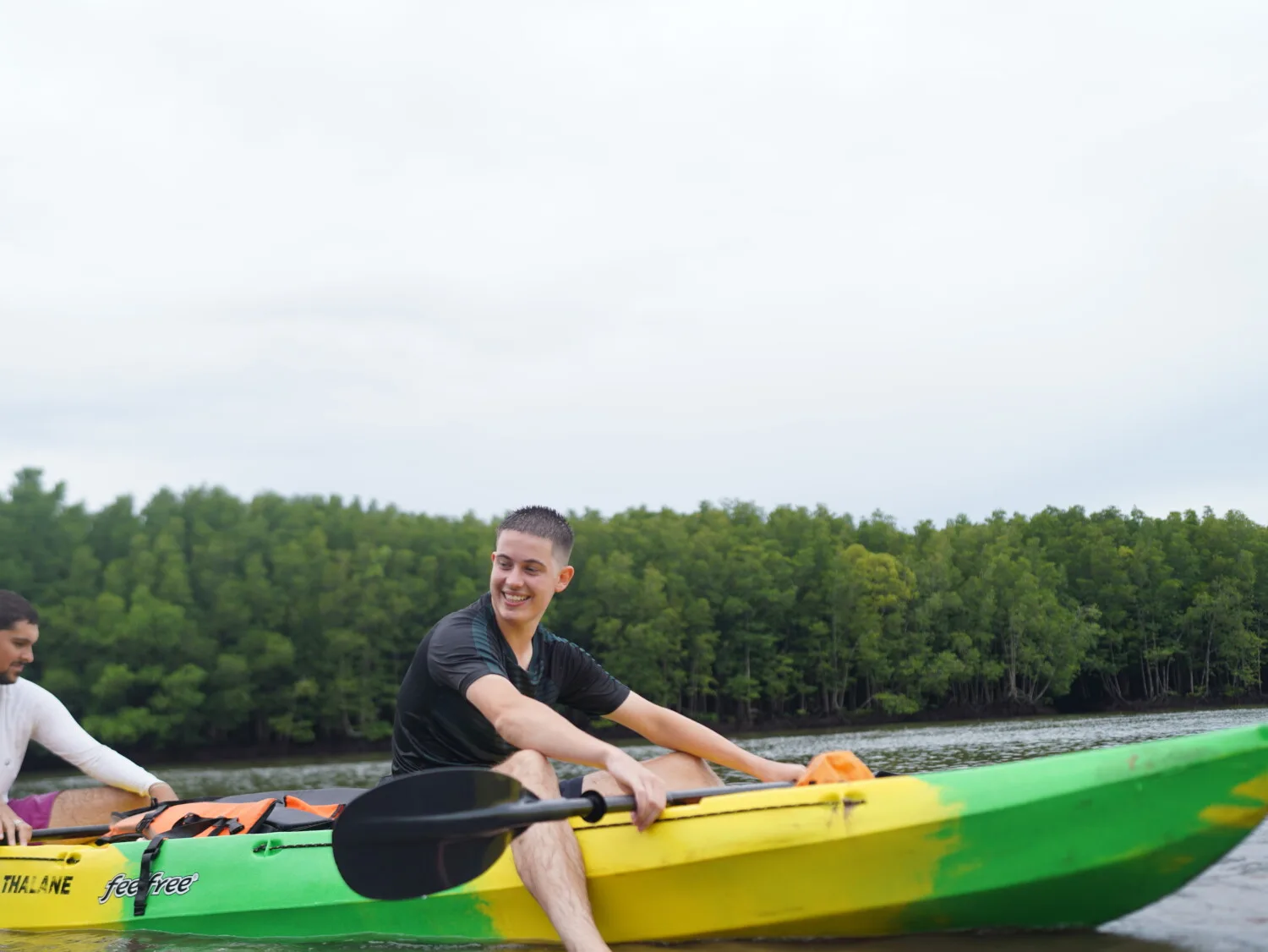
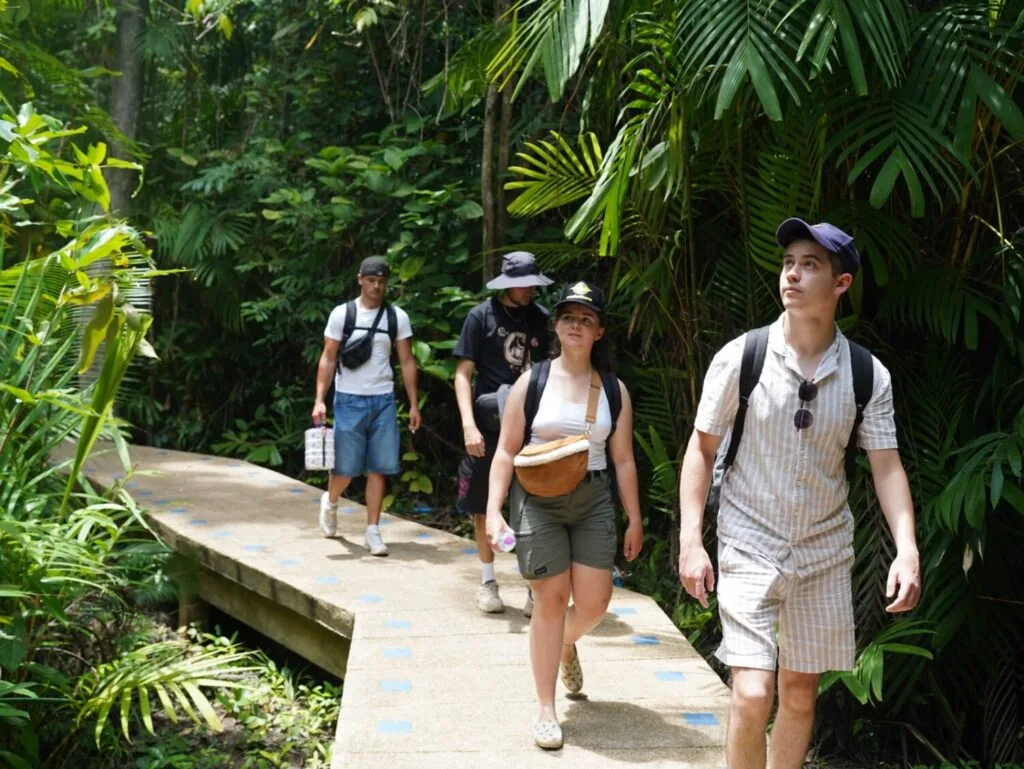
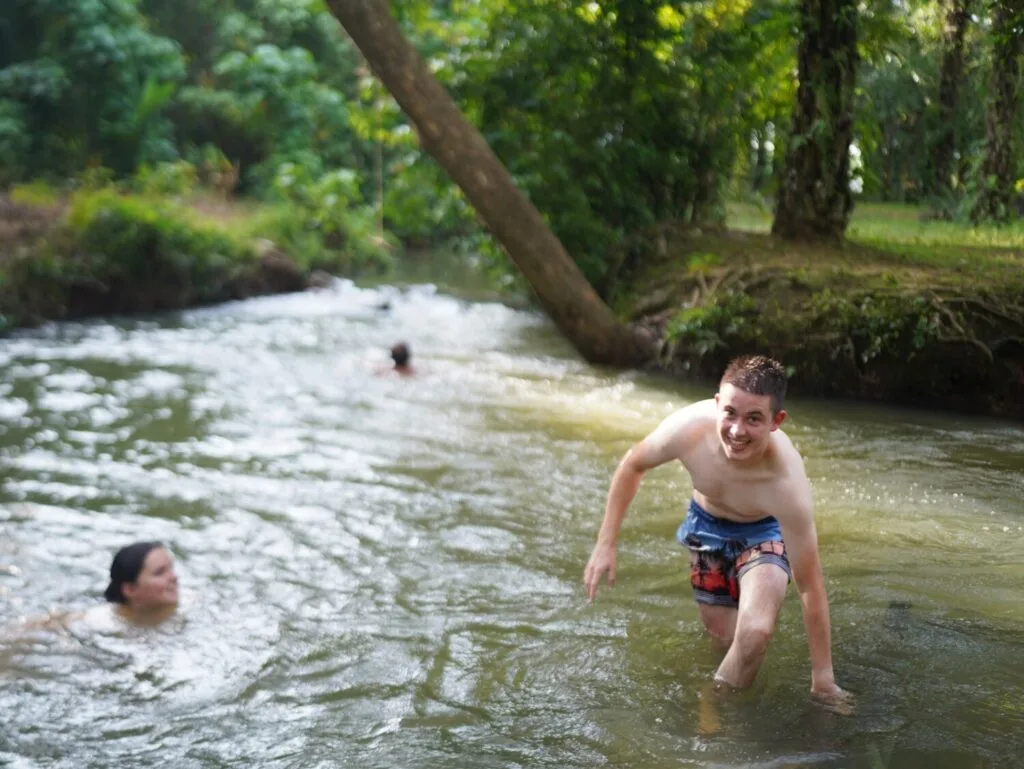
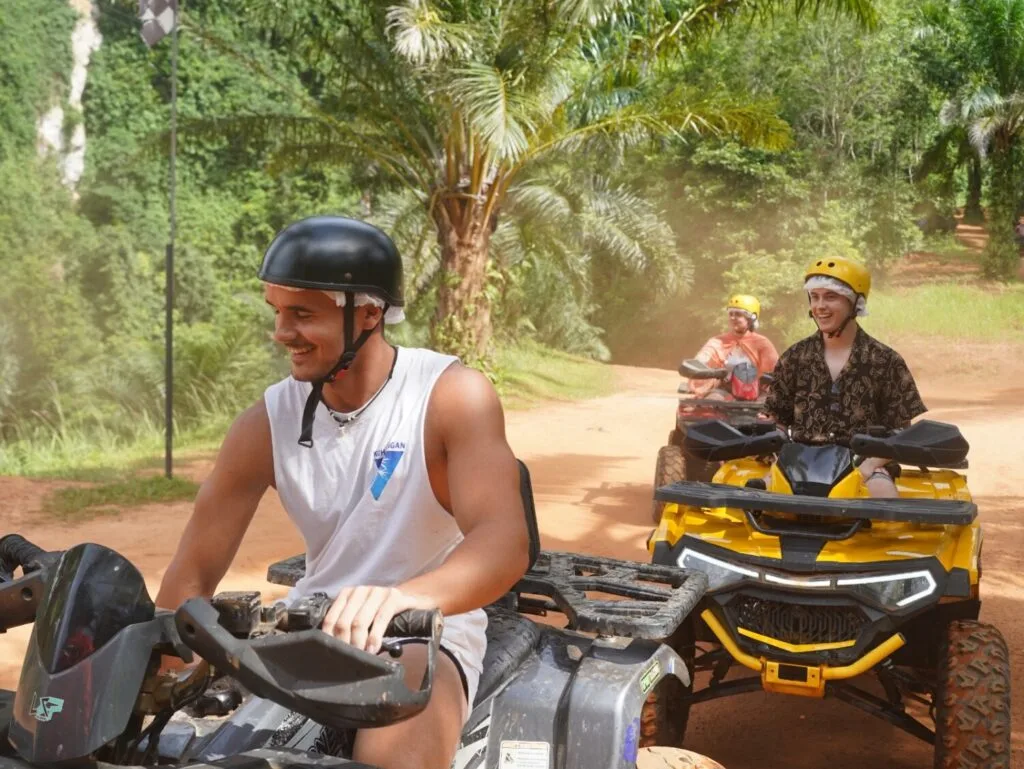
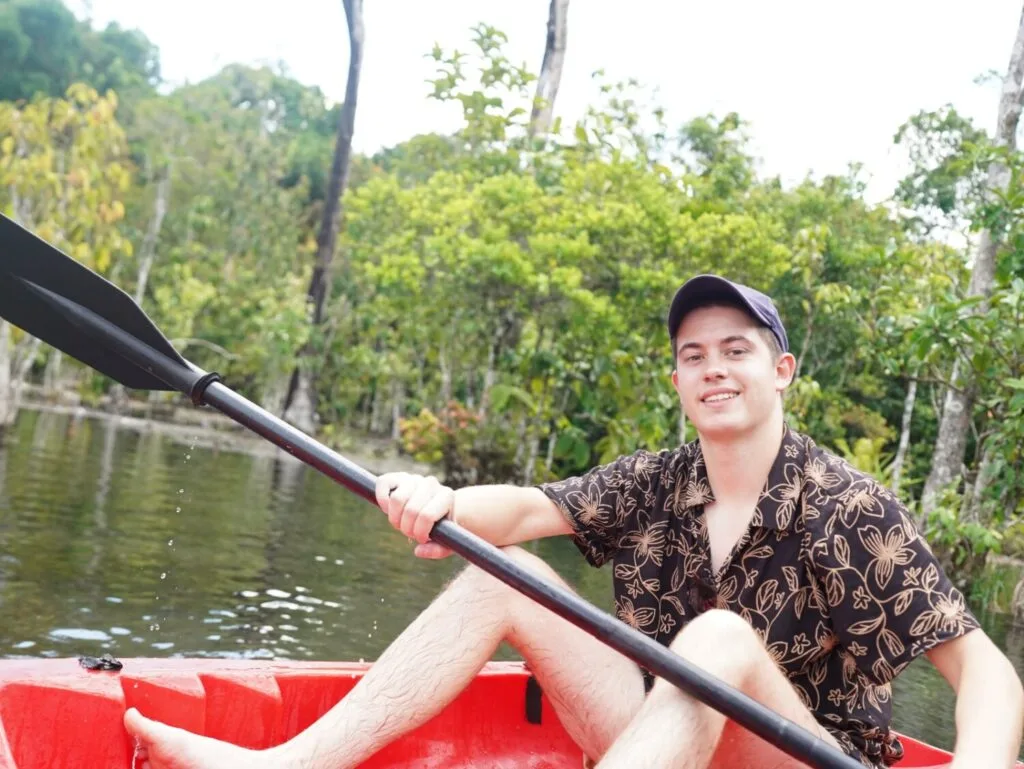
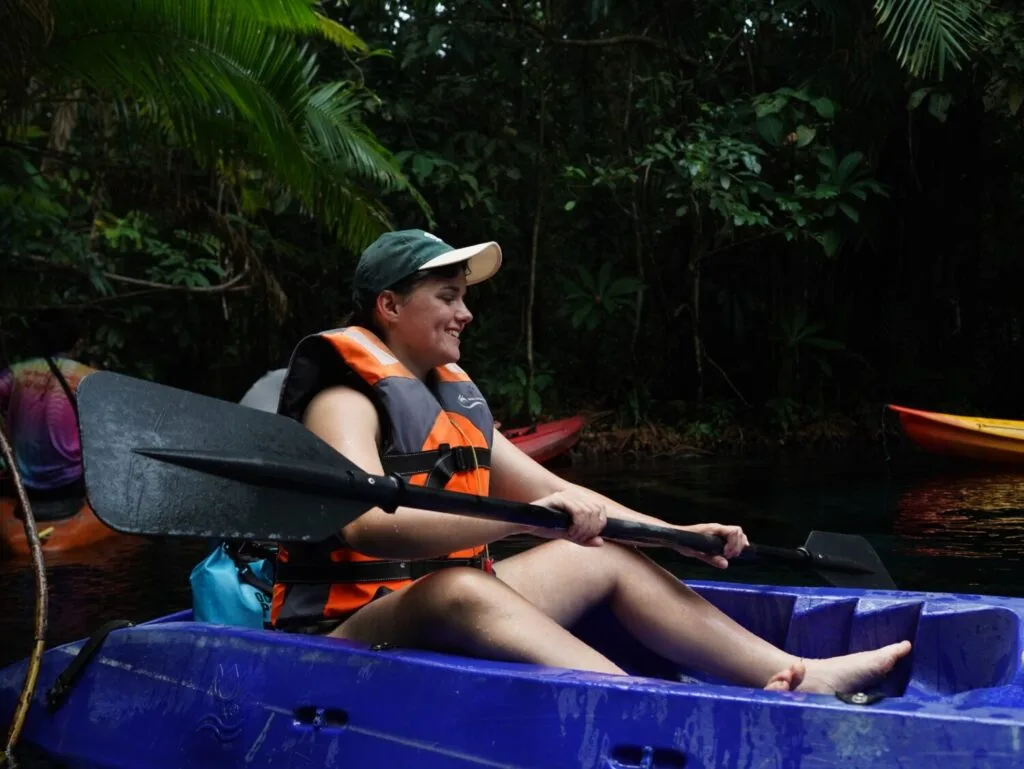
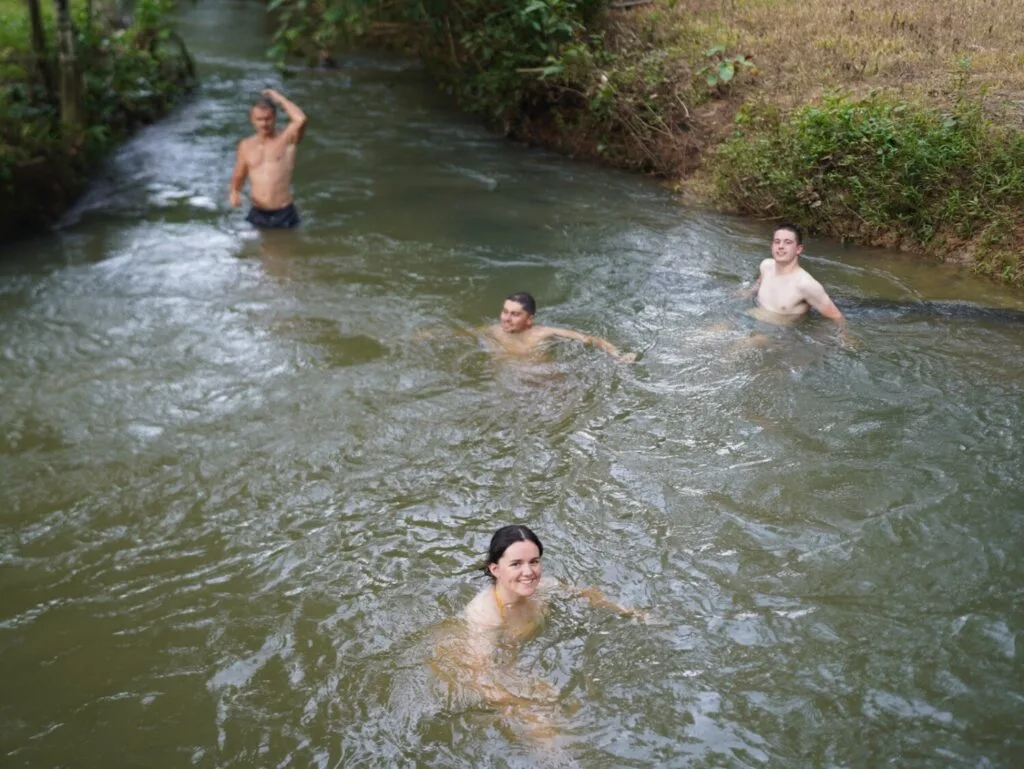
Activities included hiking through tropical forest, kayaking in Tha Lane and at Klong Root, visits to natural hot springs, and island hopping along the coast. None of this was simply time off. Each outing gave students a better sense of the region’s ecosystems, its local communities, and the sustainable tourism initiatives already at work here — context that fed directly back into how they understood the restoration project itself.
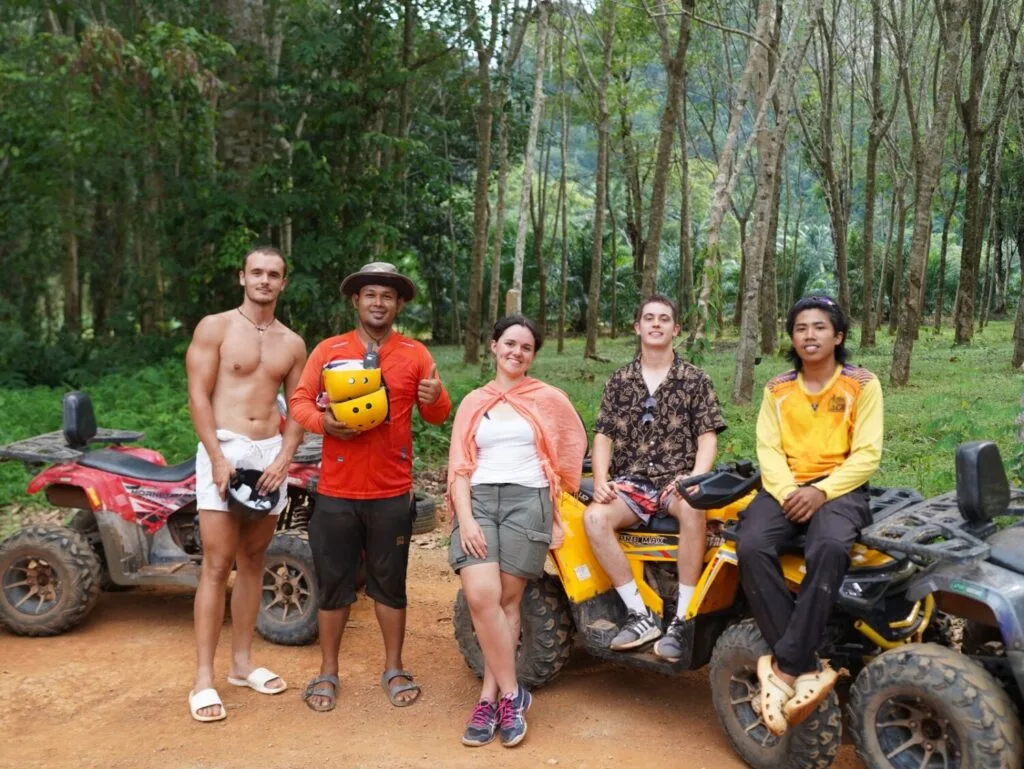
Just as importantly, these breaks from physical labour strengthened friendships within the group, creating a healthy rhythm between demanding construction work and the discovery of a new place and culture.
Image gallery: candid, unposed shots from Tha Lane, Klong Root, and the hot springs — sequenced as a short photo essay between Week Three and the Sustainability section.
Sustainability guided the project long before the first beam was reinforced. Choosing to preserve the existing school building, rather than replace it, was itself the project’s largest sustainability decision — repairing what could be repaired, and reserving replacement for what truly could not be saved.
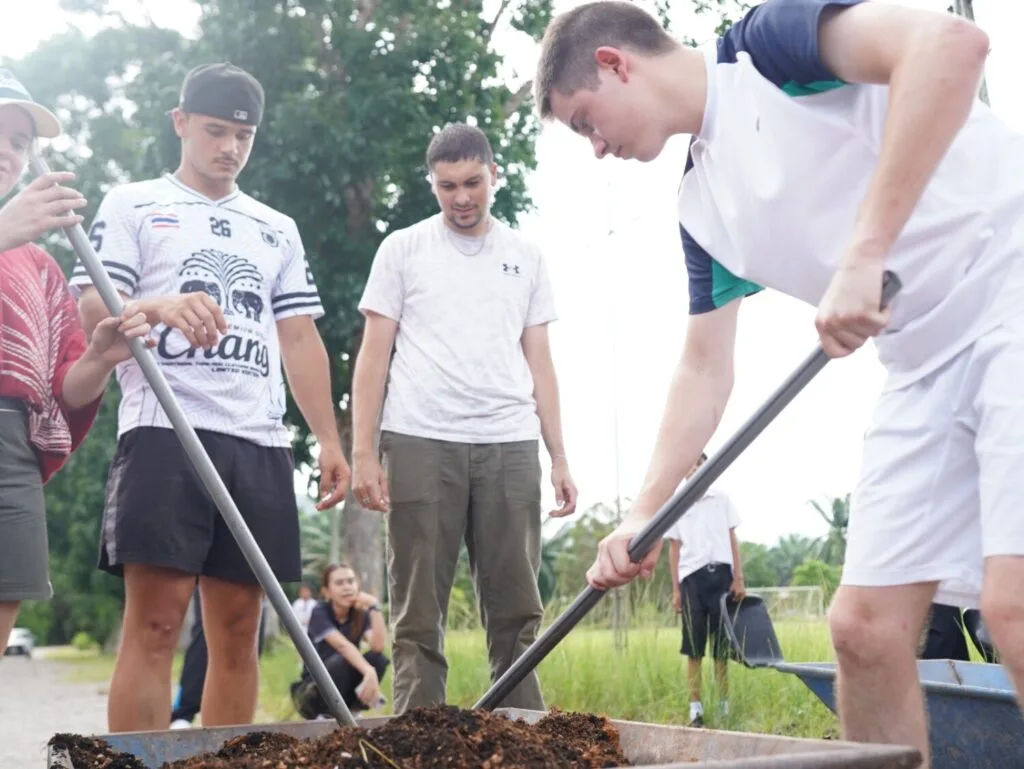
That same logic runs through the smaller decisions made every day on-site: reducing construction waste by reusing timber wherever possible, drawing on traditional knowledge and local craftsmanship instead of imported methods and materials, and thinking in terms of a circular process rather than a linear one — remove, repair, return, reuse. The long-term value created is not only environmental. A restored school building represents years of continued use for the community, at a fraction of the resources a new building would require.
Sustainability, in this project, is not only about materials. It is about preserving history, extending the working life of a structure that already exists, reducing what gets thrown away, and passing traditional knowledge on to the people who will need it next — whether that is the next generation of Bang Laew’s students, or the next group of interns to arrive on-site.
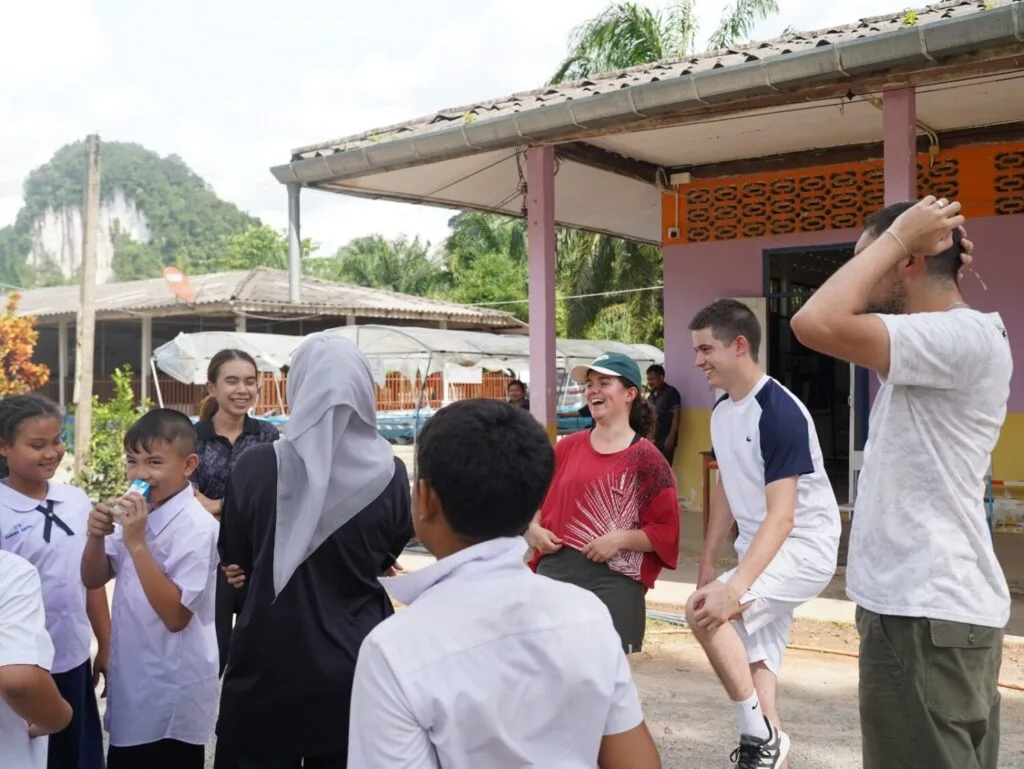
Much of the internship’s cultural exchange happens away from any structured activity. Living with local hosts, sharing meals, and picking up the small customs of everyday Thai life teach students things that no orientation session could. Working alongside experienced craftsmen adds another layer — a kind of exchange built entirely on shared attention to a task, where language barriers matter less than watching, trying, and being corrected.
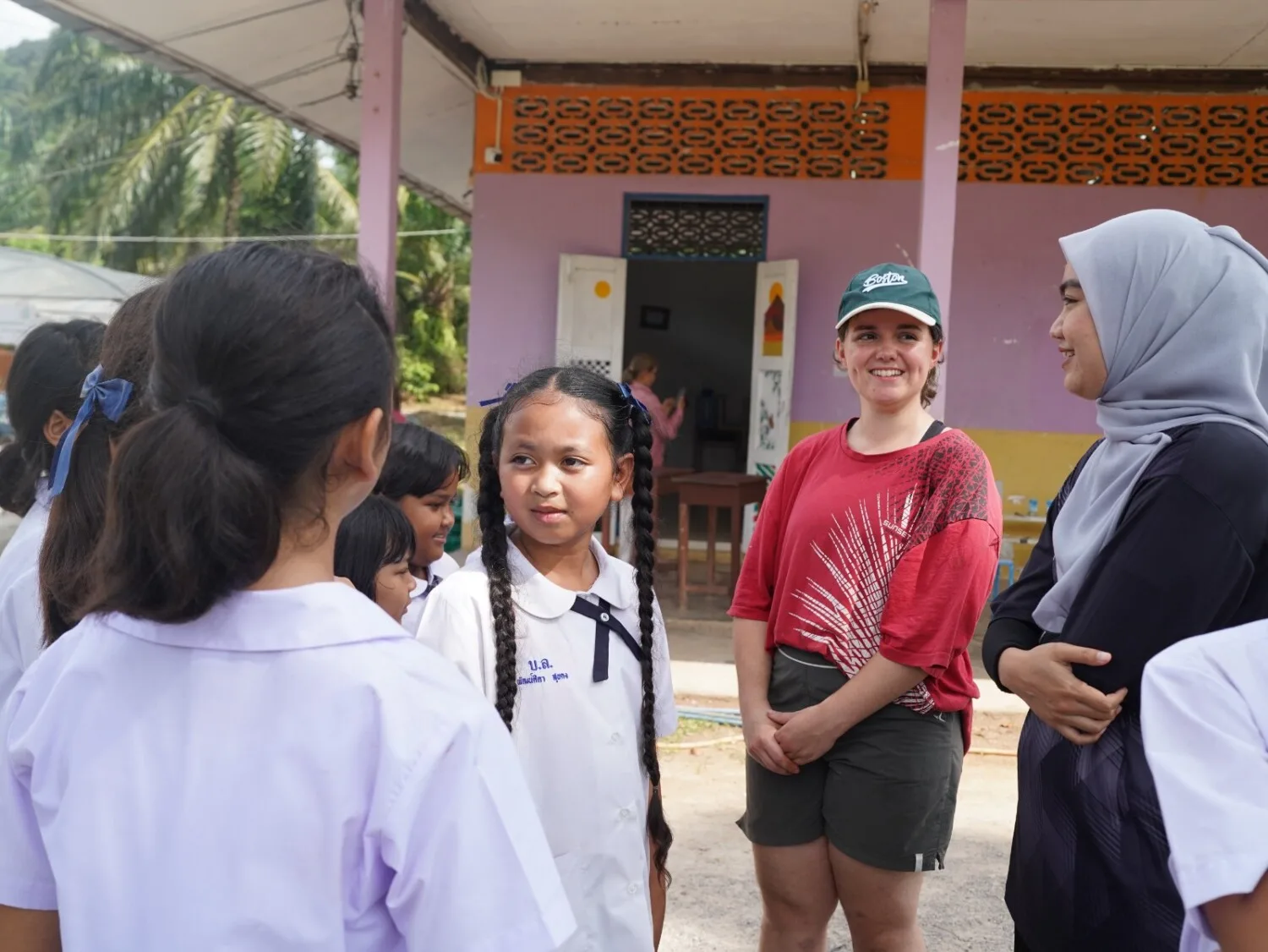
Visits to local communities and a closer look at rural life ask students to set aside assumptions and understand a different way of thinking on its own terms, rather than measuring it against what they know from home. These daily interactions, easy to overlook next to the visible progress of construction, are just as central to the internship as the restoration work itself.
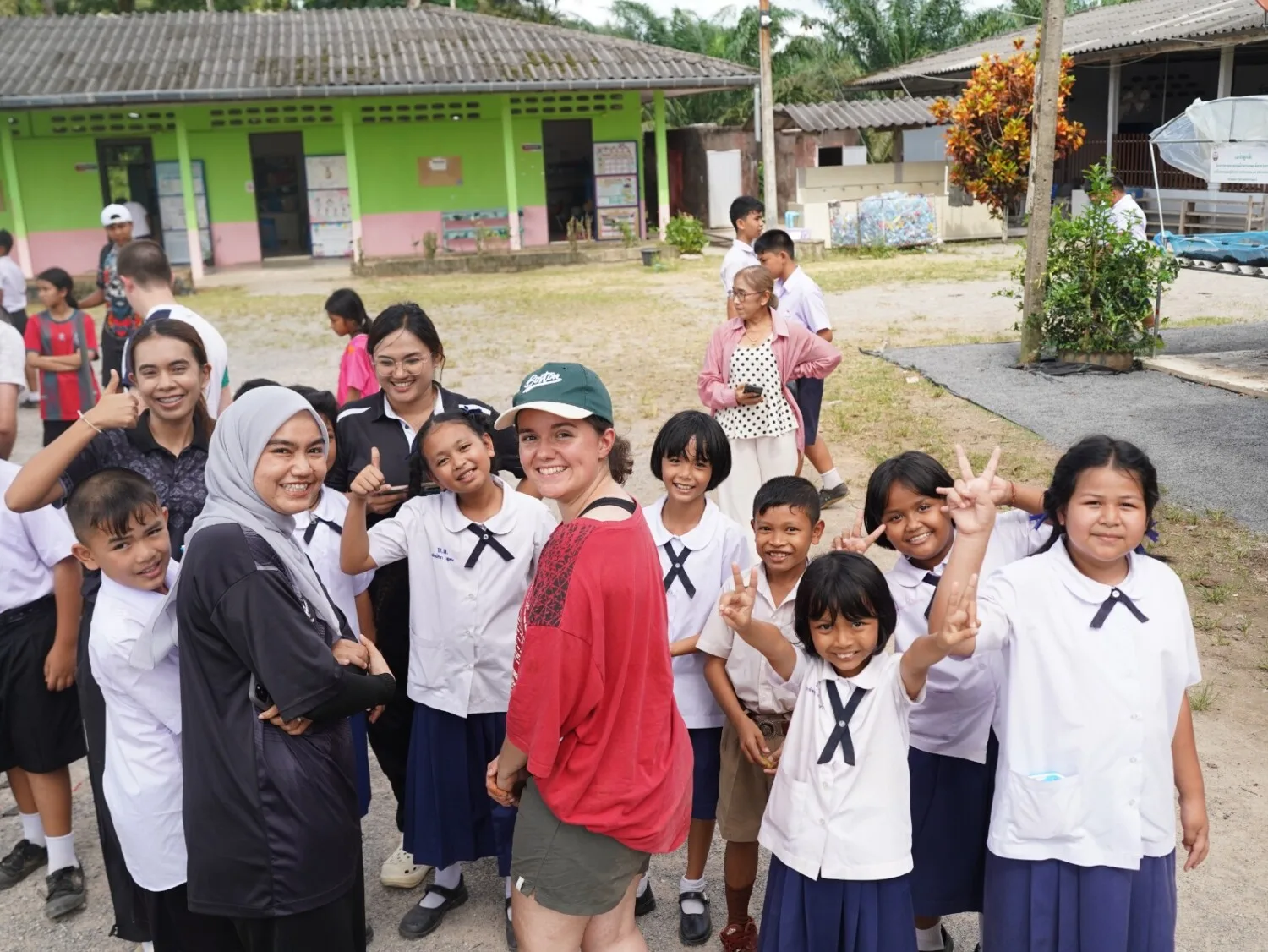
The project’s benefits run in both directions. Bang Laew School gains a restored building that can serve students for years to come — a piece of community infrastructure that would otherwise have been lost. The wider community gains the preservation of a building that matters to its history and identity, along with the visible presence of people who came from elsewhere to help, without expecting anything beyond the chance to learn.
For the students, the internship creates educational opportunities that a classroom cannot replicate, builds international friendships that often outlast the programme itself, and shares knowledge across cultures in both directions — craftsmanship moving from local builders to students, and students bringing their own perspectives and questions back to the site. In small, cumulative ways, the project encourages a more responsible, more grounded sense of global citizenship.